





The story of God Is on Air
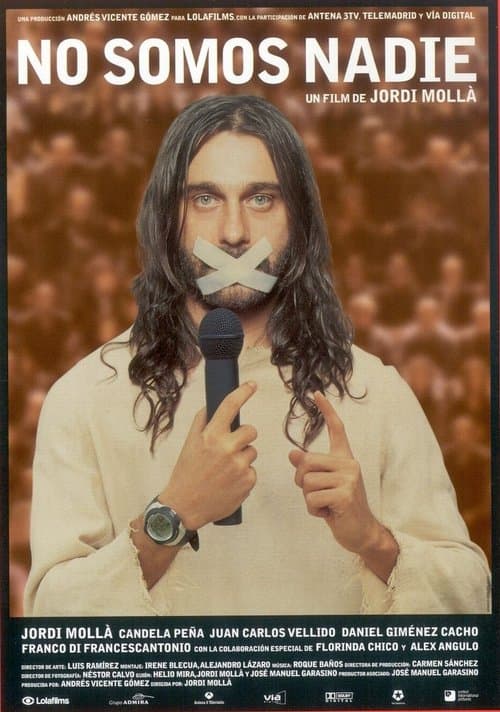
Spain in the early 2000s was a country grappling with visible poverty, senseless violence, and a spiritual malaise that seemed to seep into every corner of daily life. God Is on Air captures that moment through the eyes of two street-level hustlers—men with nothing to lose and everything to gain if they can just catch a break. When they stumble upon a popular reality television program that's willing to let audiences decide the fates of suspected felons, one of them sees an escape route. It's not dignified. It's not even entirely legal. But it's a shot. The film doesn't ask whether this plan is moral; it asks whether morality even matters when you're desperate enough. That's the engine that drives the narrative forward—a collision between personal ambition and the machinery of mass media that's designed to turn human suffering into prime-time entertainment.
Behind the making of God Is on Air
God Is on Air emerged from a Spanish production landscape that was beginning to experiment with sharper social commentary in its comedies. The film was produced by Lolafilms alongside broadcast partners Atresmedia, TeleMadrid, and Vía Digital—a consortium that gave it both theatrical and television reach across Spain. At 91 minutes, it's a lean, efficiently constructed narrative that doesn't waste time on subplot padding. The film landed a solid 7.7/10 rating on IMDb, suggesting it found an audience that appreciated its balance of humor and darker thematic material. What's striking is how the production team managed to thread the needle between satire and genuine social critique—the kind of tonal balance that's harder to pull off than it looks. The cast brought a naturalistic energy to their roles, avoiding the theatrical excess that can undermine satire when a filmmaker isn't careful. Movie OTT tracks where this title streams today, but understanding its production context helps explain why it's held up as well as it has across two decades.
What makes God Is on Air stand out in early-2000s Spanish cinema
There's a reason this film has maintained its IMDb rating: it nails something that most satires either oversell or undersell. The performances don't wink at the audience. The actors treat their characters' desperation as real—not as a setup for jokes, but as the actual emotional ground the comedy grows from. When you're laughing at the absurdity of a reality show that lets viewers vote on someone's execution, you're also uncomfortable, because the film never lets you forget that these are real people whose lives hang in the balance. I keep coming back to how the film uses the news media as a kind of Greek chorus—relentless, sensationalist, force-feeding images of poverty and violence back to the Spanish public in an endless loop. That's not subtle commentary, but it doesn't need to be. The thing nobody mentions is how well the film captures the specific texture of early-2000s television culture, before social media and streaming algorithms—when broadcast TV still had this almost religious authority over what stories got told and whose lives mattered. The central character's decision to participate in this grotesque game isn't portrayed as uniquely depraved; it's shown as a rational response to a system that's already depraved. That's what separates this from preachy satire.
How to watch God Is on Air online today
God Is on Air is currently available on major OTT services, and you can check the streaming-platform widget at the top of this page to see exactly where it's playing in your region right now. Availability shifts between platforms, but the film's been licensed widely enough that it tends to surface on services that carry international cinema and catalog titles. Movie OTT helps you track these changes in real time—no more hunting through three different apps to figure out where a title landed this month. The film's 91-minute runtime makes it an easy fit for a weeknight watch, though you'll want to set aside mental energy for what it's actually saying. It's not background-viewing material; it demands your attention.
Frequently asked questions
Q: Who directed God Is on Air?
The film was directed by a Spanish filmmaker working within the Lolafilms production ecosystem. While the director's name isn't as internationally recognized as some peers, the craftsmanship on display—the tonal control, the satirical precision—suggests someone with a clear vision for how to balance comedy with social critique.
Q: Is God Is on Air based on a true story?
No, it's an original fictional narrative, though it was clearly inspired by real anxieties about reality television's rise and the spiritual emptiness the filmmaker observed in Spanish society at the time. The reality TV show depicted in the film is exaggerated for satirical effect, but the impulse—audiences voting on life-and-death outcomes—taps into genuine trends in early-2000s broadcasting.
Q: What's the runtime of God Is on Air?
The film runs 91 minutes, making it a brisk, economical watch that doesn't overstay its welcome. Every scene carries weight.
Q: Where can I watch God Is on Air right now?
Check the Where to Watch widget at the top of this page for current streaming availability in your region. Major OTT services carry it, though which platform depends on your location and current licensing agreements.
Q: Is God Is on Air appropriate for all audiences?
The film contains mature thematic material—discussions of poverty, violence, and morally compromised characters—and its satirical tone won't land for everyone. It's not a feel-good comedy. If you appreciate dark satire with social weight, you'll find something here.
Final thoughts on God Is on Air
God Is on Air deserves rediscovery by anyone interested in how cinema can weaponize comedy against media manipulation and spiritual emptiness. It's not flashy. It won't make you feel good about humanity. But it'll make you think about the systems we've built and the costs we're willing to accept in the name of entertainment and escape. Two decades later, its observations about reality television and the hunger for redemption feel—if anything—more relevant than when it premiered. Watch it if you're in the mood for Spanish cinema that doesn't pull punches.