








The Story of Gonjiam: Haunted Asylum
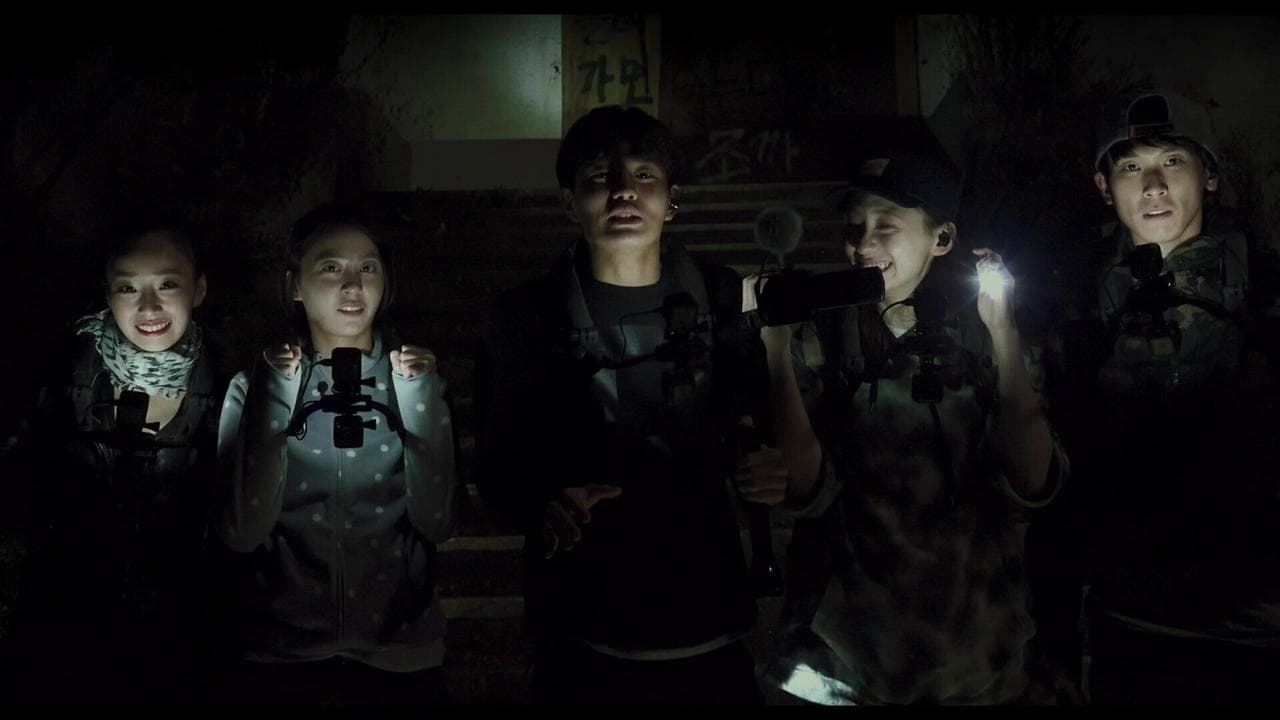
Gonjiam: Haunted Asylum follows a crew of young content creators who travel to South Korea's notorious Gonjiam psychiatric hospital for what they believe will be an easy viral moment. They're planning a live broadcast — the kind of paranormal investigation that's become catnip for internet audiences — but the abandoned building has other plans. What starts as calculated exploration of a real location with a genuinely dark history quickly becomes something neither the crew nor the viewers can control. The deeper they move through the hospital's corridors, the clearer it becomes that they've brought cameras into a place that doesn't want to be documented. It's a premise that works because it taps into something primal: the fear of being trapped somewhere you can't escape, and the knowledge that nobody can help you when the broadcast goes live.
Behind the Making of Gonjiam: Haunted Asylum
Director Jung Bum-shik and co-writer Park Sang-min crafted this film on the foundation of real location history. Gonjiam was an actual psychiatric hospital that operated in South Korea before its closure, and the filmmakers leaned hard into that authenticity — casting Wi Ha-joon, Park Ji-hyun, Oh Ah-yeon, Moon Ye-won, Park Sung-hoon, Yoo Je-yoon, and Lee Seung-wook as ensemble members of the web series crew. The ensemble approach matters here; there's no single protagonist to follow, which means the paranoia spreads across the group in ways that feel organic rather than scripted. Hive Media Corp produced the film with a clear understanding of what makes found-footage horror work in the streaming era: it's not about big-budget scares, it's about the texture of authenticity. The film clocked in at 95 minutes — lean enough to maintain tension without overstaying its welcome — and earned a 7.271 rating on IMDb, a solid score that reflects both its strengths and the fact that found-footage horror remains a divisive subgenre. The production succeeded in creating something that doesn't feel like a traditional horror film, which was precisely the point.
What Makes Gonjiam: Haunted Asylum Stand Out
What's striking about Gonjiam is how it weaponizes the camera itself. The film doesn't just use found-footage as a gimmick — it makes the act of filming the central source of dread. When the crew's equipment catches something they weren't expecting, you're watching it happen in real time, unfiltered, the way the characters are experiencing it. There's no cutaway, no dramatic score swelling to tell you when to be scared. That restraint is harder to pull off than it sounds, and it's what separates this from the endless parade of mediocre paranormal-investigation knockoffs flooding streaming platforms. The performances don't feel "acted" in the traditional sense (which some viewers might find uneven, but that's part of the immersion). What's really working is the crew dynamic — the way they bicker, make jokes to defuse tension, and gradually realize their situation is deteriorating. One moment early on sticks with me: when they're still treating this like a game, laughing at the possibility of ghosts, before the atmosphere of the building itself starts to push back. That tonal shift from confidence to genuine fear is what anchors the entire experience. The film understands that paranormal investigation content thrives on the live-broadcast element — there's no stopping the stream, no second takes, no way to edit out the scary parts. That's the real horror.
Where to Stream Gonjiam: Haunted Asylum Online
Finding Gonjiam: Haunted Asylum is straightforward thanks to its availability across major OTT services. The film has secured distribution on several platforms, making it accessible whether you're a horror completist or someone stumbling onto it by accident. You can check the "Where to Watch" widget at the top of this page for current streaming availability in your region — Movie OTT tracks these listings across services in real time, so you'll always know which platform has it today. Streaming rights shift frequently, especially for international horror films, so it's worth checking before you settle in. The good news is that Gonjiam isn't locked behind obscure platforms; it's found its way onto the services most people already subscribe to, which means there's a decent chance you can start watching within the next few clicks.
Frequently asked questions
Q: Is Gonjiam: Haunted Asylum based on a true story?
The film is set in the real Gonjiam psychiatric hospital in South Korea, which operated before its closure. While the paranormal events depicted are fictional, the location itself has genuine historical significance, which adds an unsettling layer of authenticity to the horror.
Q: Who directed Gonjiam: Haunted Asylum?
Jung Bum-shik directed the film and co-wrote it with Park Sang-min. Bum-shik brought a clear vision for how to make found-footage feel genuinely threatening rather than gimmicky.
Q: How long is Gonjiam: Haunted Asylum?
The film runs 95 minutes, which is deliberately compact for the found-footage format — long enough to build atmosphere and let the crew's situation deteriorate, but short enough that tension never fully dissipates.
Q: What's the IMDb rating for Gonjiam: Haunted Asylum?
The film holds a 7.271 rating on IMDb, reflecting strong appreciation for its immersive approach to paranormal-investigation horror, though found-footage remains a divisive subgenre.
Q: Where can I watch Gonjiam: Haunted Asylum?
The film is currently available on major OTT streaming services. Use the "Where to Watch" widget above to see which platforms have it in your region right now.
Final Thoughts on Gonjiam: Haunted Asylum
If you've grown tired of jump-scares and orchestral stings, Gonjiam: Haunted Asylum offers something different — a slow-burn paranormal experience that trusts the viewer to feel dread without being bludgeoned by it. It's the kind of film that works best late at night, alone, when you're already primed to believe in shadows. The found-footage format isn't for everyone, and the acting won't win awards, but if you're drawn to horror that prioritizes atmosphere over spectacle, this deserves your attention. It's exactly the sort of gem that streaming platforms are perfect for discovering — the kind of international horror that might've been buried in festival circuits a decade ago, now sitting right there in your queue.