







The Story of Guttersnipes and Its Quiet Emotional Core
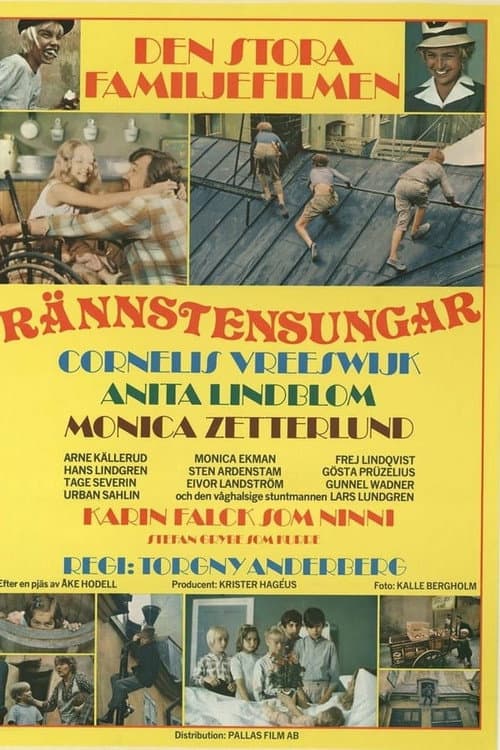
Guttersnipes tells the story of a man with almost nothing—a poor painter scraping by in circumstances that don't afford much hope—who encounters a child living with paralysis. What unfolds isn't a sentimental rescue narrative but something more textured: a gradual, authentic relationship built on proximity, need, and the kind of care that doesn't announce itself. The 97-minute film, released in 1974, carries the subtitle "The big family," a phrase that hints at how unconventional bonds can form and what they come to mean. There's no melodrama here, no swelling strings designed to manipulate tears. Instead, the film sits with its characters, watching how two people on the margins of society find something like purpose in each other.
Behind the Making of Guttersnipes: Swedish Production and Context
Guttersnipes emerged from Swedish cinema during a period when Scandinavian filmmakers were increasingly interested in social realism and the lives of ordinary people. The film was produced by two entities—Allboksförlaget AB and Pallas Film—both rooted in Nordic production traditions that valued authenticity over spectacle. While the film doesn't command the international recognition of some of its contemporaries from the Swedish New Wave, it carries the hallmarks of that era's commitment to character-driven storytelling and unflinching looks at economic hardship. The IMDb rating of 6.9/10 reflects a film that's earned respect among those who've discovered it, though it remains something of a hidden gem in streaming catalogs. Without major star power or a blockbuster premise, Guttersnipes had to succeed on the strength of its performances and its willingness to take its subjects seriously—which, honestly, is harder than it sounds.
Why Guttersnipes Still Resonates: Performance and Thematic Depth
What's striking about Guttersnipes is how it refuses easy answers. The painter isn't a saint. The child isn't inspiration porn. Their relationship develops because they need each other in ways that go beyond sentiment—the painter needs purpose, structure, someone to care for; the child needs an adult who'll see past the disability and treat them as a full person. That's not revolutionary by today's standards, but in 1974, this kind of unsentimental portrayal of disability and poverty was genuinely uncommon. The performances ground everything. You can feel the weight of economic struggle in how the painter moves through the world, the resignation that comes from having tried and failed repeatedly. And the child's performance—there's a specificity there, a refusal to perform "disabled" in the way cinema often demands. What anchors the entire film is this mutual recognition between two people who've been written off by their respective circumstances. I keep coming back to that central dynamic because it's the kind of thing that doesn't date, even when everything else about a film's style or pacing does.
Where to Stream Guttersnipes Online
Guttersnipes is available on major OTT services, and the "Where to Watch" widget at the top of this page will show you exactly which platforms currently carry it in your region—streaming availability shifts regularly, so that's always your most up-to-date source. Movie OTT tracks these changes across services, so you don't have to hunt through five different apps wondering if a title's still there. Given that Guttersnipes isn't a title that gets heavy marketing push, it's the kind of film that benefits from aggregator sites helping viewers actually find it. If you're the type who likes to discover older international dramas, keeping an eye on your preferred streaming service's catalog additions is worth the effort—films like this tend to come and go quietly.
Frequently Asked Questions
Q: When was Guttersnipes released?
Guttersnipes came out in 1974 as a Swedish production. It's now over fifty years old, which makes its thematic concerns with poverty and care feel either timeless or urgently relevant, depending on your perspective.
Q: Who produced Guttersnipes?
The film was produced by Allboksförlaget AB and Pallas Film, both Swedish production companies working within the Nordic cinema tradition of social realism and character-focused storytelling.
Q: How long is Guttersnipes?
The film runs 97 minutes, a lean runtime that doesn't waste time but gives enough space for the relationship between the two main characters to breathe and develop naturally.
Q: What's the plot of Guttersnipes about?
Guttersnipes follows a struggling painter living in poverty who forms an unexpected bond with a child who's paralyzed, exploring themes of human connection, economic hardship, and what family really means beyond blood relations.
Q: Is Guttersnipes available to stream?
Yes. The film is currently available on major OTT services. Check the "Where to Watch" widget at the top of this page for the most current streaming options in your region, as availability varies by location and changes over time.
Final Thoughts on Guttersnipes
Guttersnipes isn't the kind of film that demands your attention through spectacle or manipulation. It asks something quieter: that you sit with two people and watch what happens when they refuse to disappear into their circumstances. It's a film about dignity, about how care works when there's nothing to gain except the relationship itself. If you're looking for something that doesn't insult your intelligence, that trusts you to find meaning without spelling it out, Guttersnipes rewards that kind of attention. Fifty years on, it's still worth seeking out.