









The Story of Happiness for Sale
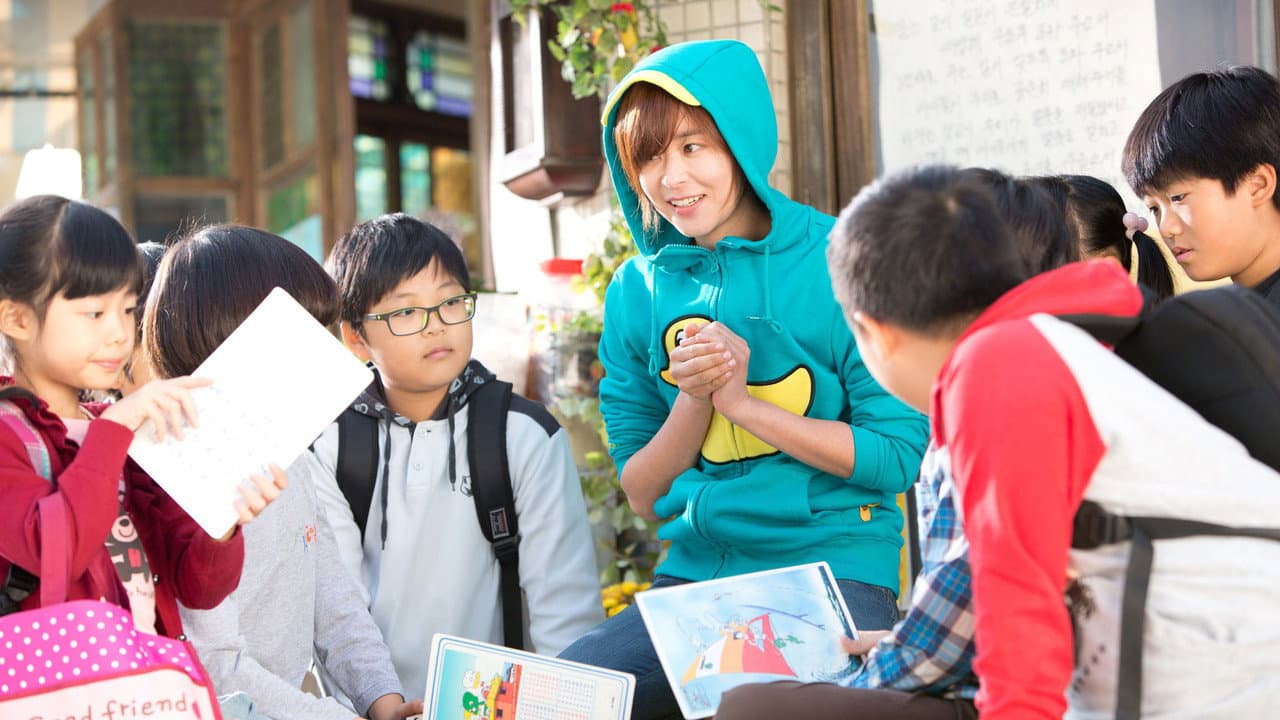
Happiness for Sale opens on a premise that feels deceptively simple: Mi-na's father has had a sudden accident, leaving her to take over the family stationery store. She doesn't want it. The store feels like a burden—a relic of her father's life, not hers—and her plan is straightforward: sell it, move on, start fresh. What she doesn't anticipate is that a small neighborhood stationery shop isn't just a business. It's a gathering place. A refuge. When the store's regular customers learn about her intentions to sell, they push back. Hard. And it's not the adult regulars who prove most difficult to resist—it's the children who've made the store part of their daily lives, their after-school ritual, their small pocket of stability.
The film's central tension isn't really about profit margins or lease agreements. It's about what we owe to the people around us, even when we don't realize we're giving them anything at all. Mi-na came to the store thinking she'd inherited a problem. She doesn't yet understand that she's inherited something far more valuable—and far more complicated.
Behind the Making of Happiness for Sale
Happiness for Sale arrived in 2013 as a co-production between several major South Korean entertainment companies: Lotte Entertainment, KEYEAST, Union Investment Partners, and Daemyung Culture Factory. The film's 106-minute runtime gives it room to breathe—it's not a quick, punchy comedy but rather a character-driven piece that takes its time exploring the emotional layers beneath what could've been a simple feel-good story. The ensemble cast brings genuine warmth to the material, and the production team's attention to the intimate spaces of the stationery store—the shelves, the counter, the quiet moments—grounds the film in a sense of place that matters.
While Happiness for Sale didn't become a blockbuster phenomenon, it found an audience among viewers who appreciate quieter, more contemplative storytelling. The film currently holds a 6.3/10 rating on IMDb, a score that reflects its modest but genuine appeal rather than universal acclaim. It's the kind of film that connects deeply with some viewers while leaving others unmoved—which is often the mark of something sincere rather than something calculated for maximum reach. The production values are solid throughout, with cinematography that captures both the coziness of the store and the emotional texture of Mi-na's internal struggle.
What Makes Happiness for Sale Stand Out
What's striking about Happiness for Sale is how it refuses to make Mi-na's initial selfishness feel villainous. She's not wrong to want a different life. She's not wrong to see the store as a weight. The film respects her perspective even as it gradually reveals why the people around her are fighting so hard to keep it open. That's a difficult balance to strike—most films tip into sentimentality or judgment, but this one stays curious about all sides.
The performances anchor everything. There's a real chemistry between Mi-na and the regulars, especially the children, that doesn't feel manufactured. Watch the scenes where kids browse the shelves, picking out notebooks and pencils with genuine joy, and you'll notice the film isn't manipulating you into tears—it's just showing you what's actually happening in this space. The thing nobody mentions is that the best scenes aren't the dramatic confrontations but the quiet moments: customers chatting while Mi-na restocks, kids doing homework at a corner table, the rhythms of a place that's become essential to people's daily lives.
The comedy works because it emerges from character and situation rather than forced gags. There's humor in Mi-na's exasperation, in the customers' stubborn determination, in the gap between what she wants and what the world keeps insisting she needs. It's the kind of film that makes you smile rather than laugh out loud—though there are genuine laughs too. And underneath it all is a genuine emotional core about belonging, community, and whether we can ever really escape the roles other people need us to play.
Where to Stream Happiness for Sale Online
Happiness for Sale is available across major OTT services, making it easy to find regardless of which streaming platform you already subscribe to. Rather than hunting across multiple apps, Movie OTT tracks current streaming availability so you can see exactly where the film is playing right now. The "Where to Watch" widget at the top of this page shows you every platform carrying the title, updated in real time. Since streaming rights shift regularly, checking Movie OTT before you settle in ensures you'll know exactly where to find it without the frustration of searching blind.
The 106-minute runtime makes it a perfect weeknight watch—long enough to feel substantial, short enough that you won't feel like you're committing to an epic undertaking. It's the kind of film that works well in the evening, when you're in the mood for something that'll make you feel something without demanding you stay awake until midnight.
Frequently Asked Questions
Q: Who directed Happiness for Sale?
The film was directed by Lee Jae-kyoo and released in 2013. It's a South Korean production that brought together multiple major entertainment companies to tell its story about inheritance and community.
Q: Is Happiness for Sale based on a true story?
No, it's an original screenplay. While it feels grounded and realistic, the film is a fictional exploration of themes around family obligation, community, and what we inherit from our parents—both materially and emotionally.
Q: What's the runtime of Happiness for Sale?
The film runs 106 minutes, giving the story enough time to develop its characters and explore the emotional stakes without overstaying its welcome.
Q: Is Happiness for Sale a comedy or a drama?
It's both. The film blends comedy and drama, using humor to explore serious themes about obligation, belonging, and what it means to be part of a community. The tone shifts between funny and touching, sometimes within the same scene.
Q: Where can I watch Happiness for Sale right now?
Check the "Where to Watch" widget at the top of this page for current availability across all major OTT platforms. Streaming rights vary by region and change over time, so Movie OTT keeps the information updated so you'll always know where to find it.
Final Thoughts on Happiness for Sale
Happiness for Sale is a film about discovering that the life you didn't choose might be the one you actually need. It won't blow your mind with innovation or technical virtuosity, but it will sit with you—especially if you've ever felt torn between obligation and desire, between what you want and what the people around you need from you. The stationery store becomes a character itself, a space where small moments accumulate into something that matters. It's a quiet film about quiet things, and sometimes that's exactly what we're looking for. If you appreciate character-driven stories that trust their audiences to find meaning in small moments, this one's worth your time.