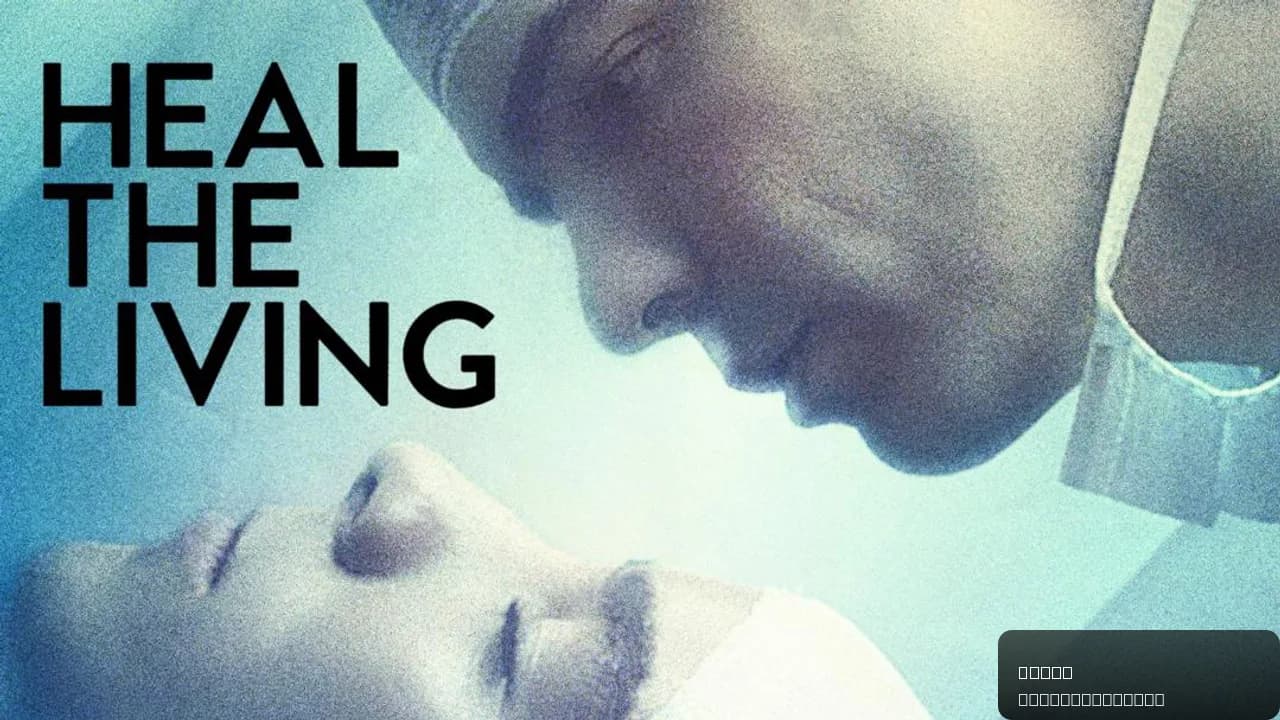

The story of Heal the Living
Heal the Living opens with an image that stays with you: three young surfers riding the raging Atlantic at daybreak, their bodies moving in sync with the water. It's a moment of pure vitality—youth, freedom, the kind of morning that feels like it'll stretch forever. But the film's title tells you something's coming. A few hours later, on the way home, an accident occurs. That's all you need to know going in. What follows isn't a medical thriller or a weepy tearjerker, but something more ambitious: a meditation on how a single catastrophic moment can ripple outward, touching the lives of people who'll never meet, connected only by the invisible thread of human need and the possibility of redemption through donation.
Director Katell Quillévéré, adapting Maylis de Kerangal's 2013 novel Réparer les vivants, structures the film around three distinct but interwoven narratives. There's the family of the young surfer whose accident sets everything in motion. There's the medical team—the surgeons, nurses, and coordinators who work through the night to assess viability and manage the impossible logistics of transplantation. And there's the family waiting on the other side, desperate and hopeful, watching their own loved one slip away while holding onto the possibility that someone else's tragedy might be their salvation. It's a structure that could easily feel gimmicky in less careful hands, but Quillévéré trusts the material—and trusts her audience—to follow the emotional through-line without heavy-handed exposition.
Production, cast and recognition for Heal the Living
Heal the Living premiered in the Horizons section at the 73rd Venice International Film Festival in 2016, a selection that signaled the film's artistic ambitions from the start. The Horizons program at Venice typically showcases innovative, boundary-pushing cinema that resists easy categorization—not quite mainstream, not purely avant-garde, but something searching and formally inventive. That context matters because it explains why this film, despite its subject matter, doesn't play like a conventional medical drama.
The cast is anchored by Tahar Rahim, an actor with serious dramatic credentials (he's been in everything from A Prophet to The Mauritanian), alongside Emmanuelle Seigner, Anne Dorval, Bouli Lanners, and Kool Shen. Rahim brings a particular gravity to his role—there's a restraint in his performance that mirrors the film's own aesthetic, a refusal to milk emotion from scenes that could easily become manipulative. Seigner and Dorval, both powerhouse European actors, carry the weight of the waiting families with a kind of quiet devastation that's all the more affecting for its understatement. The ensemble cast works as a kind of distributed protagonist, which is exactly what Quillévéré wants: no single hero, just people trying to survive an impossible situation.
The film has an IMDb rating of 6.2/10, which honestly feels low for what's on screen—though ratings can be skewed by viewers expecting something different from what they found. It's 103 minutes long, which is precisely the right length: long enough to breathe and develop its interconnected stories, short enough that it never feels self-indulgent. The film's production design and cinematography emphasize clinical spaces (hospital corridors, operating theaters) against intimate domestic moments, creating a visual tension that mirrors the film's thematic concerns. Quillévéré and cinematographer Manuel Dacosse use natural light wherever possible, which gives the hospital scenes an almost documentary-like authenticity.
What makes Heal the Living stand out
What's striking about Heal the Living is that it refuses to sentimentalize organ donation or position any single person as a hero. That's the thing nobody mentions when they talk about this film—it doesn't want your tears, exactly. It wants your attention. It wants you to sit with the bureaucratic reality of transplantation, the paperwork and the waiting and the coordination that has to happen across multiple institutions and families simultaneously. There's a sequence where the surgical team is simply doing their work, moving through protocols, and Quillévéré films it with an almost Brechtian distance. You're watching the machinery of medicine, but you're also watching people who care deeply trying to do right by someone they've never met.
The performances never tip into melodrama, which is crucial. Rahim, in particular, carries scenes of profound grief with barely a flicker of expression—you see it in how he holds his body, the way he moves through a room. Seigner and Dorval do something similar on the other side of the equation, their hope and desperation expressed through glances and silences rather than monologues. This restraint could feel cold in less skilled hands, but here it's the whole point. These are people in shock, people trying to function through systems they don't fully understand, and that's what the film captures.
One scene that lingers: the moment when the medical team has to make the decision to approach the family about donation. There's no manipulation, no emotional music swelling—just a doctor and a family in a room, and the terrible clarity of what's being asked. That's Quillévéré's gift as a filmmaker. She trusts that the situation itself is dramatic enough. You don't need to add anything to it.
Audience reviews have noted the film's power as an awareness piece about organ donation. It's not preachy—there's no character turning to camera to explain why donation matters—but you can't watch Heal the Living without thinking differently about what it means to be a donor, about the families on both sides of that equation, about how one person's tragedy can quite literally give life to someone else. That's not manipulation. That's just what happens when you tell this story honestly.
How to stream Heal the Living online
Heal the Living is currently available on Prime Video, where you can stream it whenever you're ready to commit to its 103-minute runtime. (And honestly, it's the kind of film that demands your full attention—not something to half-watch while scrolling your phone.) The Movie OTT streaming widget at the top of this page will show you real-time availability across all platforms, so if you're checking from a different region or at a different time, you'll want to verify current listings there. Prime Video's library is constantly shifting, so it's worth bookmarking that widget if you're a frequent streamer trying to catch films like this before they rotate off.
The film's deliberate pacing and quiet cinematography actually benefit from a home viewing experience—you're not fighting theater distractions, and you can pause if you need to sit with a moment. That said, if you ever get the chance to see it on a big screen, the compositions are worth it. Quillévéré and her cinematographer frame scenes with real care, and the hospital lighting design has a kind of austere beauty that deserves space.
Frequently asked questions
Q: Is Heal the Living based on a true story?
No, but it's based on a novel. Katell Quillévéré adapted the screenplay from Maylis de Kerangal's 2013 novel Réparer les vivants (which translates to "Repair the Living"). While the specific story is fictional, the medical and emotional realities depicted are drawn from real transplant protocols and genuine human experiences.
Q: Who directed Heal the Living?
Belgian-French director Katell Quillévéré directed the film. She co-wrote the screenplay with Gilles Taurand. Quillévéré has built a career making character-driven dramas that explore emotional complexity without melodrama.
Q: What's the runtime of Heal the Living?
The film runs 103 minutes, which gives it enough time to develop its three interconnected narratives without feeling bloated or rushed.
Q: Is Heal the Living a documentary or a drama?
It's a narrative drama, though it's shot with a documentary-like aesthetic in places—particularly in the hospital sequences, where Quillévéré emphasizes procedural realism over theatrical emotion.
Q: What's the IMDb rating for Heal the Living?
The film has a 6.2/10 rating on IMDb. While that might seem modest, it reflects the polarizing nature of slow-burn character dramas—some viewers connect deeply with its restrained approach, while others find it too quiet or paced too deliberately.
Final thoughts on Heal the Living
Heal the Living isn't easy cinema, but it's necessary cinema. It doesn't ask you to feel a particular way so much as to witness something true—the collision of grief, hope, bureaucracy, and the possibility of redemption that happens when one person's ending becomes another person's beginning. Tahar Rahim and the ensemble cast carry you through that collision with a kind of dignified restraint that's genuinely rare in contemporary drama. If you're the kind of viewer who appreciates films that trust you to find the emotion rather than having it delivered to you, this is absolutely worth your time. Streaming on Prime Video makes it accessible, but accessible doesn't mean easy. That's the film's strength.