The Story of Hiding Out
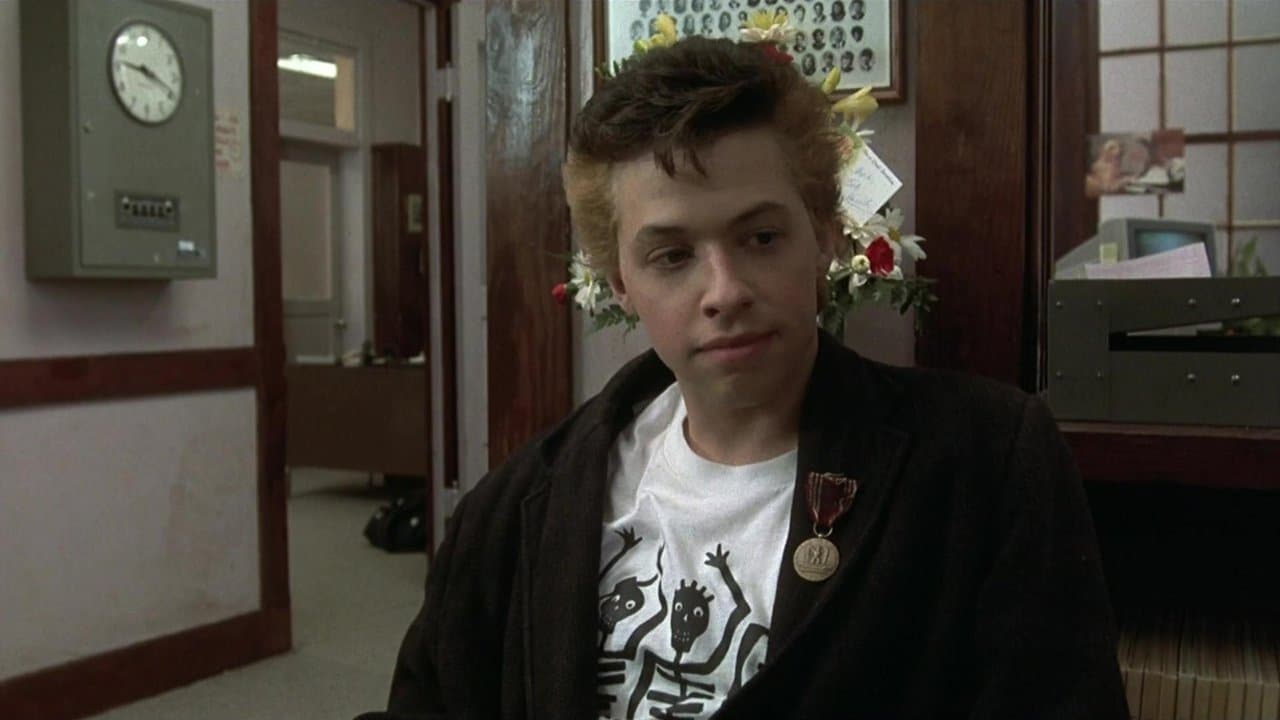
Andrew Morenski is living the dream. He's a successful stock broker with a corner office, a sharp suit, and all the trappings of adult achievement—until the moment he agrees to testify against a mob boss involved in insider trading. What follows is the kind of setup that could play as pure thriller: a colleague who was supposed to testify gets murdered, and suddenly Andrew isn't just a witness anymore. He's a target. The police offer him protection, but there's a catch. A significant one. Instead of hiding in some nondescript safe house across the country, Andrew must go back to high school. Not as a teacher, not as a parent volunteer, but as a student. Assume a new identity—Max Hauser—enroll in classes, eat in the cafeteria, and somehow blend in while the mob hunts for him on the outside. It's a premise that sounds absurd on paper, which is precisely the point.
Behind the Making of Hiding Out
Produced by DEG, Evenmore Entertainment, and Locomotion Pictures, Hiding Out arrived in 1987 as a modest studio offering that tried to straddle two genres at once. The film runs 98 minutes—tight enough to keep things moving, long enough to actually develop its central character beyond the gimmick. Jon Cryer carries the lead as Andrew/Max, bringing a kind of earnest vulnerability to a role that could've been pure comedy fodder in less capable hands. The supporting cast includes Annabeth Gish, who'd go on to more substantial dramatic work, and the always-reliable Keith Szarabajka as one of the mob heavies. What's interesting about the production is that it never fully commits to either comedy or thriller; instead, it wobbles between both, treating the high school setting with genuine observation rather than just mining it for jokes. The film didn't set the box office on fire—it was the kind of mid-tier release that found its real audience later, on home video and cable, where its particular blend of humor and menace could breathe a little. While it didn't rack up major awards recognition, the film has maintained a modest cult following among those who appreciate its willingness to treat teenage social anxiety as legitimately terrifying, maybe more so than actual mobsters.
What Makes Hiding Out Stand Out
Here's the thing that actually works about Hiding Out: it's not cynical about high school. That's rare. Most films treat the teenage years as either a punchline or a tragedy, but this one—and I keep coming back to this—seems genuinely interested in the specific humiliations and social minefields that make adolescence genuinely frightening. Andrew's terror at navigating cafeteria politics, at trying to figure out where to sit, at the prospect of going to prom with someone he barely knows, isn't played entirely for laughs. There's real dread underneath it. Cryer's performance anchors this balance; he's not winking at the camera, he's actually sweating through the experience. The mob subplot provides external pressure, sure, but the internal pressure—fitting in, making friends, understanding why Jennifer won't talk to him—that's where the real stakes live. The romance angle with Gish's character doesn't feel tacked on either; it's tangled up with Andrew's need to be seen as normal, to be accepted, to be someone other than a frightened adult pretending to be a kid. Critics at the time gave it a mixed reception (it currently sits at 5.7 on IMDb), but that's partly because they were looking for either a straight comedy or a straight thriller, not this hybrid thing that refuses to choose. What's striking is how the film's central anxiety—can you ever really fit in if you're fundamentally pretending?—ends up being more interesting than either genre could've been alone.
Where to Stream Hiding Out Online
If you're hunting for Hiding Out, you'll find it available across major OTT services. The beauty of using Movie OTT is that you don't have to guess which platform has what—the site aggregates current streaming availability so you can see at a glance where you can watch it right now. Since streaming rights shift constantly (a title might be on one service this month and gone next), that widget at the top of this page is your real-time source of truth. Whether it's on a subscription service you already have or whether you need to rent it, Movie OTT tracks it all. Just check the "Where to Watch" section, and you'll know instantly where to find it.
Frequently Asked Questions
Q: Is Hiding Out based on a true story?
No, Hiding Out is a fictional screenplay. The premise—a witness going into protection—is inspired by real witness protection concepts, but Andrew Morenski and his high school adventure are entirely invented. The filmmakers used the setup as a springboard for exploring both mob-thriller and coming-of-age comedy themes.
Q: Who directed Hiding Out?
The film was directed by Bob Giraldi, a filmmaker who worked across both music videos and feature films. Giraldi brought a visual sensibility that helped balance the film's tonal shifts between comedy and thriller.
Q: How long is Hiding Out?
The film runs 98 minutes, making it a fairly lean watch that doesn't overstay its welcome. It's long enough to develop its characters but short enough to maintain momentum across both the mob and high school storylines.
Q: What rating is Hiding Out?
The film carries a PG-13 rating, which makes sense given its blend of light violence, teenage romance, and comedic situations. It's accessible to a wide audience without being entirely sanitized.
Q: Can I watch Hiding Out with my family?
That depends on your family's tolerance for mob violence and high school social dynamics. There's no graphic content, but there are moments of genuine peril and some language. Most families with teenagers would find it appropriate, though younger kids might find the mob threat a bit intense.
Final Thoughts on Hiding Out
There's something oddly endearing about Hiding Out. It's not a perfect film—the tonal shifts don't always land, and the thriller elements sometimes feel like they're in a different movie from the romance. But it commits to its premise without winking, and it treats its protagonist's social anxiety with as much weight as his physical danger. If you're looking for an '80s film that's willing to be sincere about the actual terrors of teenage life while also delivering mob-movie thrills, you could do worse. It's the kind of movie that deserves a second look.