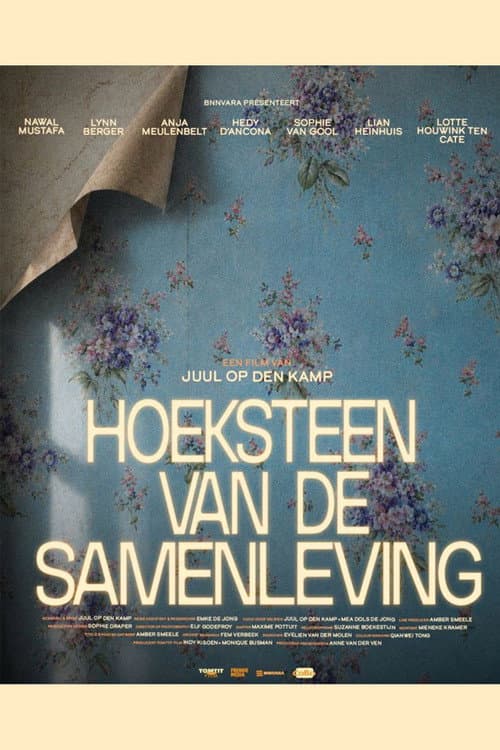
Hoeksteen van de Samenleving: What Dutch Family Life Actually Looks Like
Hoeksteen van de Samenleving (Cornerstone of Society) premiered on NPO 2 on June 7, 2026, and it's a 61-minute documentary that quietly dismantles one of the Netherlands' most comfortable myths: that Dutch families have actually solved the equality problem. Director Juul Op den Kamp doesn't yell about it. She just shows you the data — and then introduces you to the people living inside it.
Why this documentary matters more than the title suggests
The film opens with something you've seen a hundred times: a Dutch family at the dinner table. Warm. Functional. Equal, or so they believe. What Op den Kamp does next is the whole point — she asks questions that shouldn't feel radical but absolutely do. Who cooks? Who leaves work early for the sick kid? Who remembers the dentist appointment? And why do answers to those questions look almost identical across households that swear they're different?
What's striking is that she doesn't lead with sociology lectures. She leads with people. Real Dutch families talking about their days, their invisible divisions of labor, their quiet compromises — the stuff nobody brings up at dinner parties. Only then does Op den Kamp layer in the harder material: the statistics showing that care work is still disproportionately absorbed by women, even in households that consider themselves progressive. By that point, you're not being lectured. You're being shown something you recognize.
The film weaves in historical context that traces how the post-war Dutch ideal of the gezin (the nuclear family unit) wasn't some natural cultural artifact — it was constructed. Shaped by policy. By economic convenience. That reframing matters. Once you see the family not as an organism but as a social technology, you can't unsee it. And honestly, that's where the discomfort starts.
How the production came together
This is a co-production between BNNVARA, Tomtit Film, and Frenkie Media, backed by the CoBO Fonds, a Dutch public funding body that supports documentary and fiction projects with cultural weight. That institutional support meant Op den Kamp didn't have to rush. She had the runway to build an argument carefully — layering historical context beneath contemporary testimony in a way that feels considered rather than like a news segment.
The film landed on NPO Start (the Dutch public broadcaster's free streaming platform) following its television premiere, which meant immediate availability for Dutch viewers. De DocUpdate reported ahead of broadcast that the production aimed to connect structural economic data to lived experience — harder to pull off than it sounds.
Because it arrived mid-2026, the usual aggregator scores (Rotten Tomatoes, Metacritic) aren't yet available. What exists instead is editorial attention and audience conversation, particularly around Op den Kamp's central claim: the Dutch family hasn't changed nearly as much as the Netherlands likes to believe. If you're tracking where documentaries like this land across platforms, Movie OTT's where-to-watch aggregator tracks availability across regions — useful if you're outside the Netherlands.
The film's strongest intellectual move
Op den Kamp avoids the trap that kills most socially conscious documentaries: preaching to people who already agree with you. The argument builds from the ground up. Personal testimony first. Data second. By the time you hit the harder structural evidence — the kind that shows how care work divides along predictable lines even in "modern" households — it lands differently than it would in a PowerPoint.
I keep coming back to one thing: the historical thread. Archival material showing how the post-war family ideal was literally sold to Dutch households as progress, when it was really just convenient for the economy. That's not polemical. That's someone finally saying the quiet part out loud. LINDA.nl's coverage noted that Op den Kamp connects personal frustration to systemic cause — which is genuinely difficult in under 61 minutes without feeling reductive. The personal stories carry weight. The data points land with force. Because you've already met the people behind them.
Where to actually watch it
Available on NPO Start, the free on-demand platform run by NPO. That's the primary home for now. Availability is primarily for Dutch residents, though geo-restrictions can vary by region.
The Where-to-Watch widget at the top of this page has current platform listings — streaming rights shift constantly. If you're in another country and looking for legal options, Movie OTT aggregates what's available in your region so you're not hunting across a dozen tabs. Hard to say if wider international distribution is planned, but given the film's subject matter and public funding roots, NPO Start remains the primary home.
Who should actually watch this
Anyone who's ever sat at a table and felt the invisible weight of an unspoken arrangement. Anyone who's wondered if the family they grew up in — or the one they're building now — is as equal as it looks from outside. You don't need to be a policy expert or gender studies graduate. You just need to have lived in a family and noticed something off about how the work actually divides.
Thoughtful. Compact. Genuinely unsettling in the best way. The runtime means you can watch it in one sitting, which matters — the argument accumulates.
Key Details:
- Director: Juul Op den Kamp
- Runtime: 61 minutes
- Premiered: June 7, 2026 on NPO 2
- Streaming: NPO Start (free)
- Genres: Documentary
- Production: BNNVARA, Tomtit Film, Frenkie Media (with CoBO Fonds support)