
The story of How to Be a Good Wife
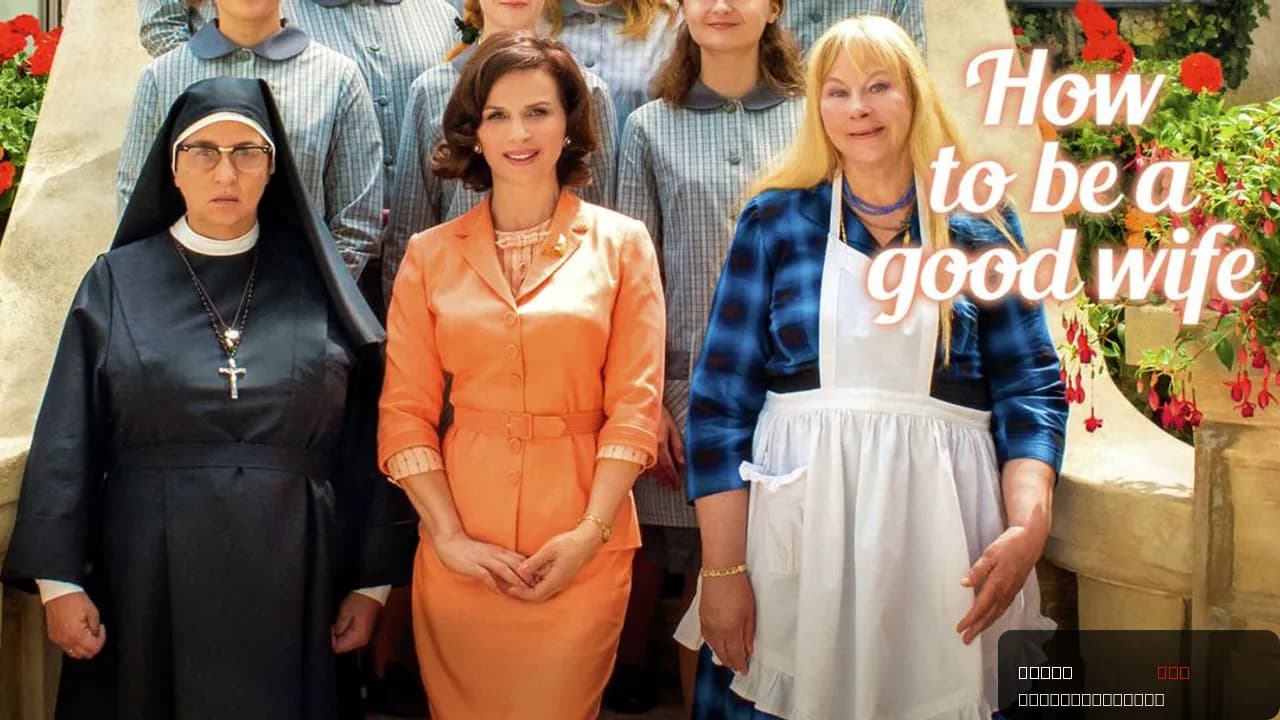
How to Be a Good Wife opens in 1967 in Alsace, France, where Paulette Van der Beck runs a prestigious homemaker institute—a school dedicated to teaching young women the arts of domestic perfection. She's the picture of propriety, the embodiment of everything her institution preaches, a woman so committed to the ideals of wifehood that she's practically disappeared into the role. Then her husband dies, and suddenly everything changes. What begins as a crisis of financial survival becomes something far more interesting: an unexpected awakening. Juliette Binoche plays Paulette with a kind of buttoned-up grace that makes her eventual unraveling all the more satisfying to watch. The film follows her as she grapples with taking over the school's leadership, managing its debts, and—most unexpectedly—discovering that there's a whole version of herself she's never been allowed to explore.
Behind the making of How to Be a Good Wife
Director Martin Provost brings a light, observant touch to what could have been a heavy-handed story about female constraint and liberation. Released in 2020, the film runs 109 minutes and features a strong ensemble cast alongside Binoche, including Yolande Moreau, Noémie Lvovsky, Édouard Baer, and François Berléand. The period setting—that specific moment in late 1960s France when the old certainties were beginning to crack—gives the story real historical weight without ever feeling like a lecture. Provost's background in comedy is evident throughout; he knows how to find humor in the collision between rigid social expectations and human desire without ever letting the comedy undercut the genuine stakes. The production design captures the aesthetic of postwar French domesticity with precision—the school itself becomes almost a character, all clean lines and carefully arranged furniture, the physical embodiment of control. What's striking is how the film manages to be both a period piece and something that speaks to contemporary audiences about the cost of conformity.
What makes How to Be a Good Wife stand out
Binoche's performance is the film's backbone. She doesn't play Paulette as oppressed or downtrodden; instead, she's competent, intelligent, and genuinely invested in her world—which makes the cracks in that world all the more poignant. There's a scene early on where she's teaching a class on proper table setting, and you can see in her face that she's both completely committed to this knowledge and, somewhere deep down, aware of how absurd the precision matters. The supporting cast works beautifully around her—Moreau as a fellow widow brings a knowing warmth, and the younger women in the school provide a kind of mirror to the choices Paulette never had. What I keep coming back to is how the film doesn't mock its own world. It would be easy to make fun of a 1960s housekeeping school, to treat it as obviously ridiculous from a modern perspective. Instead, Provost seems genuinely interested in why these women believed in what they were doing, and what happens when circumstances force them to believe in something different. The IMDb rating of 5.7/10 suggests the film's reception was mixed, but that's often the case with comedies that refuse to punch down at their subjects. The humor here is generous and observant rather than cruel.
Where to stream How to Be a Good Wife online
How to Be a Good Wife has found its way onto an impressive array of streaming platforms, making it relatively easy to track down depending on where you subscribe. You'll find it on Netflix, Prime Video, and Canal+, among many others including Amazon Prime Video with Ads, Tubi TV, The Roku Channel, and various VOD platforms like Apple TV Store, Google Play Movies, and YouTube. Movie OTT maintains an up-to-date tracker of where this title is currently streaming—since availability shifts by region and platform, the "Where to Watch" widget at the top of this page will show you exactly which services have it available right now in your area. If you're browsing French cinema or looking for character-driven comedies, this one's worth hunting down on whichever platform you already have access to.
Frequently asked questions
Q: Who directed How to Be a Good Wife?
Martin Provost directed the film. He's known for his ability to find comedy and humanity in stories about social constraint and personal reinvention, and that sensibility shapes every frame of this 2020 release.
Q: Where can I watch How to Be a Good Wife?
The film is available on numerous platforms including Netflix, Prime Video, Canal+, Tubi TV, The Roku Channel, and many VOD services. Check the "Where to Watch" widget on this page for current availability in your region.
Q: Is How to Be a Good Wife based on a true story?
The film is a fictional narrative, though it's grounded in the real historical context of 1960s France and the very real institutions that taught women domestic skills. It's not an adaptation of a specific true story, but rather Provost's original screenplay about that era and those expectations.
Q: What is the runtime of How to Be a Good Wife?
The film runs 109 minutes, giving Provost enough time to develop both the comedy and the genuine emotional stakes of Paulette's transformation.
Q: Who stars in How to Be a Good Wife?
Juliette Binoche carries the film as Paulette Van der Beck, with strong supporting performances from Yolande Moreau, Noémie Lvovsky, Édouard Baer, and François Berléand among others.
Final thoughts on How to Be a Good Wife
This is a film that rewards patience and attention. It's not trying to be a grand statement about feminism or social change—it's simply interested in one woman's quiet revolution, the small ways that grief and circumstance can crack open a life and let something new grow through the cracks. If you're looking for French cinema that's intelligent without being pretentious, or comedy that trusts its audience to find depth in character rather than punchlines, How to Be a Good Wife deserves your time. It's the kind of film that Movie OTT's streaming guides help you discover—a solid mid-tier gem that won't blow your mind but might genuinely move you.