The Story of I Die Alone
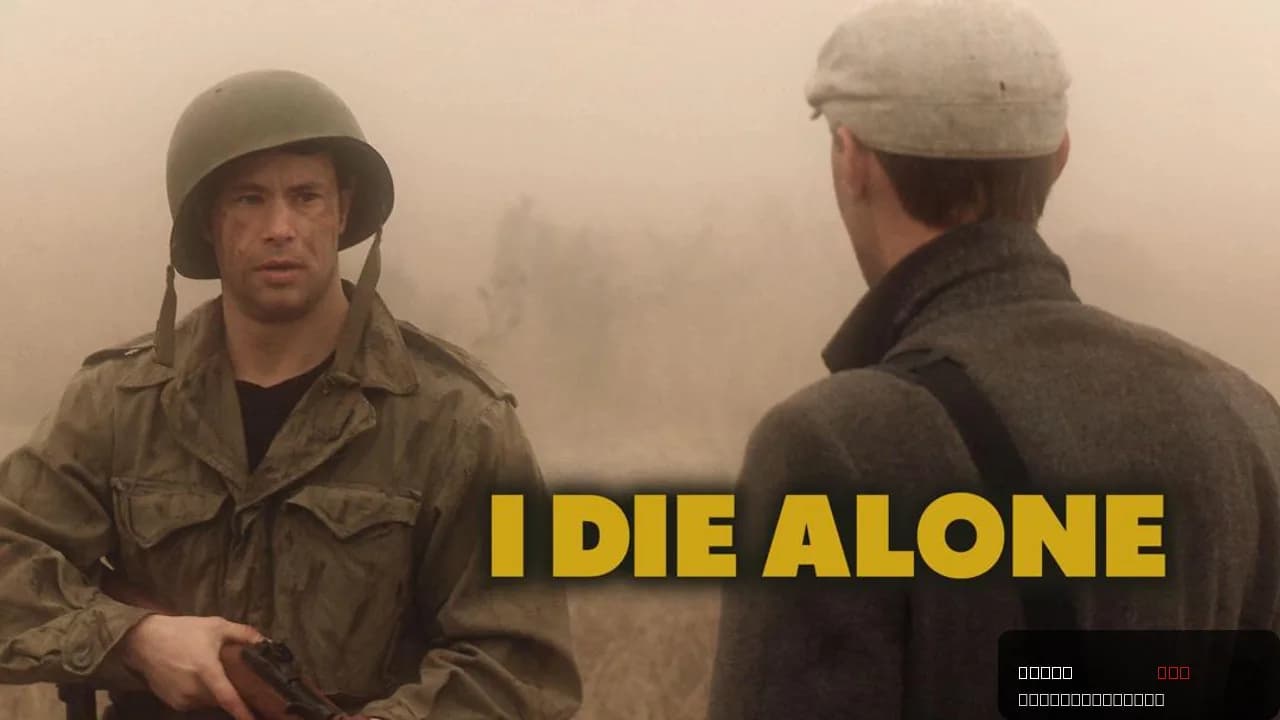
I Die Alone tells the story of an American soldier who must fight his way through enemy lines after an unexpected massacre of his platoon during the Korean War in 1953. Isolated, outnumbered, and cut off from any hope of immediate rescue, the protagonist faces not just the physical threat of enemy combatants but the psychological weight of being the sole survivor. The film strips away the grand-scale battle sequences that typically define war cinema, instead focusing on what happens when one man is left to navigate hostile territory with nothing but his training, determination, and will to survive. It's a premise that sounds straightforward until you realize the film isn't interested in easy heroics — it's interested in what survival actually costs.
Behind the Making of I Die Alone
Director Michael Fredianelli helmed this 2013 production with a lean cast that includes Carl Joseph Schreiber in the lead role, alongside Marc Litman, Peter Stylianos, Michael Nosé, Jeremy Koerner, Steve Huang, and Jonah Katz. At 101 minutes, the film operates as a contained, character-driven narrative rather than a sprawling military epic. Independent war films occupy a peculiar space in cinema — they rarely command the budgets or distribution networks of studio productions, yet they often attract filmmakers willing to take creative risks that bigger productions can't afford to take. Fredianelli's work here reflects that indie sensibility: focused storytelling, a tight ensemble, and the kind of creative constraints that sometimes force more inventive solutions than unlimited resources would.
The cast brings a naturalistic quality to their performances, avoiding the melodrama that can sometimes plague lower-budget productions. Schreiber carries much of the film's emotional weight, and the supporting players ground the narrative in a kind of gritty authenticity. Without major award recognition or significant box office returns — which isn't unusual for independent war dramas — the film has found its audience through streaming platforms and word-of-mouth discovery. Movie OTT tracks where titles like this are currently available, making it easier for viewers to find smaller productions that might otherwise slip through the cracks.
What Makes I Die Alone Stand Out
The film currently holds a 4.4 rating on IMDb, which tells you something important: this isn't a universally beloved crowd-pleaser, and it doesn't pretend to be. What's striking is that it seems to divide viewers between those who appreciate its uncompromising approach to survival storytelling and those who find it slow or emotionally distant. That divide is actually the film's strength. It refuses to manipulate you with manufactured emotional beats or patriotic grandstanding. Instead, it asks you to sit with a man in crisis, to experience his desperation, his exhaustion, his moments of doubt — and to do so without a swelling orchestral score telling you how to feel about it.
The performances don't strain for effect. There's no monologue where the protagonist explains his feelings or his past. He's simply trying to stay alive, and that single-minded focus creates a kind of tension that doesn't need explosions or elaborate set pieces to sustain itself. I keep coming back to the film's willingness to let scenes breathe, to let silence do some of the work — which is a risky choice in a genre where audiences often expect constant action. The Korean War setting itself is interesting because it's a conflict that doesn't receive nearly as much cinematic attention as World War II or Vietnam, so there's a freshness to seeing it treated with this kind of intimate, unglamorous focus.
Where to Stream I Die Alone Online
If you're looking to watch I Die Alone, you can currently find it on Prime Video. The film's availability may vary depending on your region and subscription status, so it's worth checking the where-to-watch widget at the top of this page for the most up-to-date information. Movie OTT helps viewers navigate the fragmented streaming landscape by tracking which platforms carry which titles, so you won't waste time hunting across multiple services. For indie films like this one, streaming platforms have become crucial distribution channels — they've given smaller productions access to audiences that theatrical releases alone could never reach. If you're a subscriber to Prime Video, this is the kind of hidden gem worth exploring when you're looking for something that won't follow the conventional war-film playbook.
Frequently Asked Questions
Q: Who directed I Die Alone?
Michael Fredianelli directed the film. It's a relatively lean production that reflects his indie sensibility and willingness to focus on character-driven storytelling over spectacle.
Q: When does I Die Alone take place?
The film is set during the Korean War in 1953, following an American soldier who becomes separated from his unit after an ambush. This historical setting gives the narrative a specific context while exploring broader themes of survival and isolation.
Q: Is I Die Alone based on a true story?
The film is a fictional narrative, not based on a specific true story, though it draws on the historical reality of the Korean War and the kinds of situations soldiers faced during that conflict.
Q: How long is I Die Alone?
The film runs 101 minutes, making it a relatively compact war drama that doesn't linger on subplots or secondary storylines — it stays focused on its central survival narrative.
Q: Where can I watch I Die Alone?
I Die Alone is currently available on Prime Video. You can check the where-to-watch widget on this page to confirm current availability in your region.
Final Thoughts on I Die Alone
I Die Alone isn't trying to be Saving Private Ryan or a Hollywood war epic. It's a quieter, more introspective take on survival, one that asks you to stay with a protagonist through his worst moments without promising catharsis or redemption. That won't work for everyone — and that's okay. But for viewers who appreciate war films that prioritize character and psychological tension over action sequences, who don't mind a film that ends ambiguously rather than neatly, this one's worth seeking out. It's exactly the kind of independent production that streaming platforms were made for.