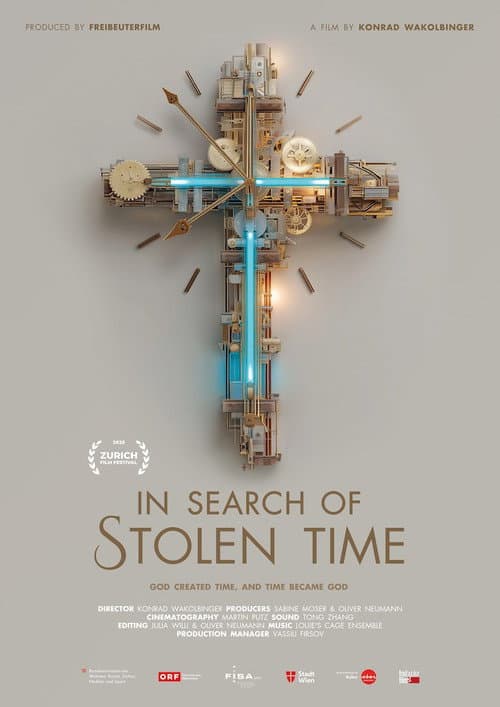
In Search of Stolen Time: A Documentary About Why Your Schedule Isn't Really Yours
Director: Konrad Wakolbinger | Runtime: 86 minutes | Year: 2026 | Country: Austria
Here's the thing about "time is money" — you've heard it a thousand times, and you've probably never stopped to ask where it actually came from. Konrad Wakolbinger's In Search of Stolen Time does exactly that. It traces the phrase back through centuries, showing how the relationship between work and time shifted from seasonal rhythms in medieval Europe to the clock-punching present we're stuck in now. The film doesn't lecture. Instead, it uses subtle humor and real people's faces to make you uncomfortable in a way that lingers.
What makes this documentary different from the usual work-culture critique
Most films about labor and productivity end up wagging a finger at capitalism and calling it a day. This one doesn't. What's striking is Wakolbinger's tone — genuinely curious rather than outraged, which makes the whole thing harder to dismiss once it's over. He's not angry at the system; he's asking you to notice it exists in the first place.
The film cuts between historical framing and contemporary interviews, and that transition feels almost jarring — like the director's daring you to see yourself in the same continuum as a medieval peasant whose time also wasn't entirely their own. It's uncomfortable. Probably intentional. The lightly humorous register keeps you from checking out, which is precisely why the film works better than the doom-and-gloom strain of productivity criticism that's everywhere right now.
I keep coming back to one sequence where a modern office worker describes their schedule, and the film cuts it against a medieval woodcut. The parallel lands harder than it should, which tells you something about the filmmaking.
How this Austrian documentary came together
Auf der Suche nach der gestohlenen Zeit (the original Austrian title) was produced by FreibeuterFilm, a Vienna-based production company, with producers Oliver Neumann and Sabine Moser backing Wakolbinger's vision. The Austrian Film Commission funded it — and that matters, because Austrian documentary funding tends to favor work with genuine philosophical ambition rather than pure commercial appeal.
The film premiered in the Zurich Film Festival 2025 documentary competition, a meaningful debut slot in the festival circuit. It also screened at Crossing Europe, which means it's building credibility in the European documentary world before moving toward wider distribution. As of now, there are no Rotten Tomatoes or Metacritic scores — not unusual for a film still working its way through festivals.
According to FreibeuterFilm's project page, the documentary examines how modern labor systems and our concept of time evolved in tandem from the Middle Ages through today, and even looks ahead at what tech-driven futures might mean for our already strained sense of temporal freedom. That's a wide historical canvas for 86 minutes. The fact that Wakolbinger pulls it off without collapsing into a Wikipedia summary is a real achievement.
Where to watch In Search of Stolen Time right now
Streaming availability for this film is expanding as it moves beyond the festival circuit. The most current platform lineup appears in the widget at the top of this page — that's your fastest check for what's available in your region.
Movie OTT tracks streaming availability across major services in real time, which means if the film lands on a new platform after this article publishes, the tracker updates before the editorial does. Given the film's Austrian roots and festival pedigree, it's the sort of title that tends to find a home in documentary-friendly corners of the streaming landscape (think platforms with strong European documentary collections). Rather than checking each service manually, Movie OTT's search function does the work for you — saves about 10 minutes of frustration.
Who should actually watch this
Anyone who's felt vaguely cheated by their own schedule — which is most of us — will find something worth sitting with here. You don't need specialist knowledge of economics or history. The film asks only that you're willing to question something you've probably never questioned before.
If you appreciated The Social Dilemma or The Century of the Self but found them too heavy-handed, this is worth your time. Fans of thoughtful European documentary work, or anyone who values films that treat ideas with humor rather than solemnity, should seek it out. The irony of procrastinating on a film about stolen time isn't lost on anyone — which is exactly why you should move it to the top of your list.
The official trailer gives you a solid sense of the tone: measured, slightly wry, more interested in making you think than delivering easy answers. Watch it first if you're on the fence.
FAQ
Q: How long is the film?
86 minutes. Long enough to develop its historical argument across several centuries, short enough that it doesn't overstay its welcome.
Q: Is this based on a true story?
It's a documentary grounded in real history and real interviews, not a narrative feature built around a single true story. The film traces how the concept "time is money" developed from the Middle Ages to the present day, drawing on historical research and contemporary voices.
Q: Where did it premiere?
Zurich Film Festival 2025, documentary competition. It's also screened at Crossing Europe. Both are respected festival stops with strong documentary programs.
Q: Who directed it?
Austrian filmmaker Konrad Wakolbinger, produced by FreibeuterFilm with backing from the Austrian Film Commission.
TL;DR: An 86-minute Austrian documentary that deconstructs "time is money" by tracing labor history from the Middle Ages to now. Subtle humor, real people, hard-to-shake ideas. Premiering at Zurich 2025. Check Movie OTT for current streaming availability in your region.