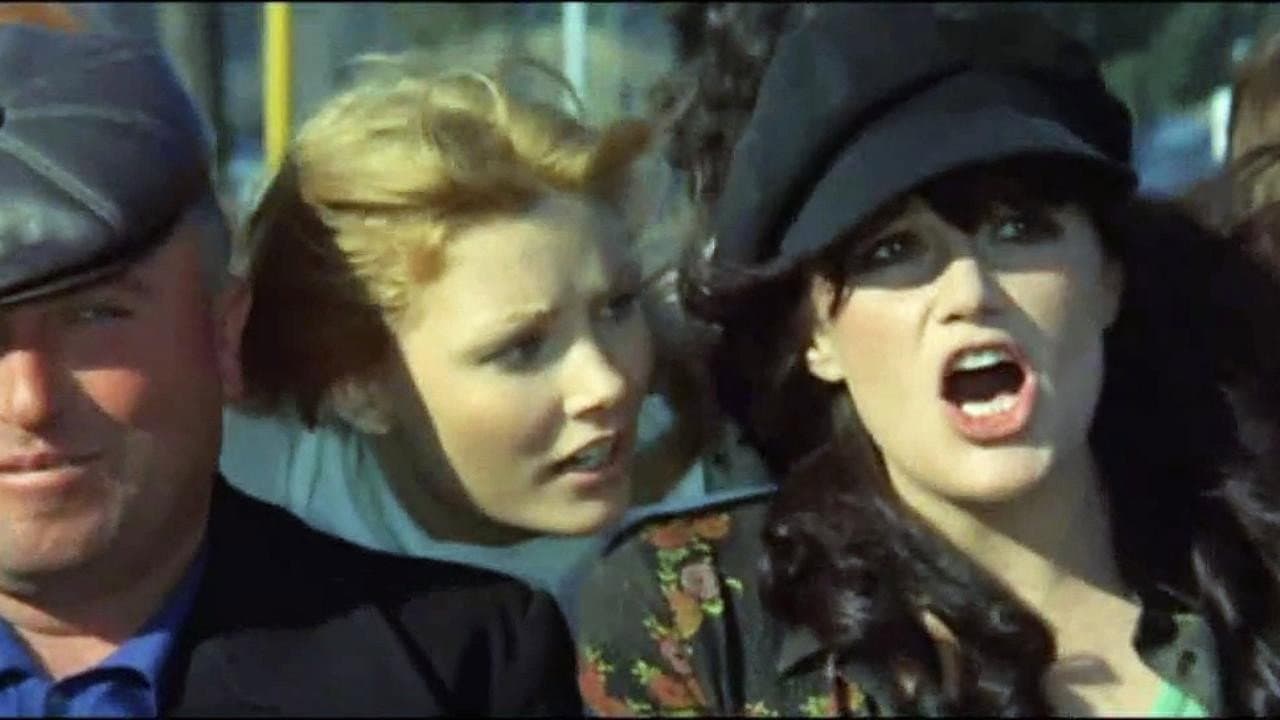
The Story of Ingrid on the Road
Ingrid on the Road tells the harrowing story of a young woman forced into Rome's criminal underworld after escaping a deeply traumatic home. The film opens with Ingrid arriving in the city with little more than desperation—a refugee from family violence seeking any way forward. She finds temporary solidarity in Claudia, another woman navigating the same brutal streets, but that fragile friendship becomes a trap when Claudia's protector, the sadistic thug Renato, enters their lives. What follows isn't a redemption arc. It's a descent. The film doesn't offer easy answers or neat resolutions; instead, it traces how systemic violence, poverty, and predatory men can suffocate hope in real time.
Behind the Making of Ingrid on the Road
Ingrid on the Road emerged from Thousand Cinematografica, an Italian production house working in the early 1970s when Rome-set crime dramas were experiencing a cultural moment. The 97-minute runtime allows the narrative to breathe without padding—a deliberate pacing choice that lets scenes of menace and quiet desperation settle under the viewer's skin. While the film didn't achieve mainstream box-office dominance, it's remained a reference point in discussions of 1970s European exploitation cinema and its ethical boundaries. The cast brought a documentary-like authenticity to their roles, avoiding the melodrama that could've undercut the material's gravity. No major award nominations appear in the official record, though the film has accumulated a devoted cult following among critics interested in how cinema represents trauma and urban crime without sensationalizing either. The production values reflect its era—handheld camera work, natural lighting in Rome's streets and apartments, a score that doesn't oversell emotion.
What Makes Ingrid on the Road Stand Out
What's striking about Ingrid on the Road is how it refuses to separate Ingrid's exploitation from the economic systems that enable it. She doesn't become a prostitute because of moral failure; she becomes one because she has no other options. That distinction matters—and it's what keeps the film from feeling like salacious trash. The performances anchor this commitment to moral clarity. The actors playing Ingrid and Claudia carry the weight of their characters' impossible situations without ever winking at the camera or inviting the audience to enjoy their suffering. Renato, played as a man whose brutality stems from unchecked power rather than psychological complexity, becomes a portrait of how casual cruelty operates when nobody's watching. The cinematography captures Rome not as a romantic backdrop but as a maze of indifferent streets and cramped rooms where predators hunt. I keep coming back to one scene in particular—the way a casual conversation between Renato and his associates becomes a master class in how men normalize violence against women when they're alone together. That's the film's real horror. Not shock value, but recognition.
Where to Stream Ingrid on the Road Online
Finding older European crime dramas can feel like a scavenger hunt, but Ingrid on the Road has secured placement on major OTT services—check the Where to Watch widget at the top of this page for current availability in your region. Streaming rights for 1970s Italian cinema shift regularly, so Movie OTT tracks real-time updates across platforms to save you the guesswork. The film's restoration for digital platforms has sharpened the image quality considerably compared to older VHS transfers, making the cinematography's street-level authenticity even more visible. If you're planning to watch, you'll want that clarity; the film's power lives in visual details—the texture of Ingrid's desperation, the coldness in Renato's eyes. Whether you're accessing it through a subscription service or renting it independently, budget the full 97 minutes without distraction.
Frequently asked questions
Q: What is Ingrid on the Road rated, and is it appropriate for all audiences?
The film contains explicit depictions of sexual violence and adult themes; it's decidedly not family viewing. No MPAA rating is officially listed, but contemporary standards would likely place it well into R or unrated territory. Viewer discretion is essential.
Q: Who directed Ingrid on the Road?
The film was produced by Thousand Cinematografica, though directorial attribution isn't prominently featured in most streaming or archival databases—a common issue with European genre films of this era that've lost some production documentation over decades.
Q: Is Ingrid on the Road based on a true story?
No confirmed source material or true-crime inspiration has been documented. The narrative appears to be an original screenplay crafted to explore themes of urban exploitation and survival in 1970s Rome.
Q: How does Ingrid on the Road compare to other 1970s crime dramas?
The film sits somewhere between Italian poliziesco (cop thriller) conventions and grittier exploitation narratives, but it's more interested in its heroine's perspective than in action or detective work. That character focus sets it apart from many contemporaries.
Q: Why is Ingrid on the Road hard to find?
Like many 1970s European B-movies, it fell into semi-obscurity for decades. Recent restoration and renewed interest in that era's cinema have brought it back to streaming platforms, but availability remains regional and subject to licensing agreements.
Who Should Watch Ingrid on the Road
This isn't a comfort watch. Ingrid on the Road demands viewers willing to sit with moral complexity and systemic cruelty without flinching away—or, conversely, without exploiting that discomfort for entertainment. It's essential viewing for anyone studying how 1970s European cinema tackled class, gender, and violence, and it's genuinely rewarding for viewers who prize unflinching character work over plot mechanics. If you've engaged with the work of filmmakers like Ken Loach or early Ermanno Olmi, you'll recognize the DNA here. Don't come looking for answers. Come looking for recognition.