The story of Into the Darkness: Occupation, compromise, and the cost of survival
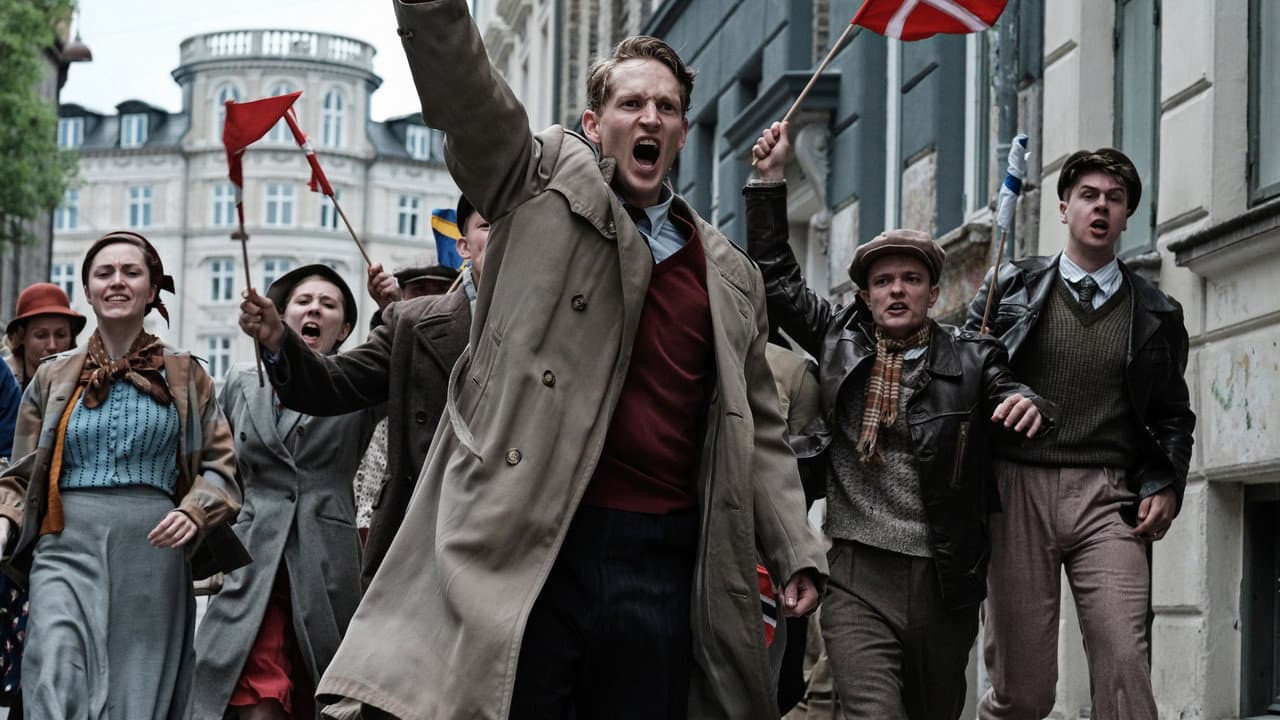
Into the Darkness opens in April 1940, at the moment German forces invade Denmark—a historical inflection point that transforms everything that follows. Karlskov, a self-made electronics factory owner living the privileged upper-class life on Strandvejen north of Copenhagen, suddenly finds himself facing an impossible calculus. He's got a wife, five children, and hundreds of employees depending on the factory's survival. When the Nazis arrive, Karlskov doesn't resist openly. Instead, he makes a choice that will fracture his family: he begins producing goods for the German market to protect his business, his workers, and—he tells himself—his loved ones. It's a film about the terrible mathematics of occupation, where every decision carries a hidden cost. The story unfolds across the first three years of Denmark's involvement in World War II, tracking the Skov family as they navigate the moral wreckage left by collaboration, ideology, and the simple human need to survive.
Behind the making of Into the Darkness: A Danish prestige production
Into the Darkness is the first installment of a two-part series directed by Anders Refn, a Danish filmmaker with serious pedigree in European cinema. The film runs 152 minutes—not a quick watch, but a deliberate, novelistic approach to its historical material. It's produced by Space Rocket Nation, a production house known for ambitious period work. The film arrived in 2020 with respectable critical attention: it holds a 61% on Rotten Tomatoes (Fresh rating), a 49 Metascore, and a 6.5/10 on IMDb across more than 2,000 votes. Those numbers suggest a film that critics found competent and engaging, if not universally transcendent. The film earned three award nominations, cementing its status as a serious historical drama rather than a casual streaming pick. The sequel, Out of the Darkness, continues the family's story through the later war years, following the events of 1942 and beyond, when the tide began turning against Axis forces at Stalingrad. For viewers interested in the full arc—and there's real value in watching both—the two-film structure allows Refn to build character and consequence across a longer narrative canvas than a single film could manage.
What makes Into the Darkness stand out: Performance, moral ambiguity, and Danish history
What's striking about Into the Darkness is how it refuses to let Karlskov off the hook with easy answers. He's not a Nazi sympathizer; he's not a hero either. He's a man trying to thread an impossible needle, and the film tracks how that impossible position corrodes his marriage, alienates his children, and slowly reveals the limits of pragmatism when ideology is the real battleground. The performances anchor the film in lived experience rather than historical abstraction. There's a particular scene—I won't spoil it—where Karlskov's eldest son confronts him about the factory work, and the camera just sits on their faces while the argument happens. No music swells. No dramatic cuts. Just two people who love each other realizing they can't occupy the same moral space anymore. That's the film's real power: it understands that the most devastating wars happen inside families, and that occupation doesn't just mean tanks rolling down streets. It means something far more intimate and corrosive. The film also captures a specific moment in Danish history (what Danes call besættelsen, or "the occupation") that doesn't get nearly as much cinematic attention as the French Resistance or the Holocaust. Denmark's experience was different—less dramatic in some ways, more morally complicated in others—and Refn's willingness to sit with that complexity rather than reach for conventional heroism is what gives the film its staying power.
Where to stream Into the Darkness online
Into the Darkness is available on major OTT services, and you can check the Where to Watch widget at the top of this page to see which platforms currently have it in your region. Streaming availability changes regularly, so Movie OTT tracks real-time updates across all the major services—Netflix, Prime Video, and others—so you don't have to hunt across five different apps. Since it's a 152-minute Danish-language drama (subtitled in English), you'll want to carve out an uninterrupted evening rather than trying to squeeze it into a commute. The runtime isn't bloat; it's the film taking time to let scenes breathe and characters develop across months and years of occupation.
Frequently asked questions
Q: Is Into the Darkness based on a true story?
It's inspired by historical events—specifically Denmark's occupation by Nazi Germany from 1940 to 1945—but Karlskov and his family are fictional characters. The film uses real history as a backdrop to explore how ordinary people navigated impossible moral choices during wartime.
Q: Do I need to watch Out of the Darkness first, or can I start with Into the Darkness?
Start with Into the Darkness. It's the first film chronologically and narratively. Out of the Darkness is the sequel, covering the later war years. Watching both gives you the complete family saga.
Q: Is Into the Darkness in English, or do I need subtitles?
It's a Danish-language film with English subtitles. If subtitles aren't your thing, this might not be the film for you—but honestly, the dialogue is too good to miss.
Q: How does Into the Darkness compare to other World War II dramas?
It's less interested in action or heroism than most WWII films. It's closer to something like The Pianist or Come and See in its focus on how ordinary people survive extraordinary circumstances, though it's less graphic than either of those.
Q: What's the IMDb rating for Into the Darkness?
It holds a 6.5/10 on IMDb based on over 2,000 votes, which suggests solid but not spectacular audience reception—typical for a serious, slow-burn historical drama that doesn't appeal to everyone.
Final thoughts on Into the Darkness
Into the Darkness isn't comfort viewing. It won't resolve neatly, and it won't let you feel superior to its characters. What it will do is sit with you for two and a half hours and ask difficult questions about complicity, survival, and whether there's any such thing as a "good" compromise when the stakes are this high. If you're drawn to historical dramas that prioritize character and moral complexity over spectacle—and if you don't mind reading subtitles—it's absolutely worth your time. The first of a two-part story, it's a film that trusts its audience to sit with ambiguity. That's rare. That's worth seeking out.


