The Story of Ivan the Terrible, Part I
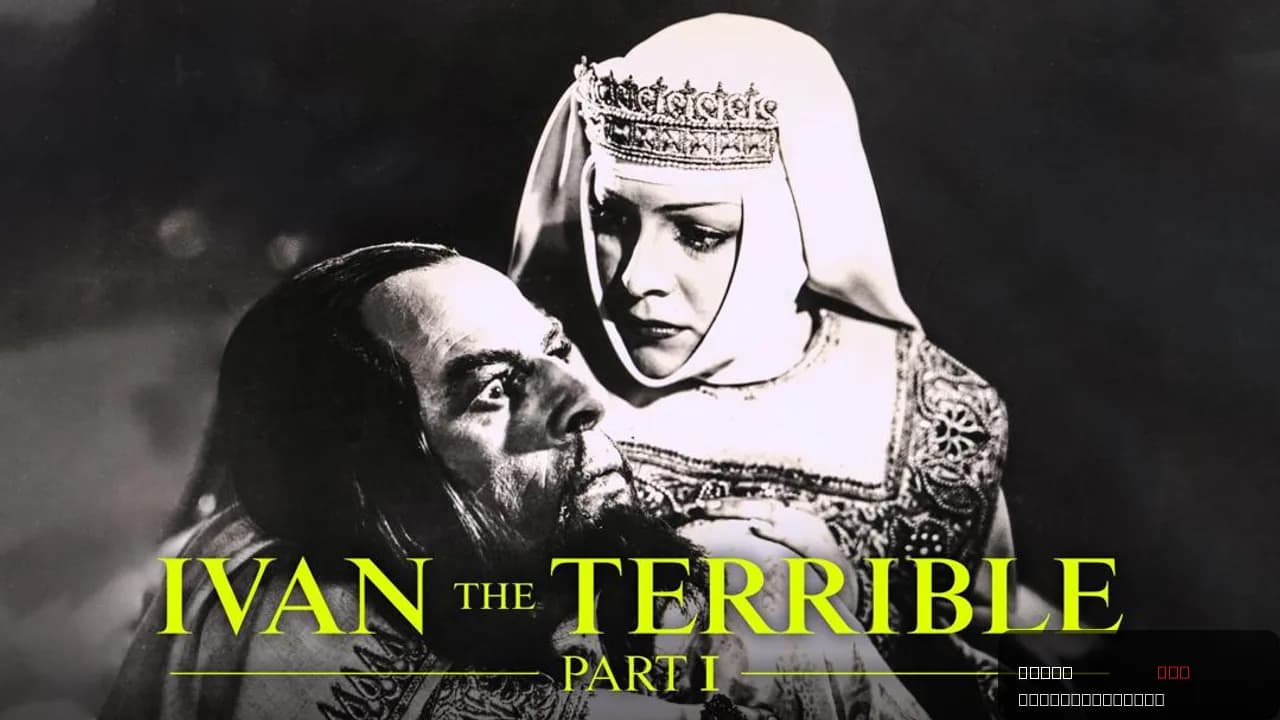
Ivan the Terrible, Part I unfolds the early reign of Ivan IV, the sixteenth-century Russian tsar who transformed a fractured realm into a unified empire—and paid a terrible price for it. The film charts his rise from a young, idealistic ruler determined to strengthen Russia against the boyar nobility who've bled the kingdom dry, through his consolidation of power, and into the paranoid darkness that begins to consume him. Eisenstein doesn't shy away from the contradictions: Ivan is shrewd, intelligent, even visionary in his ambitions, yet increasingly brutal in his methods. The narrative centers on his relationships with the court around him—his wife Anastasia, his advisors, the scheming nobles who'd rather see Russia weak than submit to a tsar's authority. What emerges isn't a simple tale of good versus evil, but a portrait of a man caught between necessity and madness, between nation-building and self-destruction.
Behind the Making of Ivan the Terrible, Part I
Sergei Eisenstein was already a legend of Soviet cinema when he undertook this ambitious trilogy in 1943, fresh from the success of his earlier works like Battleship Potemkin. Filming during the final years of the Second World War, Eisenstein navigated the treacherous politics of Stalin's USSR—a context that would prove grimly ironic, given the film's subject matter. The director assembled a formidable cast led by Nikolai Cherkasov, a stage-trained actor whose intensity and range made him ideal for the mercurial tsar. Supporting him were Lyudmila Tselikovskaya as Anastasia, Ivan's beloved first wife, and a stellar ensemble including Mikhail Zharov, Amvrosii Buchma, and Mikhail Kuznetsov as members of the oprichnina—Ivan's secret police. The runtime of 99 minutes belies the epic scope Eisenstein achieved. Perhaps most crucially, Sergei Prokofiev composed the film's score, bringing the same modernist sensibility that defined his concert works to this historical drama. The first installment was completed in 1944 and initially received official approval. Stalin, however, detected something troubling in Part II—the parallels between Ivan's paranoid terror apparatus and his own secret police became impossible to ignore—and the sequel was promptly banned, remaining suppressed for years after the director's death.
What Makes Ivan the Terrible, Part I Stand Out
What's striking about this film, even now, is how Eisenstein refuses to make Ivan sympathetic through simplification. Nikolai Cherkasov plays the role with a kind of coiled intensity—you can see the intelligence working behind the eyes, the calculation mixed with genuine conviction that he's saving Russia. The supporting cast, particularly Tselikovskaya's Anastasia, grounds the spectacle with human emotion; her scenes with Ivan crackle with genuine tenderness before tragedy intervenes. Visually, Eisenstein's direction is almost overwhelming. He didn't just make a historical film—he created a visual argument about power, using stark contrasts of light and shadow, geometric compositions that feel almost theatrical, and a pacing that builds relentlessly toward Ivan's psychological unraveling. The oprichnina sequences have a ritualistic quality that's genuinely unsettling, suggesting how ideology can calcify into cult-like devotion. One particular scene, where Ivan watches a procession of his secret police, captures the seduction and horror of authoritarian power in a single image. Prokofiev's score amplifies this: it's not lush or romantic, but angular and sometimes discordant, reflecting the fractures in Ivan's mind. The film works because it doesn't judge its protagonist so much as observe him with unflinching clarity—which, paradoxically, is far more damning than any moral pronouncement could be.
Where to Stream Ivan the Terrible, Part I Online
Ivan the Terrible, Part I is currently available on Prime Video, making Eisenstein's masterpiece accessible to viewers who want to experience one of cinema's most important historical epics. The film's 99-minute runtime makes it manageable for a single sitting, though its density and visual richness reward multiple viewings. Movie OTT tracks current streaming availability across major platforms, so you can confirm whether it's still on Prime Video in your region—streaming catalogs shift, and older titles can rotate off without warning. If you're planning to watch, check the where-to-watch widget at the top of this page for the most up-to-date information on where you can stream it right now.
Frequently Asked Questions
Q: Who directed Ivan the Terrible, Part I?
Sergei Eisenstein, one of cinema's most influential directors, wrote, produced, and directed the film in 1943-44. Eisenstein was already famous for revolutionary works like Battleship Potemkin and brought his distinctive visual style—stark compositions, symbolic imagery, and dynamic editing—to this historical drama.
Q: Is Ivan the Terrible, Part I based on a true story?
Yes, the film chronicles the actual reign of Ivan IV, the sixteenth-century Russian tsar who unified Russia and formed the oprichnina, a secret police force. However, Eisenstein took creative liberties with historical details and character relationships to serve his dramatic narrative and thematic concerns.
Q: Why was the second part of Ivan the Terrible banned?
Stalin approved the first installment but detected uncomfortable parallels between Ivan's paranoid terror apparatus and his own secret police in Part II. He promptly banned the sequel, and it remained suppressed for years. The political allegory was too obvious—and too dangerous—for the Soviet dictator to allow.
Q: What's the runtime of Ivan the Terrible, Part I?
The film runs 99 minutes, a lean runtime that belies its epic scope and the density of its narrative and visual storytelling. It's long enough to develop character and theme but brisk enough to maintain momentum.
Q: Who plays Ivan in this film?
Nikolai Cherkasov, a classically trained stage actor, delivers a commanding performance as Ivan IV. His intensity, intelligence, and ability to convey both idealism and cruelty make him ideal for the role, and his work here remains one of cinema's great historical performances.
Final Thoughts on Ivan the Terrible, Part I
This isn't a comfortable film, and it wasn't meant to be. Eisenstein created something that works simultaneously as historical drama, visual spectacle, and political parable—which is precisely why it terrified Stalin. If you're drawn to cinema that takes risks, that refuses easy answers, that trusts its audience to sit with ambiguity and moral complexity, this is essential viewing. Cherkasov's performance alone justifies the watch. The film's influence on everything from Kurosawa to modern prestige television is enormous, even if most viewers don't realize they're watching Eisenstein's DNA. It's a work that demands patience but rewards it generously.