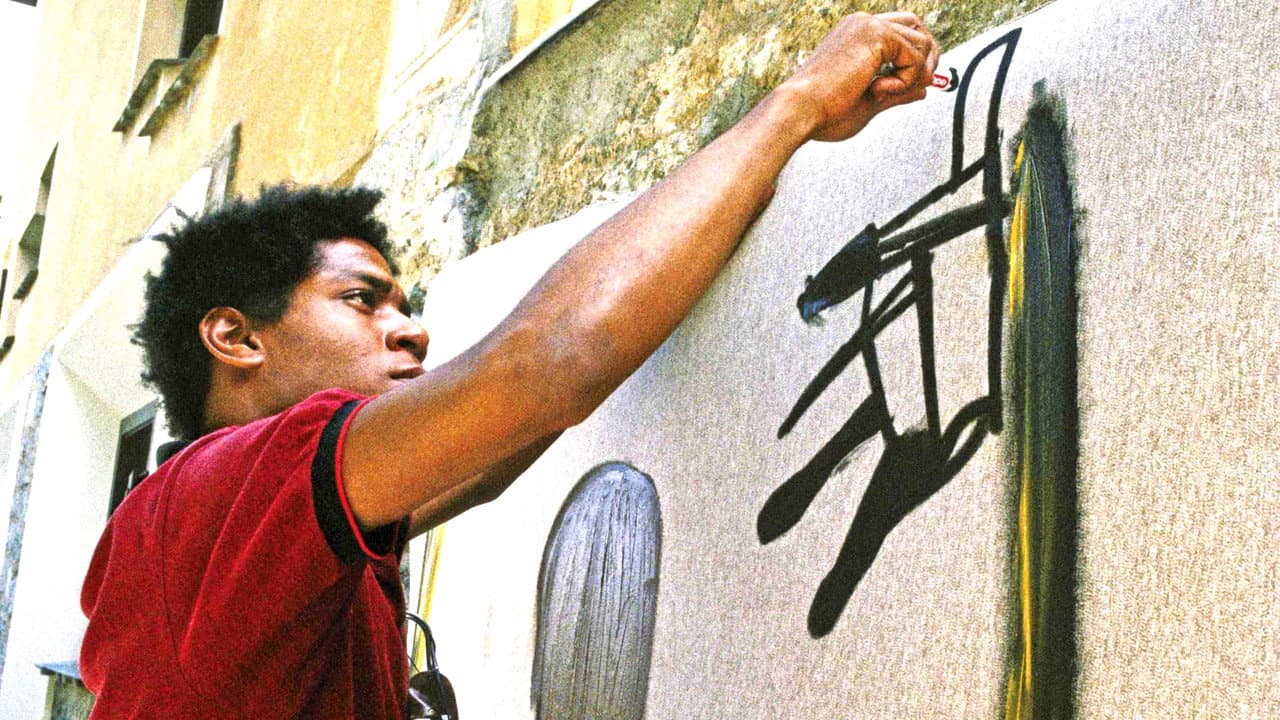
Jean-Michel: The Documentary That Finally Lets Basquiat's Sisters Tell His Story
Jean-Michel is a 2026 documentary that does something no prior Basquiat film has managed — it centers the voices of the people who knew him before the galleries, the fame, and the mythology. Directed by Quinn Whitney Wilson and Viridiana Lieberman, the film runs 95 minutes and premiered in the Documentary Competition at the 2026 Tribeca Festival. It's the first Basquiat documentary approved by his estate, and the first directed by a person of color. That's not trivia. That's the difference between a film made about Basquiat and one made with his family's trust.
What Makes This Different From Every Other Basquiat Film
Here's what I keep thinking about: the Basquiat documentary space has gotten crowded with a certain kind of film. The Warhol friendship angle. The tragedy of dying at 27. The auction-house prices. The mythology that sells.
Jean-Michel isn't that film.
Instead, it stays close to the domestic — to Basquiat's childhood in Brooklyn with middle-class Haitian and Puerto Rican parents, his immersion in New York's punk subculture, and the pressures that shaped him long before he became a major American artist. What's striking is how deliberately it resists spectacle. The decision to anchor the film in interviews with his sisters, Lisane and Jeanine Basquiat, isn't just a structural choice. It's an argument. It says: the people who knew him before the tags and the gallery shows have something to say that the art world never bothered to ask for.
The film also takes his mental and emotional state seriously — not as a footnote to his genius, but as the central story. That's harder than it sounds. It requires sitting with ambiguity, letting interviews breathe, not rushing toward the tragic ending everyone already knows is coming. Wilson and Lieberman seem to understand the most interesting question isn't how Basquiat died. It's how he lived, and what it cost him.
How the Filmmakers Got Access the Estate Had Never Granted Before
For decades, the Basquiat estate was notoriously protective. And with reason — the artist's image got handled carelessly by outsiders chasing mythology instead of truth. The estate's approval here signals something fundamental shifted. These filmmakers had access that no prior documentary could touch.
Produced by Boardwalk Pictures, the film also carries another distinction: it's the first Basquiat documentary directed by a person of color. That's not a talking point bolted onto the marketing. It's structural. It shapes how the story gets told — how his Blackness and Caribbean heritage aren't backdrop. They're central.
The Tribeca selection in competition matters too (though it doesn't guarantee awards, obviously). It puts the film in serious conversation with what festival programmers consider significant work. Hard to say if that translates to awards-circuit momentum later in 2026, but the slot itself signals something: this wasn't a fringe submission. Movie OTT is tracking any awards developments as they're announced.
Who Should Actually Watch This
If you've felt like the Basquiat story has been told at you rather than shared with you, here's your corrective. This film works for people who care where artists come from — not just where they end up. Viewers with any interest in American art history, Black cultural history, or the immigrant family experience in New York will find something that goes beyond standard biography. Even casual viewers who just know the name will leave knowing the person.
Think of it this way: if you watched the 2015 Basquiat documentary or the Warhol films and felt like something essential was missing, Wilson and Lieberman are answering what you couldn't quite name. The sisters' perspectives cut through iconography in a way that feels genuinely fresh.
Where to Watch Jean-Michel Right Now
Jean-Michel is available on major OTT services following its festival run. The fastest way to find exactly where it's streaming in your region is to check the where-to-watch widget at the top of this page — Movie OTT updates those listings in real time as platform availability shifts. Streaming rights for festival documentaries move around. What's live today might migrate in the months after Tribeca.
If it's not yet on your preferred service, add it to your watchlist. Distribution for Tribeca competition titles typically broadens within a few months of the festival premiere.
Key Facts at a Glance
- Directors: Quinn Whitney Wilson and Viridiana Lieberman
- Runtime: 95 minutes
- Premiere: 2026 Tribeca Festival (Documentary Competition)
- Producer: Boardwalk Pictures
- Primary sources: Interviews with Basquiat's sisters Lisane and Jeanine, plus former friends and colleagues
- Streaming: Available on major OTT platforms (check your region via the widget above)
Frequently Asked Questions
Q: Why is this the first estate-approved Basquiat documentary?
The Basquiat estate protected his image fiercely for years — and not without reason, given how often his legacy was exploited. Wilson and Lieberman's approach earned that trust. The estate's involvement gave them access to family testimony that no prior filmmakers could secure.
Q: Is Jean-Michel good if I don't know much about Basquiat?
Yes. The film doesn't assume you've read the biographies or seen the auction coverage. It starts with his childhood and brings you through his life in real time, so newcomers aren't lost. People who know his work deeply will catch layers the casual viewer might miss — but neither group gets shut out.
Q: How does this compare to other Basquiat docs?
The 2015 Basquiat documentary leans into the art-world angle. This one is family-first. Instead of galleries and dealers, you're hearing from the people who watched him grow up. It's a different film entirely — less marketplace, more interior.
Q: What should I watch before or after this?
If you're new to Basquiat, start here. If you've already seen the 2015 doc or any of the Warhol films, watch those after Jean-Michel — you'll catch details and context you missed before.
The Bottom Line
Jean-Michel isn't trying to be the definitive Basquiat film. It's trying to be the honest one. The sisters' voices anchor something that matters: a portrait of an artist before he became an icon. For viewers tired of mythology-first coverage, it's worth your time.