The Story of Jim Morrison: The Wild Child
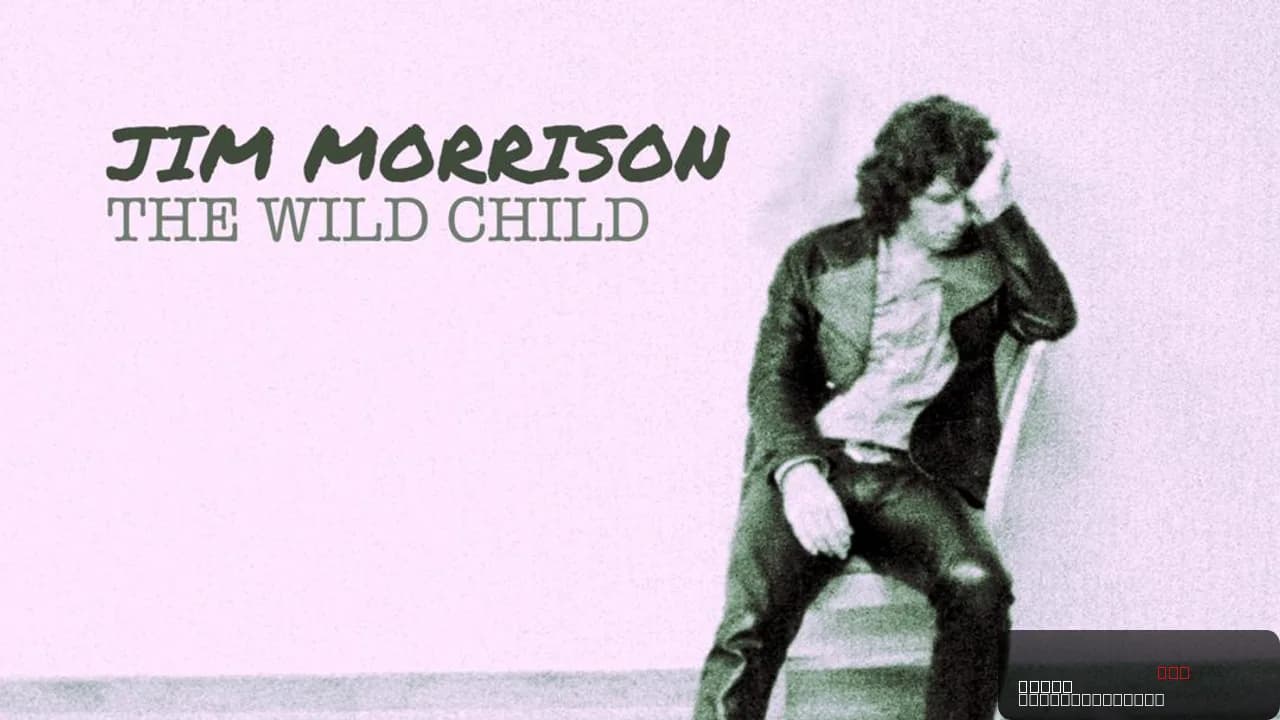
Jim Morrison: The Wild Child is a 2019 documentary that traces the trajectory of one of rock and roll's most polarizing figures. Directed by Piers Garland, the film doesn't attempt to rehash the tired biographical beats we've all heard a hundred times—the leather pants, the Miami trial, the Paris death. Instead, it zeroes in on Morrison as a poet and thinker first, a rock star second, someone who spent his brief life treading a fine line between existence and death. The documentary's 63-minute runtime is deliberately spare, a choice that mirrors Morrison's own aesthetic: maximum impact, no fat. What you're getting here is a focused examination of how a UCLA film student became the voice of a generation, then burned out spectacularly before he turned twenty-eight.
The film features a range of talking heads—music journalists, biographers, and contemporaries—who bring their own interpretations to Morrison's legacy. Jennifer Otter Bickerdike, John Tobler, Chris Salewicz, and Dave Ambrose all contribute insights, lending the documentary a conversational tone rather than a clinical one. What's striking is how the film balances reverence with skepticism, never quite letting Morrison off the hook for his excesses while acknowledging the genuine artistry underneath. The archival material—photographs, concert footage, and period documentation—gives the piece a tactile, lived-in quality. You're not watching a slick HBO production here; you're watching something more intimate, more willing to sit with contradictions and unanswered questions.
Behind the Making of Jim Morrison: The Wild Child
Garland's approach to the documentary was shaped by a desire to move beyond the mythology that's calcified around Morrison over the past five decades. Rather than lean into the rock-star excess narrative (which, let's be honest, has been done to death), the film prioritizes Morrison's intellectual ambitions—his reading, his film studies background, his serious engagement with poetry. The production itself is modest; this isn't a prestige documentary with an eight-figure budget or a major studio backing. That constraint actually works in its favor. The filmmakers had to be intentional about every choice, every interview, every piece of footage included.
The documentary arrived in 2019, fifty years after Morrison's death in Paris, a timing that allowed for some reflective distance. By then, the surviving members of The Doors had done countless interviews, and plenty of Morrison biographies existed—books like Jerry Hopkins and Danny Sugerman's No One Here Gets Out Alive (1980) and more recent works had already staked their claims. Garland wasn't competing with those narratives so much as offering a different angle. The film doesn't shy away from Morrison's documented substance abuse, his volatile relationships, or his apparent death wish, but it frames these not as the whole story but as symptoms of something deeper—a restless intellect trapped in a body that wanted transcendence more than stability.
On streaming platforms like Movie OTT, which tracks where films are currently available across major services, documentaries like this one have found a second life in recent years. The shift toward streaming has actually benefited documentary filmmaking, allowing smaller productions to reach audiences without needing theatrical distribution. Jim Morrison: The Wild Child is a perfect example of that democratization—it wouldn't have gotten a wide cinema release, but on Prime Video, it can find the exact audience it's meant for: Morrison obsessives, documentary buffs, and anyone curious about the intersection of art and self-destruction.
What Makes Jim Morrison: The Wild Child Stand Out
Here's the thing about Morrison documentaries: there are a lot of them, and most repeat the same anecdotes, the same myths, the same tragic-genius template. This one doesn't entirely escape that trap, but it comes closer than most. The interviews are substantive rather than gossipy. When Tobler or Salewicz speak, they're not dredging up old scandal; they're wrestling with how Morrison thought, what he was trying to communicate through The Doors' music, why he was drawn to the work of figures like William Blake and Friedrich Nietzsche. That intellectual framework matters, and Garland trusts his audience to care about it.
What's also worth noting—and this might sound like a small thing but it isn't—is that the film doesn't pretend to have definitive answers about Morrison. It doesn't solve him. Too many documentaries want to pin down their subject, to offer some grand unified theory that explains everything. This one is comfortable with ambiguity. Was Morrison a genuine artist wrestling with the limits of consciousness? Was he a self-destructive performer addicted to his own mythology? Was he both? The documentary suggests both, and that's more honest than most treatments manage.
I keep coming back to the film's treatment of Morrison's death. Rather than sensationalize the Paris hotel room, Garland lets it recede into the background where it belongs. The focus stays on what Morrison was trying to do while he was alive—the albums, the performances, the poetry readings, the film projects that never quite came together. That's a refreshing corrective to the industry's tendency to reduce artists to their most dramatic moments. The performances by the talking heads feel genuine, not rehearsed; these are people who've spent decades thinking about Morrison, and it shows.
Where to Stream Jim Morrison: The Wild Child Online
You can currently watch Jim Morrison: The Wild Child on Prime Video, Amazon's streaming service. The documentary is available to stream if you have an active Prime membership, making it accessible to millions of subscribers who might not have sought it out in a theater but can easily add it to their watchlist. If you're trying to track down where specific titles are streaming at any given moment, Movie OTT maintains a current database of availability across platforms—no need to bounce between five different apps wondering if something's still available.
The 63-minute runtime makes this a perfect documentary for a single sitting, or for breaking into two chunks if your attention span is more fragmented (no judgment). Prime Video's interface makes it easy to pause and pick up where you left off, which is useful if you want to take notes or look up some of the figures mentioned. The documentary doesn't require prior expertise—you don't need to be a Doors fanatic to follow it—but it rewards viewers who come with some baseline knowledge of Morrison's career and the 1960s rock landscape.
Frequently asked questions
Q: Who directed Jim Morrison: The Wild Child?
The documentary was directed by Piers Garland in 2019. Garland's approach prioritizes Morrison's intellectual and artistic ambitions over the typical rock-star excess narrative that dominates much Morrison coverage.
Q: Where can I watch Jim Morrison: The Wild Child?
The film is currently available to stream on Prime Video. Check the Where to Watch widget at the top of this page for the most up-to-date availability across platforms.
Q: How long is Jim Morrison: The Wild Child?
The documentary runs 63 minutes, making it a lean, focused portrait that avoids unnecessary padding and gets straight to its subject.
Q: Who appears in Jim Morrison: The Wild Child?
The film features commentary from music journalists and biographers including Jennifer Otter Bickerdike, John Tobler, Chris Salewicz, and Dave Ambrose, alongside archival footage and photographs of Morrison himself.
Q: Is Jim Morrison: The Wild Child based on a true story?
Yes, it's a documentary that examines the real life and career of Jim Morrison, the legendary Doors frontman. It draws on archival materials, interviews, and historical documentation rather than dramatization.
Final Thoughts on Jim Morrison: The Wild Child
This documentary won't revolutionize how you think about Morrison if you're already deeply familiar with his work. But if you're curious about him—or if you've absorbed the mythology without actually engaging with his actual artistic output—it's worth your time. The film respects its subject without deifying him, which is rarer than you'd think. It's the kind of documentary that works best when you watch it and then immediately go listen to The Doors or L.A. Woman again, hearing the songs differently. That's the mark of something that's done its job well. Not flashy, not trying too hard. Just honest.