The Story of Kingdom of the Apes: Battle Lines
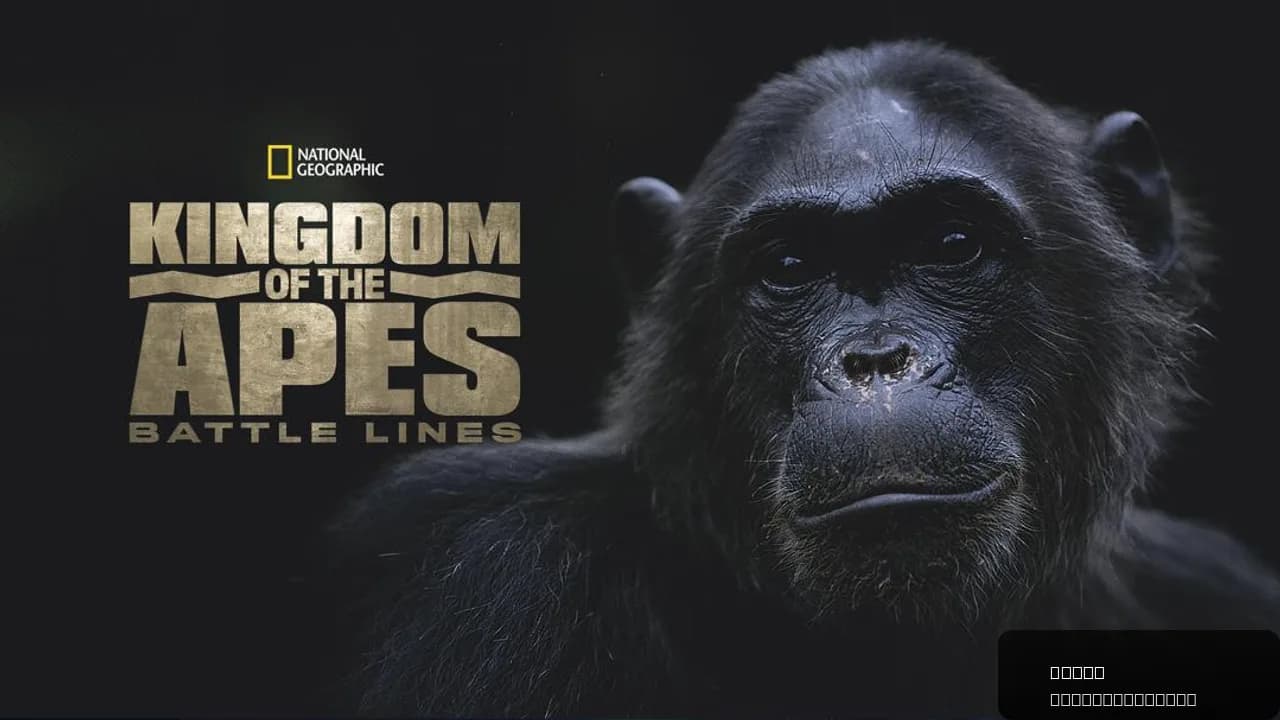
Kingdom of the Apes: Battle Lines is a 44-minute documentary that uses Jane Goodall's decades of primatological research to unlock the complex social worlds of great apes. The film doesn't just observe these creatures from a distance—it gets intimate with their personalities, rivalries, and the intricate politics that govern their clans. You'll watch as dominant males jockey for control, females navigate motherhood and alliance-building, and younger apes learn the unwritten rules of their society. The documentary frames these struggles not as simple animal behavior but as genuine culture, complete with individual quirks and learned behaviors passed down through generations. It's a window into a world that's far more sophisticated than most of us ever imagined.
Behind the Making of Kingdom of the Apes: Battle Lines
Kingdom of the Apes: Battle Lines draws its authority from one of the most respected voices in primatology. Jane Goodall's work—spanning over six decades of field research in Gombe Stream National Park—revolutionized how we understand chimpanzees and, by extension, all great apes. The documentary leverages her groundbreaking observations to construct narratives around individual apes, giving viewers a chance to see beyond the species and into the personality. Dan Nachtrab serves as the film's guide through this material, bringing clarity to research that might otherwise feel too academic for general audiences. Released in 2014, the film arrived during a period of renewed interest in nature documentaries and primate research. While it didn't generate major box-office noise (it's a streaming documentary, after all), it found its audience among educators, nature enthusiasts, and anyone curious about animal behavior. The production focuses on telling coherent stories rather than overwhelming viewers with data—a smart choice that keeps the 44-minute runtime brisk and engaging without sacrificing depth.
What Makes Kingdom of the Apes: Battle Lines Stand Out
Honestly, what's striking about this documentary is how it refuses to treat apes as metaphors for humans. Instead, it lets them be themselves—complex, contradictory, sometimes brutal, sometimes tender. The film captures moments of genuine tenderness between mothers and offspring, but it doesn't shy away from the violence and coercion that also define ape society. That balance matters. Too many nature docs either anthropomorphize animals into caricatures or strip them of personality entirely; this one threads the needle. You'll see individual apes with distinct temperaments and strategies—the young male learning to navigate hierarchy, the female protecting her young, the aging patriarch clinging to power. Goodall's research provides the backbone, but Nachtrab's narration keeps things accessible without dumbing anything down. The film acknowledges that we're watching creatures who solve problems, hold grudges, form alliances, and mourn their dead. It's not claiming apes are exactly like us. Rather, it's suggesting that the gap between us isn't as vast as we'd like to believe. What's striking is how that realization creeps up on you—not through heavy-handed messaging, but through simple observation of how these animals live.
Where to Stream Kingdom of the Apes: Battle Lines Online
Kingdom of the Apes: Battle Lines is currently available on Disney+, where you can stream it on demand. If you're already subscribed to Disney's platform, you've got instant access—no additional fees or hunting through multiple services required. The 44-minute runtime makes it perfect for a lunch break or a quiet evening when you want something substantive but not time-consuming. Movie OTT tracks current streaming availability across major platforms, so if you're wondering where to find a title, checking there first saves you the frustration of bouncing between apps. The Where to Watch widget at the top of this page shows exactly where Kingdom of the Apes: Battle Lines is streaming right now, so you'll know before you click.
Frequently asked questions
Q: Is Kingdom of the Apes: Battle Lines based on Jane Goodall's real research?
Yes. The documentary draws directly from Goodall's decades of field observations in Gombe Stream National Park, particularly her work with chimpanzees. Her research fundamentally changed how scientists understand primate behavior and intelligence.
Q: How long is Kingdom of the Apes: Battle Lines?
The documentary runs 44 minutes, making it a relatively compact watch that still covers substantial ground in terms of ape behavior, social structure, and individual personalities.
Q: Who narrates Kingdom of the Apes: Battle Lines?
Dan Nachtrab guides viewers through the documentary, providing context for Goodall's research and helping audiences understand the complex social dynamics of great ape clans.
Q: What's the IMDb rating for Kingdom of the Apes: Battle Lines?
The film holds a 5.4 out of 10 rating on IMDb, suggesting mixed reception among viewers—some appreciate its educational approach while others may find it less engaging than larger-scale nature documentaries.
Q: Is Kingdom of the Apes: Battle Lines appropriate for kids?
The documentary contains some scenes of ape conflict and violence, so it's best suited for older children and teens who can handle realistic depictions of animal behavior without sanitization.
Final Thoughts on Kingdom of the Apes: Battle Lines
Kingdom of the Apes: Battle Lines won't blow your mind with cinematic spectacle or narrative twists. What it will do—and what it does well—is shift how you think about the animals we share the planet with. It's a straightforward, intelligent documentary grounded in real research and genuine observation. If you're tired of nature content that either treats animals as cute props or reduces them to pure instinct, this one offers something different. It respects both the science and the subjects. Stream it on Disney+ when you want to learn something real without the hype.
