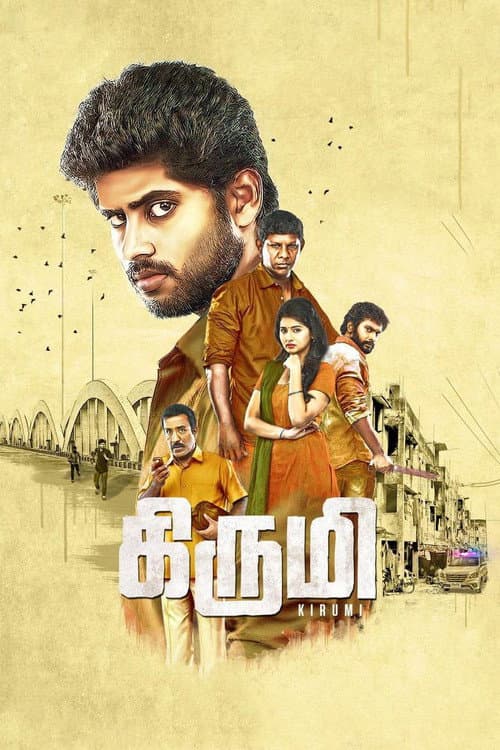









The story of Kirumi: ambition meets desperation
Kirumi opens with Kathir, a restless young man looking for purpose—or at least a way to make quick money. He's carefree, maybe a bit reckless, drifting through conversations with friends and flirting his way through neighborhoods. But when his neighbor Prabhakar—who works as a police informer—pulls him into the game, Kathir sees an opportunity. It's not exactly honest work, but it pays. What he doesn't anticipate is how fast he'll get in over his head, or how the decision to become an informer will transform him from a bystander into the center of a deadly conflict. The premise is straightforward: Kathir gets close to inspector Soundarapandian, too close, ignoring warnings that he's playing with fire. It's only when he tries to exploit a rivalry between Soundarapandian and a competing inspector, Mathiarasu, that he realizes the terrible truth—he's become a pawn in a game where the stakes are life and death.
Behind the making of Kirumi: debut direction and a tight ensemble
Kirumi marks the feature-film debut of writer-director Anucharan, who co-wrote the script with M. Manikandan and handled the editing himself—a hands-on approach that shows a filmmaker willing to wrestle with every frame. The film was produced by JPR Films and released on September 24, 2015, arriving into a competitive Tamil cinema landscape where thrillers were already crowded. The lead role went to Kathir, paired opposite Reshmi Menon, and the supporting cast anchors the moral tension that drives the narrative forward. Cinematographer Arul Vincent brings a gritty visual sensibility to the streets and police stations where most of the action unfolds, while composer K provides a score that underscores the mounting pressure Kathir faces as his world closes in. Though the film didn't become a blockbuster—it landed a modest 5.4 rating on IMDb—it's the kind of debut that shows ambition and craft, even if the execution doesn't always land perfectly. Movie OTT tracks where independent Tamil thrillers like this one find their audience on streaming platforms, and Kirumi's availability across major OTT services means it's easier than ever to discover what Anucharan was trying to do with his first feature.
What makes Kirumi stand out: the cost of desperation
What's striking about Kirumi is how it refuses to let Kathir off the hook—he's not a victim, exactly, but he's not a villain either. He's someone who made a choice, a bad one, and then kept making worse ones because backing out meant admitting he'd been foolish. The tension between the two inspectors—Soundarapandian and Mathiarasu—isn't just about ego (though it is partly that); it's about power structures and who gets to control the streets. Kathir, caught in the middle, becomes the thing he never wanted to be: irrelevant to his own story. The performances carry this weight. Kathir's portrayal captures that dangerous mix of confidence and cluelessness that makes someone believable as an informer—he thinks he's smart enough to play both sides, that he understands the game better than he actually does. It's a quieter kind of acting, less about big dramatic moments and more about the small tells that show someone realizing, too late, that they've miscalculated. Critics noted that the film's pacing drags in places, and that's fair—not every scene earns its runtime—but when Kirumi locks in, when the pressure mounts and Kathir starts to understand what he's actually done, the film becomes genuinely tense. I keep coming back to the way the script uses Prabhakar as a mirror; he's further along the same path Kathir's on, and that proximity to a cautionary tale makes the whole thing feel less like a thriller and more like a tragedy.
Where to stream Kirumi online
Kirumi is currently available on major OTT services, and you can check the "Where to Watch" widget at the top of this page to see which platform has it in your region right now. Streaming availability shifts, but the film's presence across multiple platforms means there's a good chance you'll find it on at least one service you already subscribe to. Movie OTT keeps that widget updated so you don't have to hunt across five different apps to figure out where to start watching. The 104-minute runtime makes it a solid evening watch—not so long that you're committing to a major time investment, but long enough to let the story breathe and the tension build.
Frequently asked questions
Q: Who directed Kirumi?
Anucharan wrote, directed, and edited Kirumi as his feature-film debut in 2015. He co-wrote the script with M. Manikandan and worked with cinematographer Arul Vincent to craft the film's visual style.
Q: What's the IMDb rating for Kirumi?
Kirumi has a 5.4/10 rating on IMDb, reflecting mixed audience reception. While it didn't become a critical darling, the film shows ambition in its storytelling and direction.
Q: Is Kirumi based on a true story?
There's no indication that Kirumi is based on a specific true story. It's an original thriller script that explores themes of police corruption, informants, and power struggles in a fictionalized setting.
Q: How long is Kirumi?
The film runs 104 minutes, making it a lean thriller that doesn't overstay its welcome. That runtime allows the plot to develop tension without excessive padding.
Q: Who stars in Kirumi?
Kathir plays the lead role of Kathir, the young informer at the center of the story, alongside Reshmi Menon. The supporting cast includes performers who bring depth to the rival inspectors and other key roles.
Final thoughts on Kirumi
Kirumi isn't a perfect film—the pacing falters, and not every scene lands with the impact it's reaching for. But it's a debut that announces a filmmaker willing to take risks, to sit with moral ambiguity, and to trust his audience to follow a character who isn't particularly likable. If you're looking for a Tamil-language thriller that's more interested in slow-burn tension than action set pieces, and if you don't mind a protagonist who makes you uncomfortable, Kirumi's worth your time. It's the kind of film that lingers after the credits roll, not because it's perfect, but because it doesn't let you off easy.