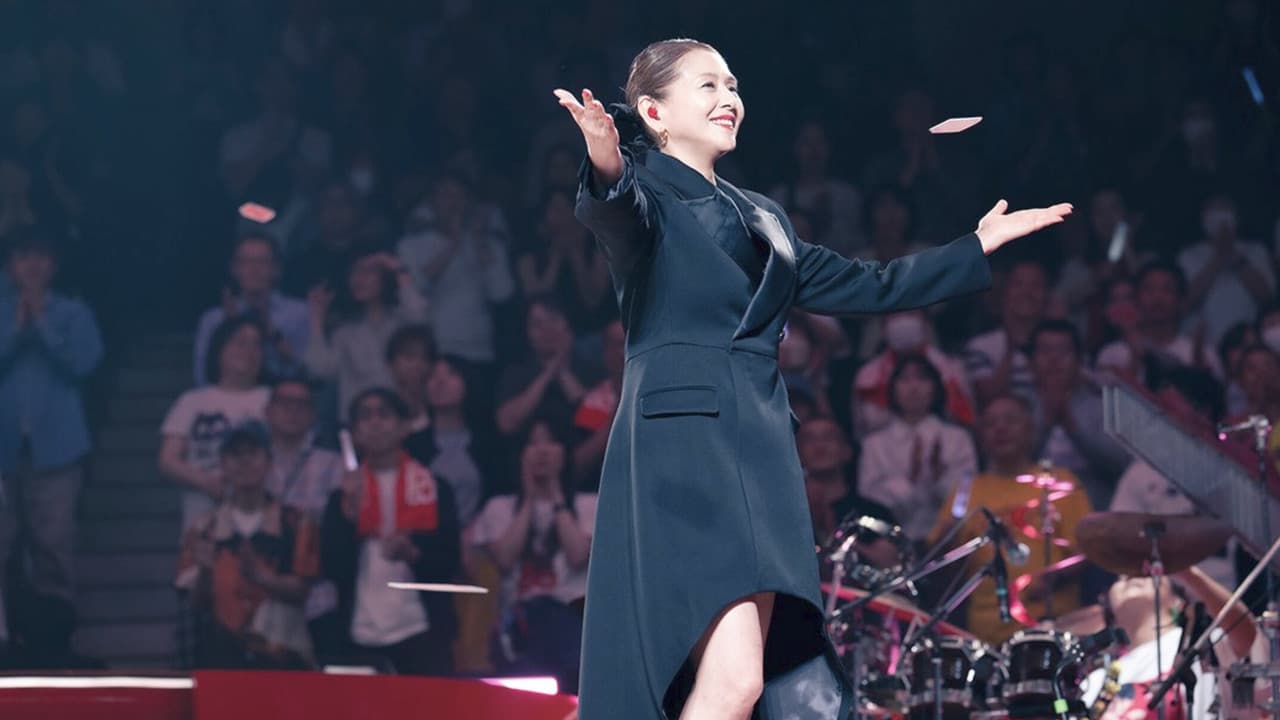
KK60 ~Koizumi Memorial Hall~ KYOKO KOIZUMI TOUR 2026
A 60-Year Reckoning at Tokyo's Most Iconic Venue
On May 3, 2026, Kyoko Koizumi stepped onto the stage at Nippon Budokan to mark her kanreki — the traditional Japanese milestone of turning 60. This concert film isn't just another greatest-hits package. It's a document of what happens when an artist who debuted as a teenager in the early 1980s returns to the stage that's hosted The Beatles, The Rolling Stones, and Japan's most enduring pop acts, and holds four decades of her own history in her hands.
The film is streaming now on major OTT platforms. Check Movie OTT's where-to-watch tracker for current availability in your region — streaming rights for Japanese concert films shift frequently, and their widget updates in real time so you don't have to check five services manually.
Why the Kanreki Matters More Than You'd Expect
Here's what most people outside Japan don't know about turning 60: it's not treated as a decline. It's treated as a rebirth. In the traditional zodiac cycle, reaching 60 means you've completed one full rotation — you're starting again, spiritually speaking. That framework changes everything about how you watch this film.
When Koizumi moves through her earlier material — songs from the 1980s and 90s that her audience has carried for decades — it doesn't feel nostalgic in the usual sense. It feels like she's revisiting rooms in a house she's never actually left. The Budokan crowd on that May evening understands this too. You can hear it in how they recognize opening notes, the collective breath before a familiar chorus, the way certain songs land completely differently in a room full of people who've lived with them.
I kept thinking about this during the slower numbers: concert films only work when the audience functions as a co-performer, and you can't manufacture that in post-production.
The Production Behind the Moment
WOWOW (Japan's premium satellite broadcaster) and Victor Entertainment produced this together — and that pairing matters. Victor has shepherded Koizumi's recorded legacy for years, so they know her catalog inside out. WOWOW, meanwhile, has a track record of treating major Japanese concert events with technical ambition that goes well beyond pointing a camera at a stage.
The choice of venue wasn't incidental. Opened in 1964 for the Tokyo Olympics and nestled in Kitanomaru Park, the Budokan seats roughly 14,000 and carries symbolic weight in Japanese pop culture that no other venue quite matches. Performing there — especially for a milestone occasion — signals a certain level of cultural permanence.
What's striking is the camera work itself. There's a sequence midway through where the direction pulls back to a wide shot of the full arena during one of Koizumi's reflective numbers and just holds it. No cuts. Just scale. Confidence.
The film was released in 2026, which means formal critical consensus hasn't accumulated yet on aggregators like IMDb — it's still in its initial streaming window. But the production credentials alone suggest this was treated as a prestige document, not a quick archival release.
What Makes This Different From a Standard Concert Film
The thing nobody mentions about concert documentaries is how much they depend on the reason for the concert in the first place. A 30th-anniversary show feels like nostalgia. An album launch feels like promotion. But a kanreki performance? That's existential. It's about time, completion, and beginning again.
The film leans into that weight without rushing past it. You're not watching Koizumi perform at the Budokan — you're watching her reckon with forty years of her own life in the place that symbolizes arrival in Japan's pop hierarchy. The distinction matters.
If you appreciated how Netflix's concert films capture the emotional texture of a live moment — the way audience energy becomes part of the composition — you'll find similar DNA here. WOWOW productions tend to approach their subjects with documentary seriousness that elevates the entire genre, and this film fits that pattern.
According to early coverage on streaming tracking sites, the May 3 recording also functions as a document of what contemporary Japanese pop fandom looks like at scale. That's useful context if you're interested in how the industry has evolved since Koizumi's debut.
Where to Watch and Current Availability
The film is available on major OTT services across Japan and select international territories. Check the where-to-watch widget above for real-time listings by region — availability shifts with licensing windows, and you'll want current information before you sit down.
If you're outside Japan, streaming rights vary by territory. The safest move is to check your local platforms now rather than getting frustrated mid-evening.
Movie OTT's streaming aggregator pulls availability data from all the major services, which saves the tab-hopping that platform fragmentation creates. It's worth bookmarking if you watch Japanese content regularly — rights changes happen quickly, and having one source beats checking each platform individually.
Who Should Watch This
Essential if: You're a Kyoko Koizumi fan. Full stop. You'll want to see her mark this milestone on one of Japan's most significant stages.
Also worth it if: You care about Japanese pop history. You appreciate live music filmmaking done with craft. You want to understand why the Budokan still matters as a cultural marker. You're interested in how artists approach career milestones with grace rather than spectacle.
Less critical if: You're unfamiliar with Koizumi's work and don't have strong interest in Japanese pop. You'll follow the emotional arc, but you won't catch the full weight of the referenced songs.
Frequently Asked Questions
When was this filmed?
May 3, 2026 at Nippon Budokan in Tokyo. That's Japan's National Holiday (Constitution Day), which carries its own significance — it's when the country tends to gather for major cultural events.
Where can I actually watch it right now?
Major OTT platforms in Japan and select international regions. Use the where-to-watch widget at the top of this page — it's updated as streaming rights change, so it's always current.
What's kanreki, and why does it matter?
It's the 60th birthday celebration in traditional Japanese culture, marking the completion of one full cycle of the Chinese zodiac. Symbolically, it represents spiritual rebirth — not an ending, but a return to the beginning. The entire tour is built around that concept.
Is this a documentary or straight concert film?
Both. It's listed under Documentary and Music genres, which suggests the film incorporates contextual material about Koizumi's career and the significance of the milestone alongside the live Budokan footage.
Who produced it?
WOWOW and Victor Entertainment. WOWOW is Japan's premium satellite broadcaster with extensive experience capturing high-quality concert events. Victor is Koizumi's longtime label.
The Takeaway
This film works because it's not trying to be a typical concert document. It's using the kanreki framework to ask something deeper: what does a career look like when you've lived in the public eye for four decades? What does it mean to return to the stage that symbolizes artistic legitimacy in your home country and acknowledge both what you've built and what you've become?
That's not easy material to execute. But the combination of Koizumi's presence, the Budokan's symbolic weight, and WOWOW's production discipline creates something that lingers. Even if Koizumi's catalog isn't your reference point, the film works as a study in how artists mark time.
If you're looking for concert films that go beyond performance documentation — that actually interrogate what the moment means — this is worth your time. Start here, then explore Koizumi's earlier recorded performances if the film connects with you. Movie OTT will keep current streaming links updated as availability evolves, so you can check back anytime.