What La Méditerranée en feu is about
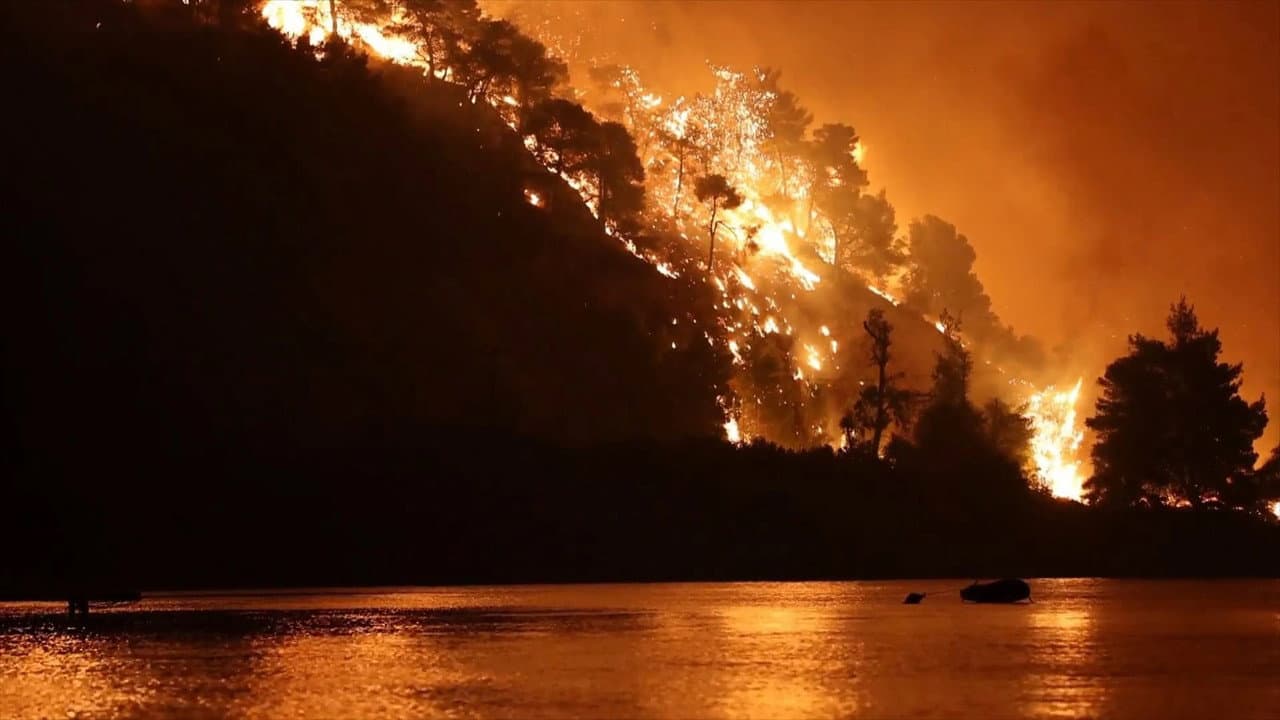
La Méditerranée en feu — translated loosely as The Mediterranean on Fire — sets its gaze on one of the world's most storied bodies of water at a moment when that water is under siege. The documentary doesn't traffic in abstract statistics. Instead it plants itself on coastlines, fishing boats, and scorched hillsides to show what's actually happening: ecosystems collapsing, communities fracturing, and a sea that has cradled civilizations for millennia now pushing back against the people who live along its shores. The title isn't metaphor. Or rather — it is, but it's also literal. Wildfires. Warming currents. Displacement. The film moves between these threads with a sense of mounting dread that feels earned rather than manufactured.
How La Méditerranée en feu came together across five production partners
The production story behind La Méditerranée en feu is itself worth understanding, because the film's ambition is inseparable from the coalition that made it possible. Five organizations pooled resources to bring this project to life: ARTE, the Franco-German public broadcaster with a long track record of backing challenging documentary work; WDR/Arte, the German public broadcaster arm that has co-financed some of Europe's most rigorous investigative films; ERT, the Greek public broadcaster whose involvement signals the documentary's particular attention to the eastern Mediterranean; A.J.D. Productions, an independent production house; and Small Planet, a company whose name, honestly, feels almost too on-the-nose given the subject matter.
That's a significant co-production arrangement — five entities across multiple countries coordinating on a single documentary — and it shows in the film's geographic sweep. You can feel the different national perspectives pulling at the edit, sometimes in tension, which gives La Méditerranée en feu a texture that single-country productions often lack. The film was released in 2026, and as of this writing it carries no formal IMDb user rating yet, which tells you something about how recently it landed on the international circuit. Awards recognition, if it comes, will likely follow the festival route that ARTE documentaries typically travel — think Hot Docs, IDFA, or the Thessaloniki Documentary Festival given ERT's involvement. Hard to say if any nominations have been confirmed at the time of publication, but the pedigree of the co-producers suggests the film will circulate widely on the documentary festival calendar.
Why La Méditerranée en feu stands out from other climate documentaries
What's striking is how resolutely human-scaled this film stays even when it's dealing with planetary-scale problems. A lot of environmental documentaries lose the thread somewhere between the data and the emotion — they show you a graph and expect you to feel something. La Méditerranée en feu doesn't do that. It stays close to faces, to specific places, to the particular texture of a fishing village that's been there for four hundred years and might not survive another generation of warming seas.
The cinematography — and I keep coming back to this — has a quality that suggests the filmmakers spent real time in these locations rather than parachuting in for a week of beauty shots. There's a sequence (early in the film, before the more overtly political material arrives) that lingers on the surface of the sea at dusk in a way that feels genuinely mournful. Not performed grief. Actual stillness. The kind of shot you only get when your crew has been somewhere long enough to stop performing and start watching.
The multi-broadcaster structure also means the film can't be accused of a single national bias. ERT's involvement in particular grounds the documentary in Greek coastal realities — migration pressure, fishery collapse, the specific devastation that wildfire seasons have brought to islands like Rhodes and Corfu in recent years — that northern European productions sometimes treat as distant statistics rather than lived catastrophe. Movie OTT editors flagged this film early precisely because that kind of cross-border documentary collaboration is rare, and the results here justify the logistical complexity.
Where to stream La Méditerranée en feu online
La Méditerranée en feu is currently available on major OTT services, and the quickest way to find out exactly which platform carries it in your region is to check the Where-to-Watch widget at the top of this page — Movie OTT updates those listings in real time as licensing arrangements shift. Given that ARTE is a primary co-producer, the film is likely accessible through ARTE's own streaming platform in France and Germany, where the broadcaster makes much of its documentary slate available for free. Beyond that, the involvement of WDR/Arte and ERT suggests additional European public broadcaster streaming availability. Movie OTT tracks current streaming availability across major platforms and regional services, so if the film has moved to a new home since this piece was published, the widget will reflect that. Don't rely on a cached Google result — streaming rights move fast.
Frequently asked questions
Q: Where can I watch La Méditerranée en feu?
La Méditerranée en feu is currently streaming on major OTT services. Check the Where-to-Watch widget at the top of this page on movieott.com for the most current, region-specific platform information, as availability can change with licensing cycles.
Q: Who produced La Méditerranée en feu?
The documentary was co-produced by five organizations: ARTE, WDR/Arte, ERT, A.J.D. Productions, and Small Planet. That multi-national production structure — spanning French, German, and Greek broadcasters alongside independent companies — gives the film its unusually broad geographic perspective on the Mediterranean.
Q: When was La Méditerranée en feu released?
La Méditerranée en feu was released in 2026. It's a very recent title, which explains why its IMDb user rating is still at zero — the audience data simply hasn't accumulated yet at the time of this writing.
Q: Is La Méditerranée en feu available in English?
Given the ARTE co-production model, the film is likely available in French and German as primary language versions, with subtitles in additional languages depending on the platform. Specific subtitle and dubbing options vary by streaming service — the platform pages listed in the Where-to-Watch widget will carry that detail.
Q: What is La Méditerranée en feu actually about?
The documentary examines the Mediterranean Sea's intersecting crises — environmental degradation, wildfire devastation, warming waters, and the human communities caught in the middle. It's not a single-issue film. It moves across multiple countries and perspectives to build a cumulative portrait of a region under pressure.
Who should watch La Méditerranée en feu
If you watch one documentary about the Mediterranean this year, make it this one. La Méditerranée en feu is built for viewers who are tired of climate films that preach without showing — this one shows. It rewards patience. The kind of film that sits with you afterward in a way that's hard to articulate but impossible to dismiss. Audiences who responded to films like Fire of Love or Anote's Ark will find familiar emotional territory here, but the European co-production framework gives it a political specificity those films didn't always have. Movie OTT recommends it without reservation for documentary fans and general audiences alike.