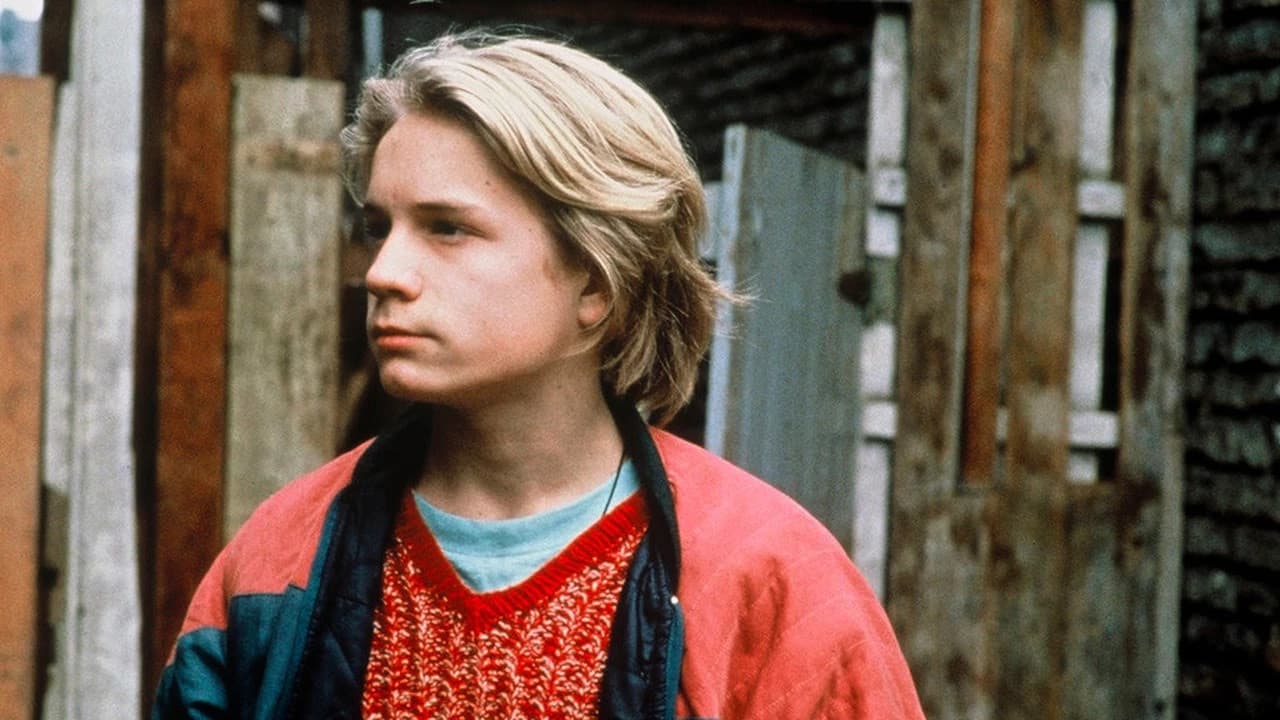
The story of La Promesse unfolds in working-class Liege
La Promesse introduces us to Igor, a 15-year-old boy living in the gritty industrial outskirts of Liege, Belgium, where his father Roger runs a sprawling operation built on exploitation and petty fraud. They're not criminals in the traditional sense—they're hustlers, swindlers, men who've learned to survive by cutting corners and cutting throats. Igor and Roger deal in undocumented labor, housing scams, and the kind of work that leaves no paper trail. The boy's childhood has been spent learning his father's trade: how to lie convincingly, how to spot weakness, how to turn desperation into profit. When an injured migrant worker—someone Roger's been exploiting on a construction site—asks Igor to promise he'll look after his wife and newborn child, the teenager finds himself standing at a fork in the road. Keeping that promise means betraying the only family he's ever known. Breaking it means living with a lie that'll eat him alive.
Behind the making of La Promesse: How the Dardenne brothers crafted their debut
La Promesse was written and directed by Belgian brothers Luc Dardenne and Jean-Pierre Dardenne, marking their feature-film debut with a work that would reshape their entire career trajectory. The film premiered at the 1996 Cannes Film Festival in the Directors' Fortnight section—a launching pad that immediately signaled this wasn't a conventional commercial drama. What's remarkable is that the Dardennes shot the film in strict chronological order, a decision that forced their young lead actor Jérémie Renier to grow into the character's moral awakening in real time, mirroring Igor's own journey. Olivier Gourmet, playing the father Roger, brought a naturalistic intensity that grounded the film in lived-in reality rather than theatrical performance. The production involved Les Films du Fleuve, Touza Productions, Samsa Film, and RTBF—a consortium of European producers betting on two unknown directors with an uncompromising vision. The film clocked in at 94 minutes, a lean runtime that never wastes a frame. At Movie OTT, we track how films like La Promesse—initially festival darlings—have circulated through the streaming ecosystem, and this one's availability across major platforms speaks to its enduring reputation among cinephiles and serious drama enthusiasts.
What makes La Promesse stand out in 1990s European cinema
What's striking about La Promesse is how it refuses easy answers or redemptive arcs. Igor isn't a saint-in-waiting; he's a kid raised by a con man, and his instinct is always toward self-preservation. The film's power comes from watching him wrestle with something his upbringing never prepared him for: genuine moral obligation. Renier's performance—raw, unglamorous, often uncomfortable to watch—captures that struggle without melodrama. The camera stays close, intimate, almost claustrophobic, which means we're trapped in Igor's head as he tries to navigate between two impossible loyalties. The construction-site sequences are particularly effective; the physical danger mirrors the emotional danger Igor's facing. What nobody mentions is how much the film trusts its audience to sit with ambiguity. There's no big speech where Igor learns his lesson. There's no moment where he becomes a better person. Instead, there's just a boy trying to do the right thing while everything in his world pushes him toward betrayal. The IMDb rating of 7.2 out of 10 actually undersells the film's critical impact—this is a work that influenced an entire generation of European filmmakers who came after, and it established the Dardennes' signature style: handheld realism, working-class subjects, moral dilemmas without convenient solutions.
How to watch La Promesse online through major streaming services
La Promesse is currently available on major OTT platforms, and you can check the Where to Watch widget at the top of this page to see which service has it in your region right now. Streaming availability shifts seasonally, so if it's not on your primary subscription today, it'll likely rotate back in. The film's 94-minute runtime makes it perfect for an evening watch—short enough that you won't feel the commitment, long enough to fully absorb the moral weight of what's happening on screen. If you're hunting for where to stream it, Movie OTT's platform tracker does the heavy lifting, pulling real-time availability data so you don't have to ping five different apps. The film holds up remarkably well on smaller screens, though if you've got access to a decent television, the Belgian industrial landscape—all concrete and rust and grey sky—benefits from the real estate.
Frequently asked questions
Q: Who directed La Promesse?
La Promesse was written and directed by Belgian brothers Luc Dardenne and Jean-Pierre Dardenne as their feature-film debut. The film premiered at the 1996 Cannes Film Festival and launched their international reputation.
Q: Is La Promesse based on a true story?
While the film isn't adapted from a specific true story, it draws from the lived reality of undocumented immigration and labor exploitation in 1990s Belgium. The Dardennes' documentary sensibility makes it feel drawn from life even though it's a fictional narrative.
Q: Who stars in La Promesse?
Jérémie Renier plays Igor, the 15-year-old protagonist, while Olivier Gourmet portrays his father Roger. Renier's naturalistic performance became his breakthrough role and earned him international recognition.
Q: How long is La Promesse?
The film runs 94 minutes, a tight runtime that keeps the moral tension taut throughout without a wasted scene.
Q: What's the main theme of La Promesse?
The film explores the collision between family loyalty and moral obligation, asking what happens when a child must choose between honoring a promise to a stranger and remaining faithful to his own father. It's fundamentally about conscience in a world that doesn't reward it.
Final thoughts on La Promesse
If you're looking for a drama that doesn't coddle you or wrap things up neatly, La Promesse delivers exactly that. It's a film about a kid who wants to do the right thing in circumstances that make doing the right thing nearly impossible—and the Dardennes never let us forget how much that costs. Watch it if you're hungry for European cinema that trusts its audience, or if you want to understand where one of contemporary film's most important directing teams found their voice. It won't make you feel good. It'll make you think.