What La Terra Trema is about
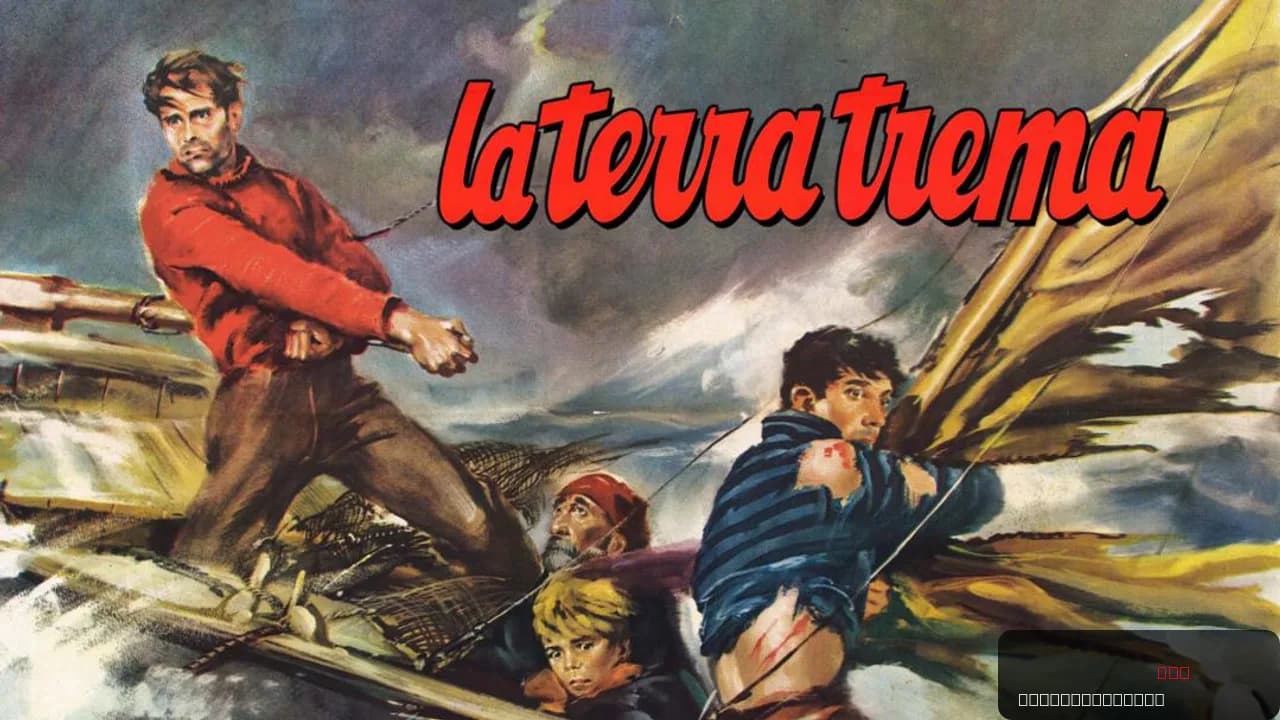
La Terra Trema tells the story of a Sicilian fishing family determined to break free from the cycle of poverty and economic exploitation that's defined their lives for generations. Set entirely in a small village on Sicily's east coast, the film follows their ambitious attempt to become independent boat owners—a dream that seems within reach until the weight of circumstance, indifference, and bad luck conspires against them. Nobody helps them. Fate itself seems to work against their aspirations. What unfolds is less a traditional narrative arc and more a documentation of how systems crush hope, how families fracture under pressure, and how survival itself becomes a daily negotiation with forces far beyond individual control.
Behind the making of La Terra Trema
Director Luchino Visconti created La Terra Trema as a loose adaptation of Giovanni Verga's 1881 novel I Malavoglia, but he approached the material in a radically unconventional way. Rather than cast professional actors, Visconti populated his film entirely with non-professionals drawn from the actual fishing community he was documenting. The cast—Antonio Arcidiacono, Giuseppe Arcidiacono, Venera Bonaccorso, Nicola Castorino, Rosa Catalano, Rosa Costanzo, and Alfio Fichera—weren't trained performers; they were fishermen, their families, their neighbors. This decision wasn't a cost-cutting measure; it was an artistic philosophy. Visconti wanted authenticity that couldn't be performed, a lived-in quality that professional acting would inevitably compromise.
The production itself was grueling, shot on location with a 153-minute runtime that demands patience and attention from viewers. The film blends scripted sequences with unscripted moments, creating what's often called a docufictional approach—part documentary, part fiction, wholly immersive. When the film was released in 1949, it didn't arrive as a commercial success, and it wasn't immediately recognized as the landmark work it would become. But critics and film historians gradually understood what Visconti had achieved: one of the essential documents of the Italian neorealist movement, a film that was named one of the top ten films of all time in the 1962 Sight & Sound poll. The work has endured because it doesn't feel like a performance. It feels like watching real lives unfold.
Why La Terra Trema stands out among neorealist films
What makes La Terra Trema remarkable—what's struck viewers for over seven decades—is its refusal to offer easy emotional catharsis or narrative resolution. The film doesn't ask you to feel sorry for these characters; it asks you to understand the systems that constrain them. There's a difference, and it's a crucial one. The performances from the non-professional cast carry a weight that's almost unbearable at times. You're watching people inhabit their own struggle, not perform it from a distance. When a family member breaks down, you're not sure if you're watching an actor cry or a human being breaking under real pressure—and that ambiguity is the entire point.
The film's visual language reinforces this sense of documentary realism. Cinematographer G.R. Aldo shoots the Sicilian landscape with an almost ethnographic precision: the boats, the nets, the cramped homes, the marketplace where fish are sold at exploitative prices. Every frame contains information about how these people live, work, and survive. What's striking is how Visconti never sensationalizes their poverty. He simply shows it. The critical consensus—an 82% Fresh rating on Rotten Tomatoes and a solid 7.8/10 on IMDb—reflects recognition that this isn't just a well-made film; it's a work of social documentation dressed in the language of cinema. The IMDb rating, based on over 6,100 votes, suggests it's found an audience across generations, even if that audience remains relatively specialized.
Where to stream La Terra Trema online
If you're ready to experience this landmark of Italian cinema, you can currently watch La Terra Trema on Prime Video. The film's 153-minute runtime means you'll want to set aside time for it—this isn't something to have playing in the background while you're scrolling your phone. Movie OTT tracks current streaming availability across multiple platforms, and the Where to Watch widget at the top of this page shows exactly where La Terra Trema is available right now. Since streaming catalogs change frequently, it's worth checking that widget before you sit down, but Prime Video is your current option for accessing Visconti's masterpiece.
Frequently asked questions
Q: Who directed La Terra Trema?
Luchino Visconti directed, co-wrote, and produced the film. Visconti was one of the defining figures of Italian neorealism, and La Terra Trema stands as one of his most important works.
Q: Is La Terra Trema based on a true story?
It's a loose adaptation of Giovanni Verga's 1881 novel I Malavoglia, but Visconti filmed it as a docufictional work using non-professional actors from the actual Sicilian fishing community. So while it's not a true story in the strict sense, it's deeply rooted in the real lives and struggles of the people depicted.
Q: How long is La Terra Trema?
The film runs 153 minutes—just over two and a half hours. It's a substantial commitment, but one that rewards patient viewing.
Q: What's the IMDb rating for La Terra Trema?
La Terra Trema holds a 7.8/10 rating on IMDb based on over 6,100 votes, with an 82% Fresh rating on Rotten Tomatoes, indicating strong critical and audience appreciation.
Q: Can I find La Terra Trema on multiple streaming platforms?
Currently, La Terra Trema is available on Prime Video. Check the Where to Watch widget on this page for the most up-to-date streaming availability, as catalogs change regularly.
Final thoughts on La Terra Trema
La Terra Trema isn't an easy watch—it won't leave you feeling uplifted or resolved. But that's precisely why it matters. Visconti created a film that respects its audience's intelligence and refuses to sentimentalize poverty or struggle. If you're interested in cinema history, Italian neorealism, or simply watching a work that captures human resilience in the face of systemic indifference, this is essential. It's a film that demands to be seen, discussed, and returned to. That's the mark of true art.