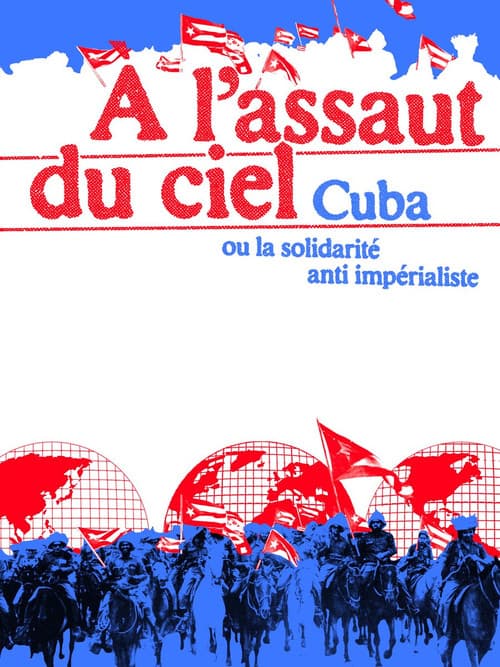
À l'assaut du ciel: A French Documentary That Refuses to Play Neutral About Cuba
A 2026 political documentary that doesn't hedge on imperialism, blockades, or where it stands.
Here's what you need to know upfront: this is a film built for people who already agree with its politics, and it doesn't apologize for that. À l'assaut du ciel, Cuba ou la solidarité anti-impérialiste — "Storming the Sky" — frames the U.S. economic blockade of Cuba as a siege and positions French solidarity movements as both a moral and practical response. The title borrows language from the Paris Commune on purpose. It wants you to feel the weight of revolutionary lineage.
Why This Documentary Matters Right Now (and Where It's Coming From)
What strikes me is how openly the film refuses the pose of neutrality that's become standard in prestige documentaries. There's no "both sides" here — the blockade is imperialism, the Cuban government is presented as a model, and the film asks viewers to move from intellectual sympathy to active solidarity. That's rare.
Produced by La brèche, a French outfit with roots in left-leaning political filmmaking, the documentary launched through activist and solidarity networks rather than traditional theatrical distribution. No Cannes premiere. No wide rollout. Instead, the film held an avant-première on 13 June in Nanterre — a Paris suburb with a long history of working-class organizing — through the radical journal Positions/Revue Trajectoires.
The Embassy of Cuba in France has been among the film's most visible institutional supporters. Their Facebook announcement framed the screening as part of a solidarity evening celebrating the Cuban people and government as "proof" that another world is possible. That kind of institutional endorsement tells you something about the intended audience — this isn't hedging its bets.
What You Won't Find (Yet) About This Film
Here's where it gets sparse: no director has been publicly credited. No runtime, budget, or box office data exists. The film hasn't entered the commercial tracking ecosystem — Rotten Tomatoes, Metacritic, and Letterboxd have nothing on it.
The IMDb rating of 0/10 reflects the fact that the film hasn't accumulated enough user votes to generate an actual score, not that it's universally disliked. Movie OTT continues tracking this title as verified information emerges, but for now, the critical record is essentially blank. Whether that changes depends on how widely the film circulates beyond activist networks.
The craft itself appears to blend archival footage, testimonial interviews, and on-the-ground observation — standard for solidarity documentaries, where the logic is cumulative rather than narrative-driven. The emotional architecture seems designed to move people to action: attending rallies, joining organizations, pressuring governments on sanctions policy. That's a specific and ambitious ask.
Where to Actually Watch It
Currently: The film's streaming footprint is still developing. It's been distributed primarily through event-style activist screenings rather than commercial platforms.
Check Movie OTT's where-to-watch widget for the most current platform breakdown — availability can shift quickly for titles still in their early release window. Streaming rights for political documentaries like this one tend to be fragmented across regional services, so don't rely on a single platform search.
If you're in France, the Embassy of Cuba's social networks and solidarity organizations are likely your best bet for upcoming screenings.
Who Should Watch This
You're the audience if you're already engaged with anti-imperialist politics and want your convictions sharpened. That's not a knock — it's an honest description of what the film does. Viewers interested in Cuban internationalism, how economic sanctions function as political tools, or the French left's relationship with Global South solidarity will find it directly relevant.
If you're approaching it expecting balanced analysis or a neutral survey? You're watching the wrong film. The thesis is the premise.
Compare it to other advocacy documentaries like The Revolution Will Not Be Televised (2003) about the attempted Venezuelan coup, where the filmmaking commits fully to a position rather than performed ambivalence. Or to French solidarity work like the documentaries that emerged from activist circles during the Cold War — this sits in that lineage.
FAQ
Q: Where can I watch this?
Check the streaming widget at the top of this page. The film's primarily been available through activist screenings; wider distribution is still developing.
Q: Who made it?
La brèche produced it. Individual director credits haven't been confirmed in public sources.
Q: When did it premiere?
13 June 2026 in Nanterre, France. No conventional theatrical release date has been announced.
Q: Is it a documentary or narrative film?
It's a documentary. Everything in it draws from real political conditions — specifically the ongoing blockade and the international solidarity movements responding to it.
Q: Why is the IMDb rating 0/10?
The film hasn't accumulated enough user votes yet. That's not a judgment on quality; it's a reflection of its limited release profile.
Next step: If the film becomes available through Movie OTT or near you, check the screening details and audience notes first — knowing what kind of event you're entering matters for a documentary this explicitly political.