The Story of Le Plaisir: Three Tales of Desire and Compromise
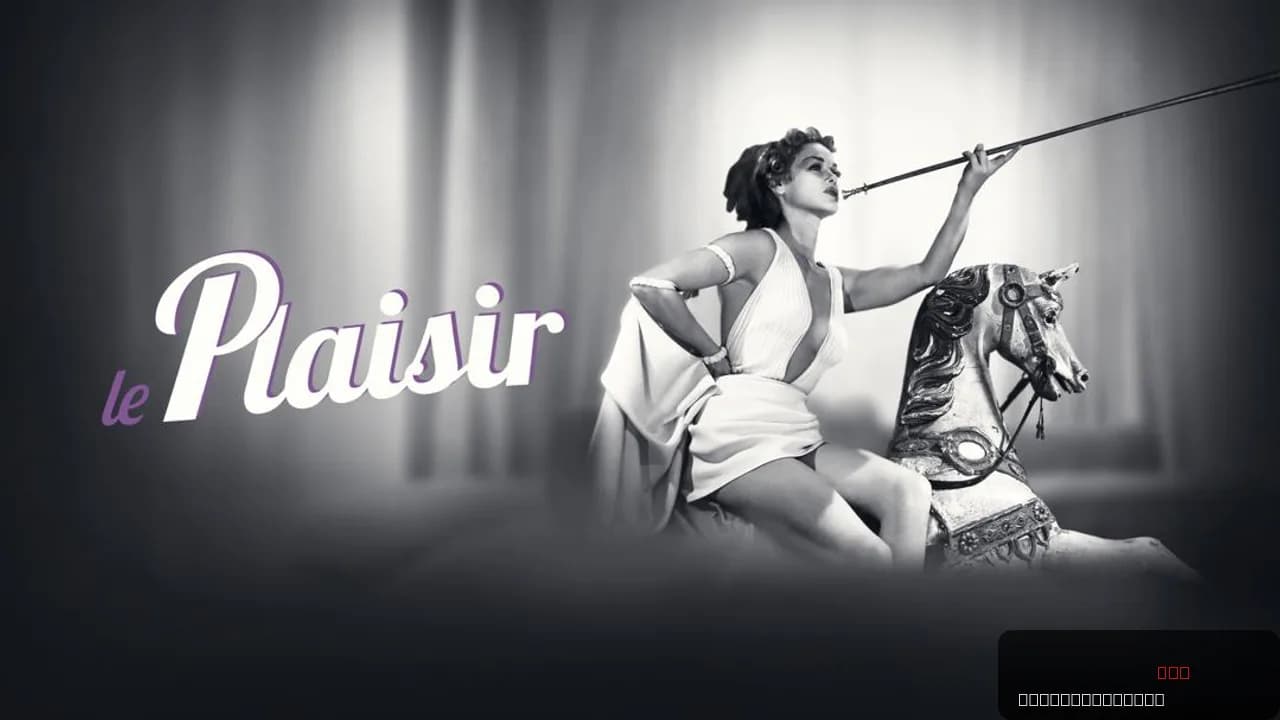
Max Ophüls' Le Plaisir unfolds as three interconnected stories drawn from Guy de Maupassant's short fiction, each exploring what happens when desire meets reality in late nineteenth-century France. The film doesn't announce itself as an "important" work—instead, it glides through ballrooms, country estates, and artist studios with a camera so restless it almost seems to be dancing. What binds these stories together isn't plot, but rather Ophüls' fascination with how people rationalize their wants, compromise their dreams, and find unexpected grace in life's ironies. The narrative moves from a masquerade ball where a man confronts the cost of youth, through a tale of working girls and unexpected redemption in the countryside, to a painter's studio where a model becomes something far more complicated than a muse. Spoilers won't spoil Le Plaisir—it's the texture of the thing that matters.
Behind the Making of Le Plaisir: Production, Cast, and Ophüls' Visual Ambition
Director Max Ophüls, a German-born filmmaker who'd already established himself as a master of mobile cinematography and romantic intrigue, adapted three distinct Maupassant stories—"Le Masque" (1889), "La Maison Tellier" (1881), and "Le Modèle" (1883)—into a unified film that premiered in 1952 and ran 100 minutes. The production brought together a constellation of French cinema's finest talent: Claude Dauphin, Danielle Darrieux, Madeleine Renaud, Jean Gabin, Simone Simon, and others whose names alone signal the ambition of the project. Ophüls' approach was characteristically audacious—rather than merely illustrate Maupassant's prose, he unleashed his camera in a way that matched the emotional and moral complexity of the stories themselves. The film arrived at a moment when European cinema was reasserting itself after the war, and Le Plaisir became one of those works that critics recognized immediately as something special. It currently holds a 7.1 rating on IMDb, a figure that undersells its influence on postwar cinema, though such metrics rarely capture what makes a film genuinely matter to those who've seen it.
What Makes Le Plaisir Stand Out: Ophüls' Camera and the Performances That Anchor It
What's striking about Le Plaisir is how Ophüls refuses to judge his characters—he observes them with a kind of tender irony that's almost impossible to achieve on film. The camera work is so fluid, so deliberately choreographed, that it becomes a character itself; watching it circle a ballroom or track through a bedroom feels less like conventional filmmaking and honestly more like witnessing someone's interior life made visible. Danielle Darrieux, in particular, carries the film with a performance that's both playful and melancholic—she understands the joke of desire before anyone else does, and that knowledge sits behind her eyes in almost every scene. The thing that gets overlooked is how Le Plaisir handles comedy without winking at the audience. These aren't broad gags; they're the small, recognizable humiliations and self-deceptions that anyone who's wanted something badly will recognize. Madeleine Renaud's work in the second segment—the story of the madam and her girls—brings a maternal warmth to what could've been a cynical premise. Ophüls captures something that cinema rarely manages: the simultaneous sadness and lightness of human compromise, the way we can laugh at ourselves and mean it at the same time.
Where to Stream Le Plaisir Online
If you're ready to experience Ophüls' visual mastery, Le Plaisir is currently available on Prime Video, where you can stream it in full. The film's 100-minute runtime makes it an ideal evening—substantial enough to feel like an event, lean enough that you won't feel drained afterward. Movie OTT tracks current streaming availability across platforms, and the where-to-watch widget at the top of this page will show you exactly where the film is accessible right now. Prime Video's restoration of the print is solid, preserving the intricate black-and-white cinematography that Ophüls designed so carefully. Don't let the 1952 release date fool you into thinking this will feel dated; if anything, the film's emotional intelligence and visual sophistication have only deepened with time.
Frequently Asked Questions
Q: Is Le Plaisir based on true stories?
No, Le Plaisir adapts three fictional short stories by Guy de Maupassant, the nineteenth-century French writer known for his mordant observations of human nature and desire. The stories are entirely imagined, though they're grounded in the social realities of their era.
Q: Who directed Le Plaisir?
Max Ophüls, a German-born director renowned for his mobile camera work and romantic narratives, directed Le Plaisir in 1952. Ophüls is also celebrated for Letter from an Unknown Woman and The Earrings of Madame de...
Q: What's the runtime of Le Plaisir?
The film runs 100 minutes, making it a compact but visually dense experience that never feels rushed despite covering three separate stories.
Q: Does Le Plaisir have subtitles?
Yes, the Prime Video version includes English subtitles, so English-language viewers can follow the original French dialogue without barrier. Most streaming services carrying classic European cinema include subtitle options as standard.
Q: Why is Le Plaisir considered important?
Ophüls' film is widely regarded as a masterwork of postwar European cinema, celebrated for its innovative camera work, sophisticated handling of narrative structure, and its refusal to moralize about its characters' desires and compromises. It influenced countless filmmakers and remains a touchstone for understanding how cinema can capture emotional and moral complexity.
Final Thoughts on Le Plaisir: A Film for Anyone Who Loves Cinema
Le Plaisir is the kind of film that rewards repeat viewing—not because it's obscure or difficult, but because Ophüls packed so much visual and emotional intelligence into every frame that you'll catch something new each time. If you appreciate filmmaking that trusts its audience, performances that suggest rather than announce, and a sensibility that's both playful and serious, this is essential. It's a reminder that pleasure—in cinema, in art, in life—doesn't need to be justified or explained. Sometimes it just needs to be felt. Movie OTT readers seeking classic cinema will find Le Plaisir a perfect entry point into Ophüls' body of work, and streaming it on Prime Video means there's no excuse to delay.