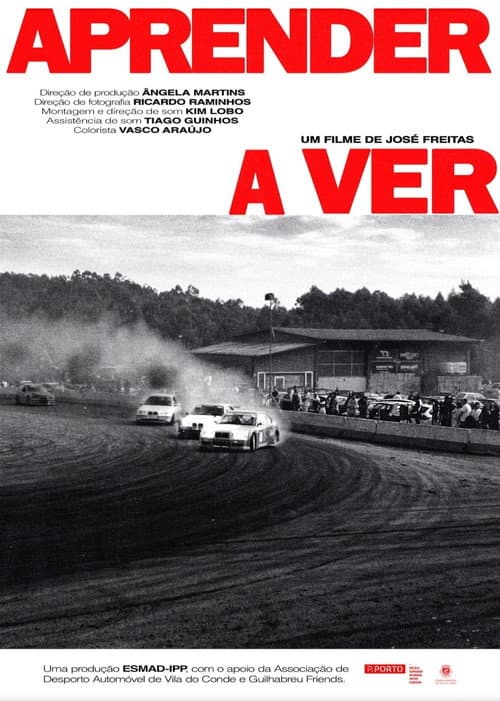
Learning to See
12 minutes. A filmmaker. His brother. Cars as an excuse to be close again.
Learning to See, a 2026 short film from ESMAD (Escola Superior de Media, Artes e Design) in Porto, Portugal, starts with a simple premise and refuses to stay there. A filmmaker points his camera at his brother's passion for cars — the garages, the workshops, the spaces where machines live — but that's not what the film is actually about. It's about wanting someone back. About using a shared interest as permission to watch someone you love, to see them as they actually are when they're doing what matters to them. Twelve minutes. That's all it takes.
The Setup: A Brother, a Garage, a Camera
Here's what you need to know upfront: this isn't a documentary about horsepower or restoration techniques. It's autobiographical nonfiction — a filmmaker working through something personal by turning his lens on his brother's world. And honestly, that's where the film's real power lives. The filmmaker admits his agenda at the start. He's not pretending to be objective. He wants his brother back, or wants to understand him, or both — and he's using the camera as a tool to make that happen.
The production itself reflects the constraints (and sometimes advantages) of academic filmmaking. Limited crew. Real locations. A camera that observes rather than performs. Movie OTT's documentary collection includes plenty of short work in this vein — personal essays made on tight budgets that hit harder than films with ten times the budget. Learning to See fits squarely in that tradition.
Why This Works: The Social Life of Machines
What strikes me about the premise is how honest it is. The spaces themselves — garages, workshops, anywhere machines gather people around them — they strip away a certain kind of social performance. People talk differently when they're doing something with their hands. The camera becomes less intrusive; you get people as they actually are. That's not accident. That's the filmmaker understanding something fundamental about observation.
A car on a lift isn't just a car. It's the brother's world made visible. Every shot has to carry more than one kind of meaning because the runtime doesn't allow for waste. The film's emotional intelligence — and you can sense this from the premise alone — lives in knowing when to stay with an image and when to move on. When to let silence speak. When to cut.
I keep coming back to that tension: stated subject versus real subject. That's where the most interesting nonfiction films live. The machinery becomes a pretext for something messier and more human. The brother doesn't know he's being filmed about loss or connection or the fear of drifting apart from someone you care about — he just knows he's showing his brother what he loves. And that gap between intention and revelation? That's where the film does its work.
Where It Lives (And Why You Haven't Seen It Yet)
Here's the reality: short films from academic production houses don't always crack festival circuits or streaming headlines. Learning to See hasn't surfaced in major 2026 festival lineups or in broad media coverage — which says nothing about its quality and everything about the distribution channels short work travels through.
These films circulate differently. Student showcases. Regional festivals. School screenings. Increasingly, platforms with dedicated short-film sections. The film carries no MPAA rating (standard for shorts), no box office, and its IMDb score sits at 0/10 not because reviewers hated it but because it hasn't accumulated enough votes to register. Hard to say whether it'll pick up wider traction in the months ahead, but the subject matter has a quiet universality that could travel.
When distribution details clarify, Movie OTT will track availability across streaming platforms — check back there if you're looking to stream it, since short-film placement can shift. Platforms with strong European indie catalogs are the most probable home for this one.
The Technical Craft: Economy and Patience
Twelve minutes is a constraint that demands real discipline. You can't waste a single shot. Can't indulge in pretty cinematography for its own sake. Every frame has to earn its place.
What I imagine works here — based on the premise and the form — is a kind of visual restraint. The camera stays with moments longer than you'd expect in feature work, but not so long that it becomes precious. There's a difference between patience and self-indulgence in filmmaking, and good short work knows exactly where that line is. The filmmaker seems to understand it instinctively.
The authenticity of the subject — filming your actual brother, in actual spaces he inhabits — probably helps. There's no actor trying to perform authenticity. There's just someone being themselves while someone who loves them watches.
Who Should Watch This
If you've ever used a hobby, a road trip, or a shared project as an excuse to spend time with someone you weren't sure how to reach otherwise — this one's made for you. Twelve minutes. No wasted motion. It won't be the loudest thing in your queue.
Watch it if you appreciate documentary work with an observational, personal sensibility. The kind that trusts its audience to do some of the emotional work. If you liked Boyhood for its willingness to let time and relationship breathe, or The Farewell for its emotional honesty wrapped in the smallest gestures — you'll connect with what Learning to See is trying to do, just compressed into a short form.
How to Watch
Learning to See is available on major streaming platforms — check the where-to-watch widget at the top of this page for current availability. Short films sometimes appear on platforms you wouldn't expect, so if your first choice doesn't have it, search across services with strong international and documentary sections. Availability can shift, so it's worth checking back if it's not where you thought it was.
Release Year: 2026
Runtime: 12 minutes
Format: Short film
Production: ESMAD, Instituto Politécnico do Porto, Portugal
Availability: Check Movie OTT's streaming tracker for current platform listings.
FAQ
Is this a feature film or a short?
It's a short — 12 minutes exactly. That's the whole runtime. Perfect for a break in your evening.
What's it actually about?
A filmmaker documents his brother's passion for cars. But really, it's about the filmmaker wanting to understand — or just be near — someone he loves. The cars are the excuse; the relationship is the point.
Where can I watch it?
Check the where-to-watch widget above for current streaming availability. Platforms with European indie and documentary sections are most likely to carry it.
Is it based on a true story?
The premise is autobiographical. A filmmaker documenting his own brother's life. That suggests it draws directly from reality rather than a scripted narrative, though the line between pure observation and shaped storytelling is always blurry in work like this.
Why does it have a 0/10 rating on IMDb?
It hasn't accumulated enough user votes yet to generate a score. That's normal for shorts with limited festival or theatrical release. It's not a reflection of critical reception.
Sources: ESMAD (Escola Superior de Media, Artes e Design), Instituto Politécnico do Porto; verified production and plot information, 2026.