The story of Lessons of Darkness
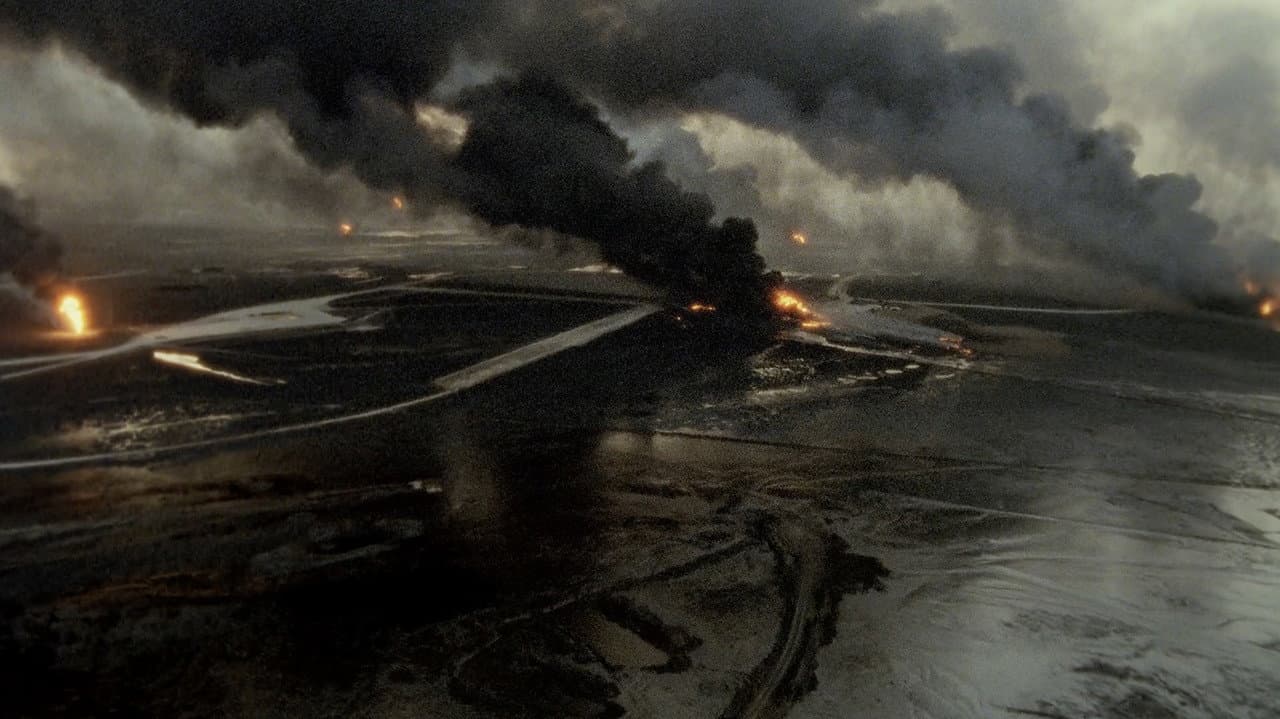
Werner Herzog's Lessons of Darkness isn't a conventional war documentary. Released in 1992, just days after the Gulf War ended, the film captures something far stranger than a historical record—it's a descent into an almost extraterrestrial hellscape. Herzog arrived in Kuwait during the final week before the massive oil fires would be extinguished, and what he filmed was a landscape so scorched, so smoke-choked, so fundamentally transformed by human conflict that it barely resembles Earth anymore. The murky skies, the capricious flames dancing across the horizon, the blackened earth—these become the real subjects, not interviews or talking heads. This is Herzog doing what he does best: finding the profound in the extreme, the poetic in the catastrophic.
Behind the making of Lessons of Darkness
The production of Lessons of Darkness was a collaboration between Canal+, Première, and Werner Herzog Filmproduktion, bringing together European broadcasters with Herzog's distinctive vision. At just 54 minutes, it's technically a TV movie, yet it carries the weight and ambition of a feature-length feature—a testament to Herzog's ability to pack philosophical heft into compact form. The film arrived at a peculiar moment in cinema history, when the Gulf War itself was still fresh, still contested in the public imagination, and yet Herzog wasn't interested in the war's politics or its human casualties. Instead, he was drawn to the environmental aftermath, the oil fires that raged across Kuwait's desert for months. The production faced obvious logistical challenges—getting to an active war zone, filming near burning oil wells, capturing the scale of the destruction—but Herzog's track record of chasing extreme environments (from the Amazon in Fitzcarraldo to the volcanoes of Into the Inferno) made him the natural choice for this assignment. The film premiered to strong critical reception, earning a 7.9 rating on IMDb and establishing itself as one of Herzog's most haunting works.
What makes Lessons of Darkness stand out
Here's what's striking about Lessons of Darkness: it refuses to be angry. You'd expect outrage, a condemnation of war, a call to environmental action. Instead, Herzog presents the burning fields with an almost reverential calm, as if he's documenting the death throes of a civilization or witnessing some biblical plague. The camera lingers. The soundtrack—spare, unsettling—doesn't manipulate. What emerges is something far more unsettling than activism: a kind of acceptance that destruction can be beautiful, that horror and aesthetics aren't opposites but can coexist in the same frame. One audience member nailed it when they asked, "Can destruction be beautiful?" and answered their own question: "Yes." That tension—the moral discomfort of finding beauty in devastation—is what the film holds without resolving. It's not that Herzog is indifferent to suffering; it's that he's interested in how we perceive catastrophe, how our eyes process the unprocessable. The film also works as a spiritual companion to Herzog's earlier desert meditation Fata Morgana, which similarly treats the landscape as a living entity with its own voice, its own agency. In Lessons of Darkness, the desert speaks through fire.
Where to stream Lessons of Darkness online
Lessons of Darkness is available on major OTT services, and Movie OTT maintains a current widget at the top of this page showing exactly where you can watch it right now. Streaming availability shifts frequently depending on your region and platform licensing agreements, so it's worth checking the widget before you settle in—what's on one service today might move next month. The film's 54-minute runtime makes it ideal for a single sitting, and its hypnotic, meditative pacing rewards uninterrupted viewing. Movie OTT tracks these availability changes across Netflix, Prime Video, and other major platforms, so you'll always know where to find Herzog's work without hunting through multiple apps.
Frequently asked questions
Q: Who directed Lessons of Darkness?
Werner Herzog directed Lessons of Darkness. Herzog is a legendary German filmmaker known for his obsessive documentaries and ambitious narratives, from Aguirre, the Wrath of God to Grizzly Man. His distinctive voice—philosophical, unflinching, often drawn to extreme environments—defines every frame of this film.
Q: Is Lessons of Darkness based on a true story?
Yes, Lessons of Darkness is a documentary filmed in the aftermath of the 1991 Gulf War. Herzog captured real footage of the oil fires burning across Kuwait's fields in the week before they were extinguished. It's not a narrative reconstruction but direct documentation of an actual environmental catastrophe.
Q: How long is Lessons of Darkness?
Lessons of Darkness runs 54 minutes. Despite its brevity, Herzog packs the film with visual and philosophical density—it feels far longer in the best way, the kind of short work that lingers in your mind well after it ends.
Q: What's the rating of Lessons of Darkness?
Lessons of Darkness holds a 7.9/10 on IMDb, reflecting strong critical and audience appreciation. It's classified as a documentary war film, though it defies easy categorization—it's part essay, part tone poem, part apocalyptic vision.
Q: Where can I watch Lessons of Darkness?
Check the Where to Watch widget at the top of this page for current streaming availability on your region's platforms. Movie OTT keeps this information updated across all major services, so you'll always know where to find it.
Final thoughts on Lessons of Darkness
If you're looking for a traditional war documentary—one with interviews, historical context, moral clarity—Lessons of Darkness will frustrate you. But if you're willing to sit with ambiguity, to let Herzog's camera work on you without resistance, you'll encounter something rare: a film that treats environmental destruction not as a problem to solve but as a mystery to contemplate. It's beautiful and terrible and deeply human in its refusal to look away. Don't miss it.
