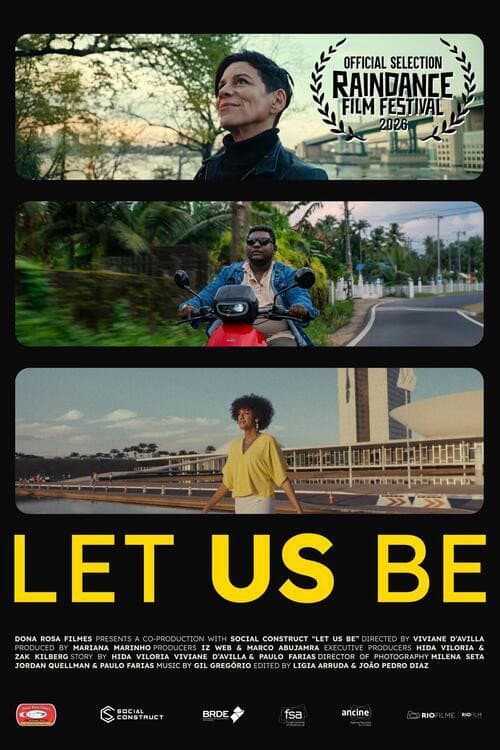
What Let Us Be is about — and why it matters right now
Let Us Be is a 2026 documentary portrait of intersex people born with sex anatomy that doesn't fit conventional male or female definitions, filmed across three countries — India, Brazil, and the United States — over what appears to be an extended production period that allowed filmmakers to capture the full weight of lives lived at the margins of medical and social convention. The film doesn't open with statistics or talking-head experts. It opens with people. Faces. Voices describing childhoods marked by surgeries they never consented to, by parents who were told by doctors that "fixing" their child was the compassionate choice. The 89-minute runtime is tight — almost deceptively so — because the film never lets you look away long enough to feel comfortable.
Behind the making of Let Us Be — production, reach, and the context it enters
Hard to say if Let Us Be had a conventional festival circuit rollout, because as of early 2026, the film doesn't appear on IMDb's upcoming releases calendar or in major trade coverage of anticipated titles. It's absent from Rolling Stone's list of the 50 most anticipated new movies of 2026, which tracks everything from studio tentpoles to prestige documentaries. That absence isn't a knock — it's actually consistent with how many of the most important human rights documentaries reach audiences: quietly, through streaming platforms and word of mouth, bypassing the awards-season machinery entirely.
What the film does have is scope. Shooting across three countries — each with distinct legal frameworks around intersex rights, different cultural attitudes toward gender and the medical establishment, and wildly different levels of activist infrastructure — is genuinely difficult to pull off without the result feeling disjointed. Let Us Be manages it by anchoring each geography in specific individuals rather than abstract policy debates. The result is a film that feels handmade, even when the subject matter is enormous.
No MPAA rating has been publicly confirmed at the time of writing, and box office figures don't apply to a documentary of this nature and distribution model. Awards recognition, if any comes, will likely arrive through human rights film circuits and documentary-specific bodies rather than mainstream Academy consideration — though stranger things have happened. Movie OTT tracks documentary titles like this one across streaming platforms as they become available, which is genuinely useful when a film's release path is this unconventional.
Why Let Us Be stands out from other intersex and LGBTQ+ documentaries
The thing nobody mentions about most intersex documentaries is how clinical they can feel — how quickly they retreat into legal language and medical terminology as a kind of protective armor. Let Us Be doesn't do that. There's a sequence — I won't say where it falls in the film's structure — where one of the subjects in India describes learning, as an adult, what had been done to their body as an infant. The camera doesn't cut away. It doesn't soften anything with music. It just stays.
What's striking is how the film handles the cross-cultural dimension without flattening it into a simple "this is a universal problem" message. The experience of an intersex person in rural India navigating family shame and a medical system with almost no accountability looks genuinely different from the experience of an activist in São Paulo who has legal frameworks to push against, or someone in the United States who grew up with access to intersex advocacy networks but still faced the same non-consensual surgeries. The film holds all three realities at once without pretending they're identical.
The craft here — whatever the budget — is thoughtful. Cinematography that feels intimate without being intrusive. The kind of documentary filmmaking that takes its subjects seriously as people, not case studies. Honestly, that's rarer than it should be in this genre. Movieott.com has been tracking the growing catalog of intersex and gender-identity documentaries on major streaming platforms, and Let Us Be sits in genuinely distinguished company.
Where to stream Let Us Be online
Let Us Be is currently available on major OTT services — and the quickest way to find out exactly which platforms are carrying it in your region right now is to check the Where-to-Watch widget at the top of this page, which Movie OTT updates in real time as streaming rights shift. Documentary distribution deals can change faster than most people realize, with titles moving between platforms or becoming available in new territories with very little public announcement. Movie OTT tracks current streaming availability across services like Netflix, Prime Video, and other major platforms so you don't have to check each one manually. If Let Us Be has landed on a new service since this editorial was published, the widget will reflect it.
Frequently asked questions
Q: Where can I watch Let Us Be online?
Let Us Be is available on major OTT streaming platforms — check the Where-to-Watch widget at the top of this page for the most current and region-specific options. Streaming availability for documentary titles can shift, so real-time tracking is the most reliable approach.
Q: Is Let Us Be based on a true story?
Yes — Let Us Be is a documentary, meaning every story in it is real. The film follows actual intersex individuals across India, Brazil, and the United States, documenting their lived experiences with non-consensual childhood surgeries and the ongoing fight for bodily autonomy.
Q: What is the runtime of Let Us Be?
Let Us Be runs 89 minutes. It's a tight, focused documentary that doesn't pad its runtime — every sequence earns its place in the film's argument.
Q: Does Let Us Be cover intersex rights in multiple countries?
It does. The documentary spans three countries — India, Brazil, and the USA — deliberately chosen to show how intersex people face similar medical and social pressures across very different cultural and legal contexts. The cross-continental structure is one of the film's defining choices.
Q: Who is Let Us Be made for?
Let Us Be is made for general audiences, not just those already familiar with intersex issues. It's structured around personal stories rather than policy arguments, which makes it accessible to anyone willing to engage seriously with questions of bodily autonomy and human dignity.
Who should watch Let Us Be — a final word
Let Us Be is not easy viewing. It wasn't designed to be. But it's the kind of documentary that recalibrates something in you — the way you think about consent, about what medicine is actually for, about the quiet violence of "normalizing" a body that was never abnormal to begin with. Ninety minutes. Three countries. Real people. If you've ever wondered what it means to fight for the right to simply exist as you were born, this film answers that question with more honesty than most. Don't miss it.