Letters to Etel
A Lebanese photographer writes letters to his dead friend — and then Gaza forces those letters to mean something much darker.
What You're Actually Watching
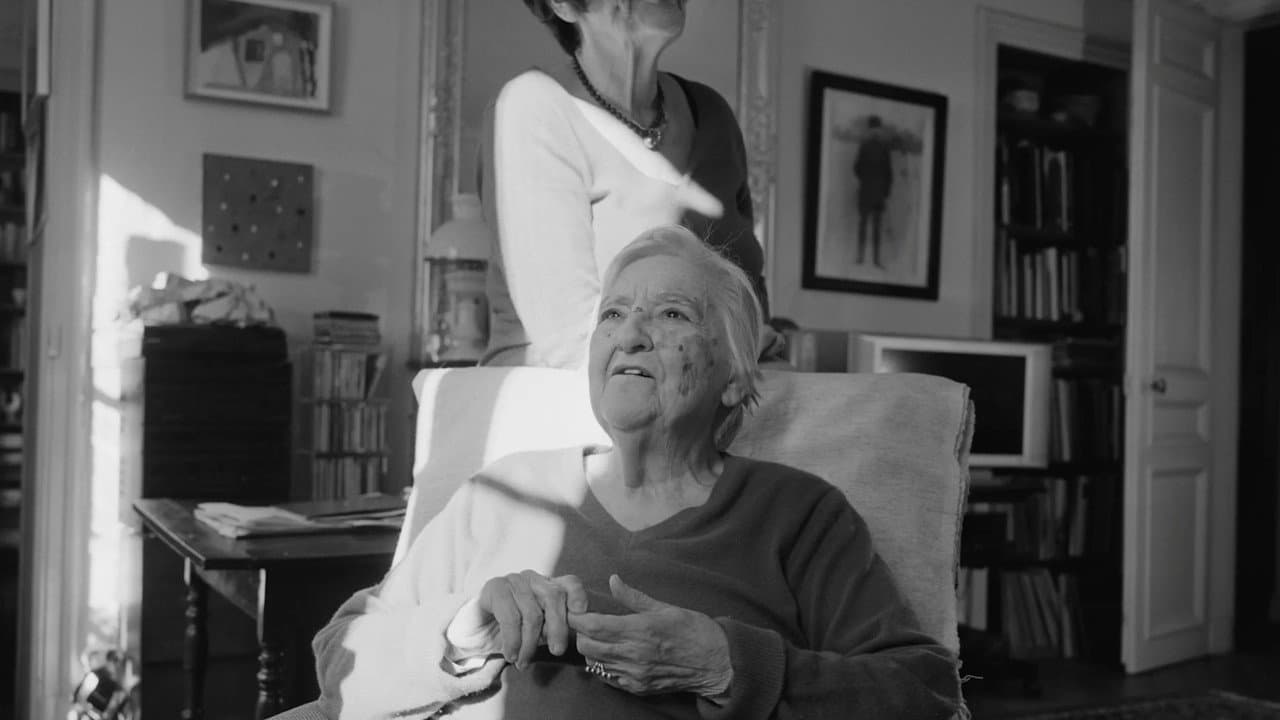
Letters to Etel is a 43-minute documentary that works like an elegy written in real time. Fouad Elkoury, a photographer who's spent decades documenting Lebanon's wars and ruins, begins corresponding with Etel Adnan after her death in November 2021 — not eulogies, just letters to someone who can't read them. Then the genocide in Gaza unfolds, and suddenly those letters stop being private grief. They become evidence.
The film pairs Elkoury's photographs with Adnan's The Arab Apocalypse, a long poem she wrote in 1989 during the Lebanese Civil War. What's striking is how precisely her 40-year-old words seem to describe what's happening now — not because she predicted the future, but because catastrophe has become the recurring structure of Arab life. The film doesn't pretend otherwise. It sits inside that pattern without looking away.
The runtime isn't a limitation — it's the whole point. Forty-three minutes is exactly long enough to build weight, not long enough to let you escape.
Who Made This, and Why It Matters
DKB Productions brought this into the world in 2026, though the real story isn't about a production timeline. It's about a photographer who decided grief needed a form, and that form had to be a letter.
Fouad Elkoury isn't a household name outside art-photography circles, but his work is woven into the visual memory of Lebanon and the Arab diaspora. He photographed Beirut through its wars, its reconstructions, its repeated devastations — the same city, different versions of wreckage. Etel Adnan, who died in Paris at 96, was something closer to irreplaceable. She moved between Arabic, French, and English; painted accordion-fold leporellos that collectors still fight over; and wrote one of the most formally daring responses to the Lebanese Civil War ever put on a page. The Arab Apocalypse reads like prophecy now. It probably felt like documentation then.
The fact that their work rhymes so precisely with Gaza in 2026 is either the saddest kind of pattern recognition or proof that the Arab world never stopped being apocalyptic — just waiting for the rest of the world to catch up.
Why This Film Lands Differently Than You'd Expect
I keep coming back to the structural idea itself: Elkoury doesn't eulogize Adnan. He argues with her. He places his photographs in conversation with her poetry, and that conversation turns out to be less a tribute than a confrontation. The poem came out of 1982 (Sabra and Shatila). The photographs span decades of Lebanese crisis. Now both sit beside images from Gaza in a way that feels less like artistic curation and more like accumulated evidence of the same wound opening again.
What makes it work — and what makes it difficult to shake — is the refusal to aestheticize the grief. There's no swelling score telling you when to feel something. The letters, presumably read in Elkoury's voice or rendered through text, carry the register of someone genuinely unsure whether writing to the dead is useful or just necessary. That uncertainty is the film's emotional engine. It doesn't resolve. It accumulates.
Hard to say if that lands differently for viewers with a connection to Lebanon, to Adnan's work, or to Palestine — but the film doesn't ask you to have read The Arab Apocalypse beforehand. It unfolds the connections as it goes. By the end, you understand why Adnan's voice matters now. You understand why Elkoury needed to write.
Where to Watch It
Letters to Etel is currently available on major streaming platforms. Check the Where to Watch widget at the top of this page for real-time availability — streaming rights for documentary shorts shift faster than features do, and Movie OTT updates its platform tracker whenever new services pick up the film.
Given the subject matter and 43-minute length, streaming is the right format for this one. This isn't a theatrical experience (though it would probably hit harder on a big screen). It's something you watch at home, possibly more than once — the way you reread letters.
Quick Facts You Probably Want to Know
Q: How long is it?
43 minutes. Dense. Not padded.
Q: Who was Etel Adnan?
Lebanese-American poet, novelist, painter. Died November 2021 at 96. The Arab Apocalypse (1989) is her most famous work — a response to the Lebanese Civil War that now reads like a warning about Gaza.
Q: Is this about Gaza specifically?
It's about Gaza through the lens of personal grief and Adnan's work. Not a conventional conflict documentary. It's more like: here's what an artist wrote about one catastrophe, here's what another artist photographed, and here's what's happening now. Make your own connections.
Q: Do I need to have read Adnan before?
No. The film brings you in.
Q: Where can I find ratings and reviews?
Movie OTT tracks critical reception as it comes in — the film's still early in its festival circuit, so aggregated scores are still accumulating. Worth bookmarking if you want to watch the reception develop.
Q: What if I want to read more about Etel Adnan afterward?
Start with The Arab Apocalypse itself, or pick up her essay collection Shift and Other Writings. Both are still in print and they'll deepen what you see in the film.
Who Should Watch This
If you care about documentary art, about Adnan's writing, about photography as witness, or about the long history that connects Lebanon to Gaza — this is worth your 43 minutes. It's not a film for every mood. It demands attention and a willingness to sit with grief that doesn't resolve into something comfortable.
But for anyone trying to understand how artists process catastrophe, how the past keeps showing up in the present, how you keep writing letters to the dead because what else are you supposed to do — this film gets it. Watch it once. Let it sit. Then probably watch it again.