The story of Lotta Leaves Home
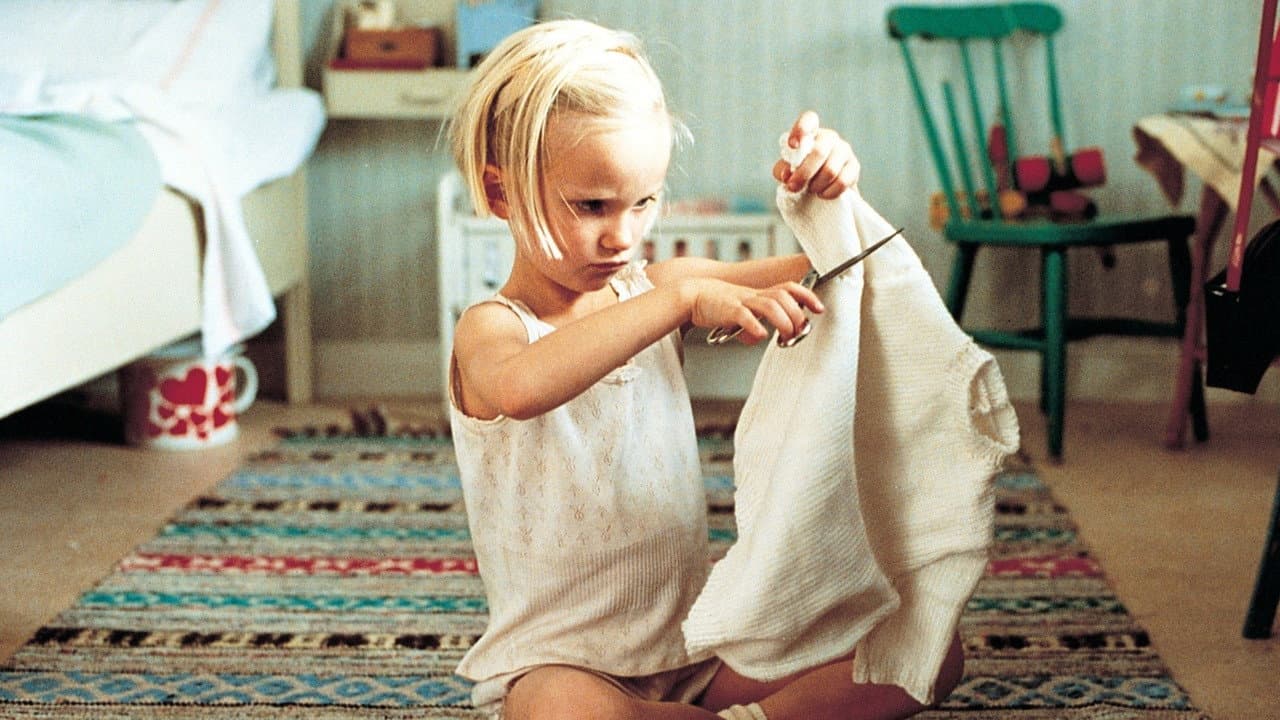
Lotta Leaves Home tells the deceptively simple tale of a stubborn, spirited five-year-old girl who decides—with the kind of logic only a young child possesses—that it's time to move out. No negotiations. No goodbyes. And definitely, absolutely not putting on that stupid sweater her mother keeps insisting on. What starts as a declaration of independence becomes a window into how children see the world: as a place where their rules matter just as much as anyone else's, where small defiances feel monumental, and where adventure waits around every corner if you're brave enough to look for it. The film doesn't condescend to its young protagonist; instead, it takes her seriously, letting her stubbornness and determination drive the narrative forward in ways that feel both comedic and genuinely touching.
Behind the making of Lotta Leaves Home
Lotta Leaves Home arrived in 1993 as part of the Lotta Collection, a Swedish film series rooted in the beloved children's literature created by Astrid Lindgren—the same author behind Pippi Longstocking. The production brought together SF Studios, Astrid Lindgrens Värld (Astrid Lindgren's World, the theme park and production entity), and SVT (Swedish Television), creating a distinctly Scandinavian approach to family entertainment that prioritizes character authenticity over sentimentality. Running at a brisk 79 minutes, the film respects both children's attention spans and their intelligence. The cast and crew understood they were working within a franchise that already had cultural cachet in Sweden and across Europe, yet Lotta Leaves Home manages to feel fresh rather than obligatory—a testament to thoughtful direction and a young lead performance that carries the entire film without ever feeling precocious or affected. While box office figures for regional Swedish releases from 1993 aren't always widely publicized, the film's enduring presence in streaming catalogs and its inclusion in the Lotta Collection canon suggest it found its audience and kept it.
What makes Lotta Leaves Home stand out
There's something genuinely striking about how this film refuses to punish Lotta for her independence. Most children's stories from that era—honestly, from any era—would use a runaway plot to teach a lesson about obedience or gratitude. Not this one. Instead, what unfolds is a portrait of childhood agency that feels almost radical in its respect for a five-year-old's right to make (and live with) her own choices. The film captures something true about how kids think: they don't see obstacles the way adults do, and their solutions—while often impractical—come from a place of genuine logic that makes perfect sense inside their own heads. I keep coming back to the specificity of that sweater detail. It's not a metaphor for parental authority in some abstract sense; it's the actual, concrete thing Lotta won't do, and that specificity is what makes her real. The performances ground the film in a kind of everyday authenticity that prevents it from tipping into cuteness, even when the situations are undeniably charming. At 5.923 on IMDb, the film sits in that honest middle ground—appreciated by those who've seen it, not universally acclaimed, which somehow makes it feel more genuine. What's striking is that the film doesn't need universal praise to work; it works because it understands its audience: kids who've felt frustrated by rules they don't understand, and adults who remember what that felt like.
Where to stream Lotta Leaves Home online
Lotta Leaves Home is available across major OTT services, making it accessible whether you're searching for something to watch on a rainy afternoon or building out your family's streaming library. You can check the Where to Watch widget at the top of this page to see which platforms currently have it in your region—availability shifts, and Movie OTT tracks those changes so you don't have to hunt across five different apps. The film's compact runtime and family-friendly appeal make it perfect for streaming, and the picture quality on modern platforms does justice to the film's warm, lived-in aesthetic. If you're already subscribed to one of the major services, there's a solid chance Lotta Leaves Home is already waiting for you.
Frequently asked questions
Q: Is Lotta Leaves Home based on a book?
Yes. The film is part of the Lotta Collection, which draws from Astrid Lindgren's children's literature. Lindgren created the character Lotta decades before this 1993 film adaptation, and the story has roots in her original writing, though the film adapts and expands on those ideas.
Q: How long is Lotta Leaves Home?
The film runs 79 minutes—short enough to hold young viewers' attention without feeling rushed, and long enough to develop Lotta's character and her journey with real depth.
Q: Who produced Lotta Leaves Home?
The film was produced by SF Studios, Astrid Lindgrens Värld, and SVT (Swedish Television), bringing together Swedish cinema's major production entities to create a film that honored Lindgren's legacy while reaching contemporary audiences.
Q: What age is Lotta Leaves Home appropriate for?
Lotta Leaves Home is a family film designed for children, though the exact age recommendation may vary by region and individual child. The film's themes of independence and its gentle approach to conflict make it accessible to early elementary-aged viewers and up, though younger children might need a parent's context for some of Lotta's choices.
Q: Why does Lotta want to leave home?
Lotta's reasons are refreshingly childlike—she's frustrated with her parents' rules (especially about that sweater) and decides that life on her own terms sounds better. The film takes her motivations seriously without making them seem trivial, which is part of what makes it work.
Final thoughts on Lotta Leaves Home
Lotta Leaves Home isn't trying to be a blockbuster or a tearjerker. It's content to be exactly what it is: a film about a determined kid who won't back down, told with warmth and humor and a genuine respect for how children see the world. If you've got kids who are starting to develop their own opinions about things—who push back against rules they don't understand, who have reasons for their stubbornness—this film speaks their language. And if you're an adult who remembers what that felt like, you'll recognize something true in Lotta's refusal to compromise. It's a small film, unassuming in its ambitions, but it knows exactly what it's doing.