








The story of Lucky Chan-sil
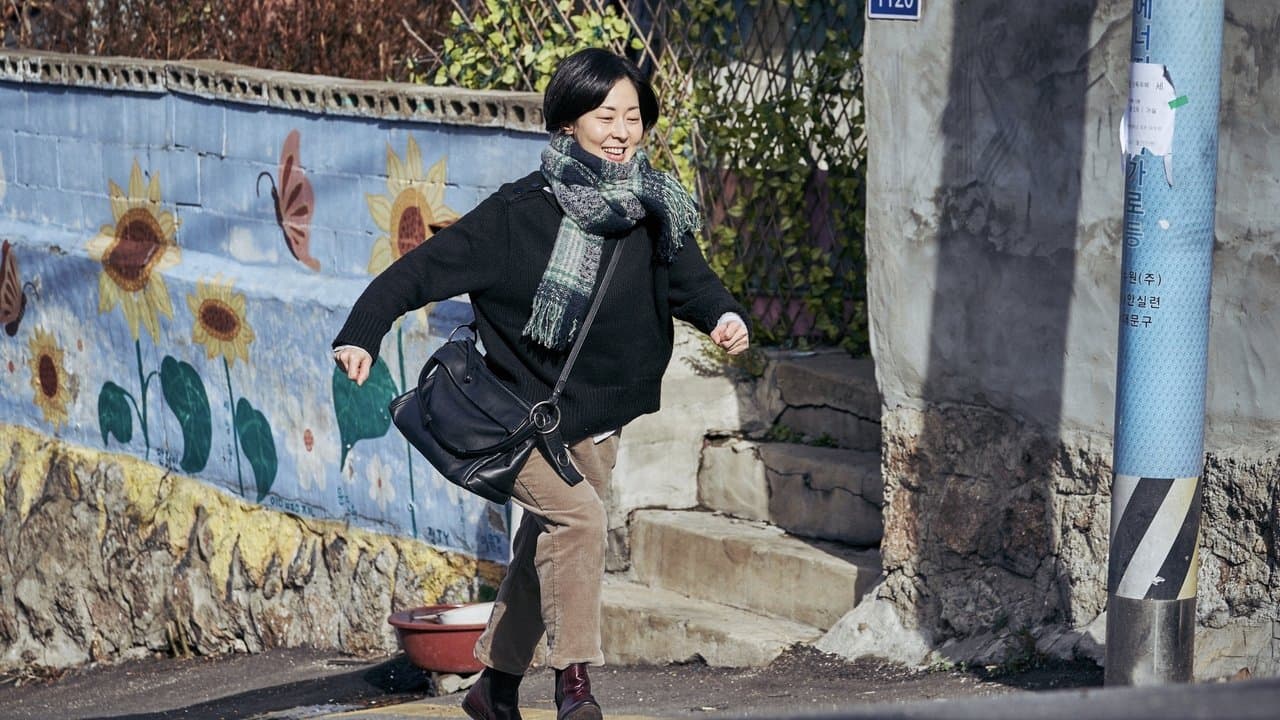
Lucky Chan-sil opens with loss. Chan-sil, a long-time film producer, loses her director—the man who'd anchored her entire professional life—and suddenly finds herself unemployed and adrift. Rather than wallow, she takes work as a cleaning lady at an actress's house, a humbling pivot that forces her to confront how far she's fallen. Then she meets a young man, and what begins as attraction becomes something more complicated: a catalyst that won't let her ignore the accumulated debris of her past. Old anxieties surface. Her youth is already gone. Her love life is a wreck. Her career feels finished. The film doesn't shy away from these uncomfortable truths; instead, it uses them as the foundation for a story about what it means to actually let something go—not as defeat, but as the only way forward.
Behind the making of Lucky Chan-sil
Lucky Chan-sil is a 2020 South Korean production written and directed by Kim Cho-hee, who brings a distinctly personal sensibility to the material. The film premiered in theaters on March 5, 2020, and stars Kang Mal-geum in the title role, with supporting performances from Youn Yuh-jung, Kim Young-min, Yoon Seung-ah, and Bae Yoo-ram. The production was a collaboration between Side Mirror and GE Production, two South Korean production houses known for character-driven cinema. Running 96 minutes, the film manages to be both intimate and expansive—a modest runtime that doesn't waste a moment. While it didn't become a massive box-office phenomenon, the film found its audience among viewers who appreciate films that sit with emotional ambiguity rather than resolve it neatly. On IMDb, it holds a 6.7/10 rating, a score that reflects its divisive nature; some viewers found it meditative and necessary, while others wanted more narrative momentum. If you're tracking where South Korean cinema has been heading in recent years—toward smaller, more introspective stories—Lucky Chan-sil fits squarely in that conversation.
What makes Lucky Chan-sil stand out
Here's what's striking: the film doesn't treat Chan-sil's stalled life as something to be fixed or overcome through willpower. Instead, director Kim Cho-hee seems genuinely interested in the texture of disappointment, the way it settles into your bones and becomes part of who you are. Kang Mal-geum's performance is understated and often quiet—she doesn't perform her sadness so much as inhabit it, which is a much harder thing to pull off. There's a scene early on where she's cleaning someone else's home, and the camera lingers on her hands, her posture, the way she moves through a space that isn't hers. It's not melodramatic. It's just life, rendered with a kind of documentary precision. The film's fantasy elements—and they do arrive, though I won't spoil how—aren't there to escape reality so much as to give the emotional truth more room to breathe. What's really happening here is a meditation on aging, on the fear that your best years are behind you, on the terror of becoming irrelevant. These aren't comfortable themes, which is partly why Lucky Chan-sil won't be everyone's cup of tea. But if you're the kind of viewer who appreciates films that trust you to sit with discomfort, this one rewards that patience. Movie OTT tracks where films like this are streaming, making it easier to find the quieter, more challenging work that doesn't always get the marketing push of bigger releases.
Where to stream Lucky Chan-sil online
Lucky Chan-sil is currently available on major OTT services, so finding it shouldn't be a hassle. The exact platform availability varies by region and changes over time—that's where the "Where to Watch" widget at the top of this page comes in handy, giving you real-time information on which service has it in your area right now. Whether you're a Netflix subscriber, a Prime Video user, or you've got access to other streaming platforms, there's a solid chance you can find it without hunting too hard. Movie OTT keeps tabs on these availability shifts so you don't have to.
Frequently asked questions
Q: Who directed Lucky Chan-sil?
Kim Cho-hee wrote and directed the film. It's her distinctive sensibility—patient, observant, willing to sit in emotional ambiguity—that shapes the entire experience.
Q: Is Lucky Chan-sil based on a true story?
No, it's an original screenplay. That said, the emotional core feels drawn from real life—the specific pain of unemployment, aging, and romantic disappointment that many people experience.
Q: What does the tagline "It's good to let go. That way you can let new things in" mean?
It's the film's central philosophy. Rather than fighting against loss or trying to reclaim the past, the movie suggests that accepting what's gone—your youth, your old career, a relationship—is actually the only path toward something new. It's not optimistic exactly, but it's honest.
Q: How long is Lucky Chan-sil?
The film runs 96 minutes, a lean runtime that moves through Chan-sil's emotional journey without padding or unnecessary detours.
Q: What genres does Lucky Chan-sil blend?
It's officially listed as drama, fantasy, and romance—though "fantasy" might not mean what you expect. The fantastical elements are subtle and serve the emotional story rather than dominating it.
Final thoughts on Lucky Chan-sil
Lucky Chan-sil isn't a film that'll leave you feeling pumped or resolved. It's quieter than that. It's a film about a woman who's lost almost everything—her job, her youth, her sense of direction—and who's learning, slowly and painfully, that maybe that's not the end of the story. The official tagline says it all: "It's good to let go. That way you can let new things in." That's the whole movie, really. If you're drawn to character studies that don't insist on happy endings, or if you're interested in what contemporary South Korean cinema is doing with intimate, introspective storytelling, this one's worth your time.