The story of M the Damned
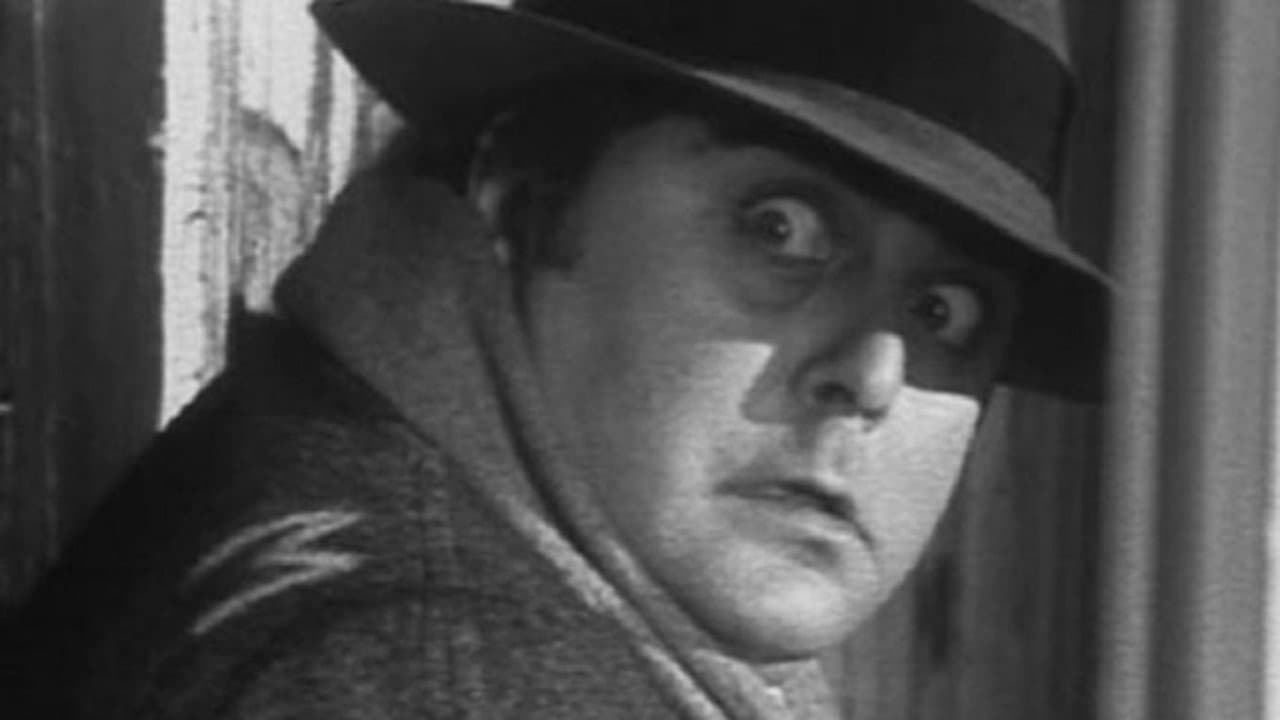
M the Damned is Claude Chabrol's audacious television adaptation of one of cinema's most enduring moral puzzles. Released in 1982 for French television, this 12-minute film takes the premise that made Fritz Lang's 1931 original so unsettling—a child killer hunted by both police and the underworld—and distills it into something lean, claustrophobic, and deeply unsettling. Rather than sprawl across two hours, Chabrol's version trusts the audience to fill in gaps, to sit with discomfort, to question their own sympathies in ways that a longer narrative might soften. The brevity isn't a limitation here. It's a weapon.
Behind the making of M the Damned
Claude Chabrol was already a legend by 1982—co-founder of the French New Wave, a director whose thrillers had redefined the genre across three decades. His decision to remake M wasn't born from a need to improve on Lang; it was born from a question: what if we stripped this story down to its absolute essence? What if we trusted viewers to understand the horror without spelling it out? The original M, made in Weimar Germany during the rise of fascism, carried the weight of its historical moment. Chabrol's version, made in the cool remove of 1980s France, asks different questions about mob justice, institutional failure, and the psychology of monstrosity.
The production was modest in scope—a television commission rather than a theatrical release—but that constraint seems to have sharpened Chabrol's vision. Working in the thriller genre was second nature to him by this point; he'd spent the 1970s perfecting the art of suspense through character and psychology rather than spectacle. His 1982 television work sits at an interesting inflection point in his career, when he'd already proven himself a master of moral ambiguity and was increasingly interested in how institutions—whether police departments, criminal syndicates, or society itself—fail the innocent and protect the guilty through bureaucratic inertia.
What makes M the Damned stand out
What's striking about Chabrol's version is how it refuses easy sympathy. The original Lang film, for all its genius, builds toward a kind of tragic understanding of its killer—a man compelled by forces he can't control, almost pitiable in his desperation. Chabrol seems less interested in that kind of psychological redemption. His M the Damned is colder, more clinical, more interested in the machinery of justice and revenge than in the interior life of the accused. The performances anchor everything; there's no room for melodrama in twelve minutes, so every gesture, every hesitation, every moment of eye contact carries weight.
The film's real power lies in how it stages the central moral crisis—when the underworld captures the killer and puts him on trial in an abandoned warehouse, we're forced to confront something genuinely uncomfortable: that vigilante justice, however satisfying it might feel, is still justice without law, punishment without process. Chabrol doesn't lecture us about this. He just shows it, and lets us squirm. The economy of the format means there's no time for explanation or moral positioning. You're dropped into a nightmare and expected to find your footing.
I keep coming back to how Chabrol uses silence here. In a 12-minute film, silence is expensive—every second counts. But he's willing to let scenes breathe, to let tension build through what isn't said rather than what is. It's a technique that feels almost more modern than the 1931 original, closer to how contemporary thriller television works. The thing nobody mentions is that this remake might actually be more relevant to how we think about justice and mob rule now than it was in 1982.
Where to stream M the Damned online
M the Damned is available on major OTT platforms, and you can check the streaming widget at the top of this page to see where it's currently accessible in your region. Because this is a lesser-known television film rather than a theatrical release, it's not always in heavy rotation on mainstream services, so availability varies by territory and season. Movie OTT tracks current streaming availability across platforms, so if you're hunting for this one, that's your best bet for finding exactly where it's streaming right now. It's worth the search if you're interested in how great directors revisit canonical material.
Frequently asked questions
Q: Who directed M the Damned?
Claude Chabrol, the French New Wave pioneer and thriller master, directed this 1982 television adaptation. Chabrol was known for his psychological thrillers and his interest in moral ambiguity, both of which are on full display here.
Q: Is M the Damned a direct remake of Fritz Lang's M?
It's based on the same premise—a child killer hunted by both police and criminals—but Chabrol's version is a radical reimagining rather than a shot-for-shot remake. The 12-minute runtime forces completely different storytelling choices.
Q: How long is M the Damned?
The film runs just 12 minutes, making it one of Chabrol's shortest works. Don't let the brevity fool you; the density of tension and moral complexity packed into that runtime is extraordinary.
Q: What's the IMDb rating for M the Damned?
The film holds a 6.167/10 rating on IMDb, which reflects its challenging nature—it's not a crowd-pleaser, and that's entirely intentional. It's the kind of work that divides viewers between those who find it brilliant and those who find it cold.
Q: Why would Chabrol remake M in 1982?
By the early 1980s, Chabrol had spent a decade perfecting the thriller form. His interest in institutional failure, mob justice, and moral compromise made Lang's material a natural fit. He wasn't trying to improve the original—he was asking what the story meant to ask in a different era.
Final thoughts on M the Damned
M the Damned won't be for everyone. It's austere, morally murky, and refuses to guide you toward comfortable conclusions. But if you're drawn to thrillers that trust their audiences—films that understand that the best suspense comes from psychology rather than plot mechanics—this is essential viewing. Chabrol made a career out of showing us how civilization is just one thin layer of consensus away from chaos. This twelve-minute film proves he could do it in the space of a breath. It's a small masterpiece, and it deserves to be discovered by anyone serious about cinema.