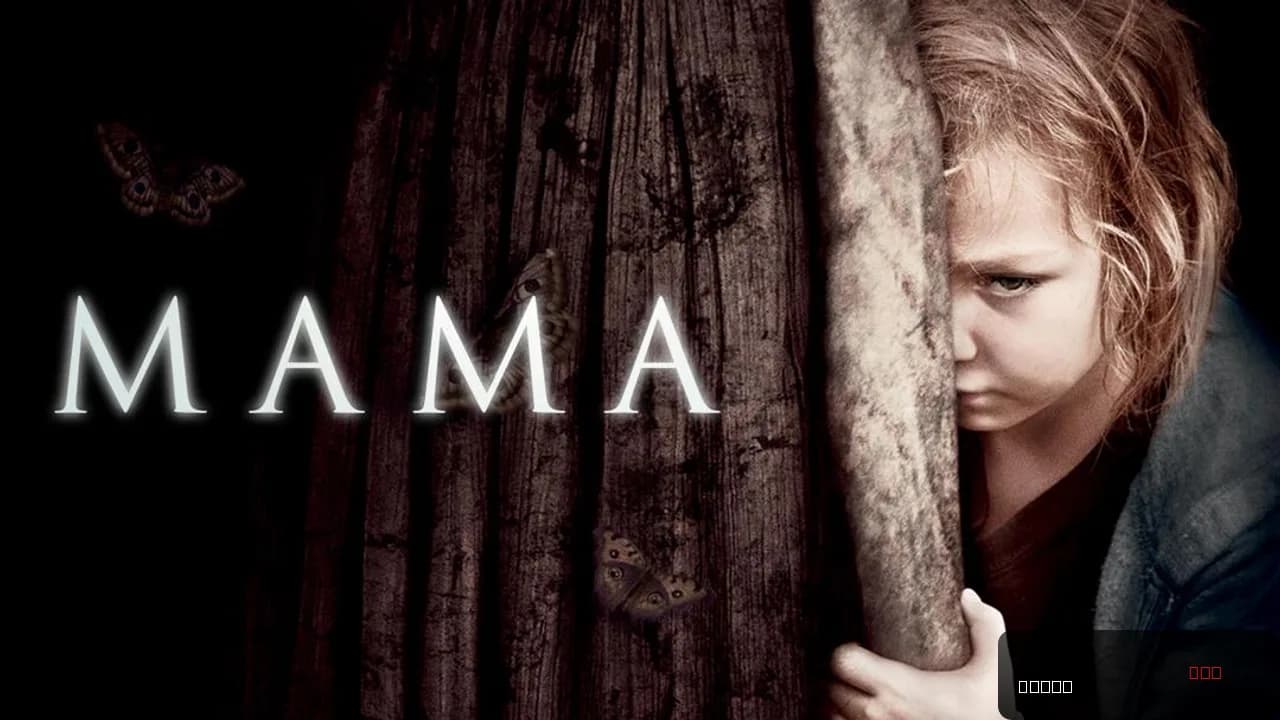


The story of Mama: what happens when the woods won't let go
Mama opens on a man's desperate act—a father fleeing with his two young daughters into a remote cabin, the specifics of what he's running from left deliberately murky. Five years pass in isolation. When authorities finally discover the girls, they're feral, nearly feral, speaking in whispers and moving with an unsettling coordination that suggests they've had company all along. That company has a name: Mama. The film follows the girls' uncle and his girlfriend—played by Nikolaj Coster-Waldau and Jessica Chastain—as they attempt to integrate the traumatized children back into a normal life, only to realize that whatever kept them alive in those woods isn't content to stay behind. It's a premise that could've been standard supernatural fare, but Mama commits to its central question: what does it mean to be a mother to something that was never quite human?
Behind the making of Mama: from short film to feature event
Andy Muschietti didn't arrive at Mama as an established name—this was his directorial feature debut, though the story itself had deeper roots. Muschietti had already made a short film called Mamá back in 2008, and that Argentine film caught the attention of Guillermo del Toro, the Oscar-winning architect of Pan's Labyrinth and The Shape of Water. Del Toro didn't just endorse the project; he signed on as executive producer and helped shepherd it into a co-production between Spain and Canada, lending his considerable prestige to what could have remained a modest horror effort. The film hit theaters in January 2013 with a modest budget and modest expectations, yet it found an audience—grossing over $146 million worldwide, a remarkable return that validated del Toro's faith in Muschietti's vision.
The cast assembled around Chastain and Coster-Waldau included two young actresses, Megan Charpentier and Isabelle Nélisse, who carried the emotional weight of the film's most vulnerable scenes. Chastain, already building a reputation as a fearless performer willing to inhabit complex, uncomfortable characters, brought a steely vulnerability to her role—she's not a warm maternal figure, but a woman learning to be one under impossible circumstances. The film received a PG-13 rating, which meant Muschietti had to walk a careful line between genuine scares and commercial viability. Cinematographer Antonio Riestra and composer Fernando Velazquez crafted a visual and sonic landscape that feels both intimate and haunted, the kind of atmospheric work that doesn't always get noticed but shapes everything you feel watching the film.
What makes Mama stand out: creature design and the performance that anchors it all
What's striking is that Mama doesn't rely on jump scares to get under your skin—there's a creeping dread that builds because the film takes its supernatural logic seriously. The creature itself, designed by Javier Botet and realized through a mix of practical and digital effects, is genuinely unsettling: all wrong angles and maternal hunger, a being that's been twisted by isolation and loss into something that can only express love through possession. You don't get a clear look at Mama for a while, which is smart filmmaking. The ambiguity lets your imagination do the heavy lifting.
Chastain's performance is the film's spine, though—honestly, without her commitment to the role's emotional contradictions, Mama would've collapsed under its own premise. She plays a woman who's skeptical, pragmatic, even hostile to the idea of motherhood, forced to become a protector anyway. That friction, that resistance slowly giving way to genuine care, is what makes the film work when the supernatural elements might otherwise feel manipulative. The child actors, Charpentier and Nélisse, hold their own in scenes that require them to be simultaneously vulnerable and eerie. Coster-Waldau, before he became a household name through Game of Thrones, provides a grounding presence as the uncle caught between his girlfriend and his blood obligation.
Reviewers noted that the film has an "unfinished" quality—there's a sense that Muschietti is still finding his footing as a director, that some scenes could've breathed longer or cut harder. The ending divides people, and that's probably intentional; it's a film that doesn't offer easy catharsis. Some viewers find the final act exhausting, a descent into melodrama that undercuts the careful tension of what came before. Others see it as the only honest ending the film could reach, given what it's set up. Movie OTT tracks where you can stream films like this across multiple platforms, and Mama's availability means you can form your own opinion without a theatrical commitment.
Where to stream Mama online right now
Mama is currently available on a wide range of streaming services, which means there's a good chance you've already got access to it. Netflix carries it in certain regions, as does Amazon Prime Video (both the standard and ad-supported tiers), making it easy to queue up if you're a subscriber to either service. If you're looking for rental or purchase options, the film's also on Apple TV Store, Google Play Movies, Fandango At Home, and Rakuten TV, among others. The "Where to Watch" widget at the top of this page will show you exactly which platforms are currently streaming Mama in your location, since availability shifts by region and subscription tier. For international viewers, services like JioHotstar, U-NEXT, MagentaTV, and Sky Store also carry the title. Whether you're browsing Movie OTT's streaming aggregator or checking your existing subscriptions, Mama is accessible enough that the barrier to watching is pretty low.
Frequently asked questions
Q: Who directed Mama and is it based on anything?
Andy Muschietti directed Mama in his feature film debut. The film is based on Muschietti's own 2008 Argentine short film also called Mamá, which he expanded into this full-length supernatural thriller with co-writers Barbara Muschietti and Neil Cross.
Q: Is Jessica Chastain the main character in Mama?
Chastain plays the female lead, a woman who becomes the reluctant caregiver to two traumatized girls, but the film is an ensemble piece. Nikolaj Coster-Waldau plays her partner, and the two young girls—Megan Charpentier and Isabelle Nélisse—are central to the story as well.
Q: How long is Mama and what's its rating?
Mama runs 90 minutes and carries a PG-13 rating in the United States, meaning it's been designed to reach a broader audience while still delivering genuine scares and dark thematic material.
Q: What's Guillermo del Toro's involvement in Mama?
Del Toro, the acclaimed director of Pan's Labyrinth and The Shape of Water, serves as executive producer on Mama. He championed Muschietti's vision and helped bring the project to international production, but didn't direct it himself.
Q: Where can I watch Mama right now?
Mama is available on Netflix, Amazon Prime Video, Apple TV Store, Google Play Movies, and numerous other platforms depending on your region. Check the "Where to Watch" widget above or visit Movie OTT to see current availability in your area.
Final thoughts on Mama
Mama isn't perfect—it stumbles in places, and its third act won't satisfy everyone. But there's something genuinely haunting about a film that's willing to ask what motherhood means when stripped of its humanity, what love looks like when it's been warped by trauma and isolation. Muschietti's debut announced a director with visual instincts and a willingness to let discomfort linger. Chastain's performance gives the film an emotional core that keeps it from becoming just another creature feature. If you're in the mood for supernatural horror that takes itself seriously—that doesn't wink at the camera or undercut its own stakes—Mama's worth seeking out across whichever streaming service you've got handy.