




Marilyn Monroe: The Rise of an Icon
The 54-minute documentary that reframes how we think about Monroe's transformation — and why a four-day winter tour in 1954 Korea mattered more than decades of red carpet photos.
The Korea moment that changed everything
Here's what this documentary actually does: it zooms in on four days in February 1954 when a 28-year-old Marilyn Monroe — not yet the untouchable icon, just a famous actress still figuring out who she was — flew into an active warzone to perform for American troops. Freezing temperatures. A sequined dress offering zero insulation. Over 100,000 GIs staring back at her on an open-air stage.
That's the entire story. And somehow, it's enough.
What strikes me about Marilyn Monroe: The Rise of an Icon is how it refuses to treat Korea as a footnote in the larger Monroe biography. Instead, the film argues — convincingly — that this tour was the hinge. The moment when Monroe stopped performing for an audience and started understanding what it meant to be Marilyn Monroe. She'd spent her whole life performing, often just to survive. Here, for the first time, an audience gave something back that felt unconditional. That distinction matters.
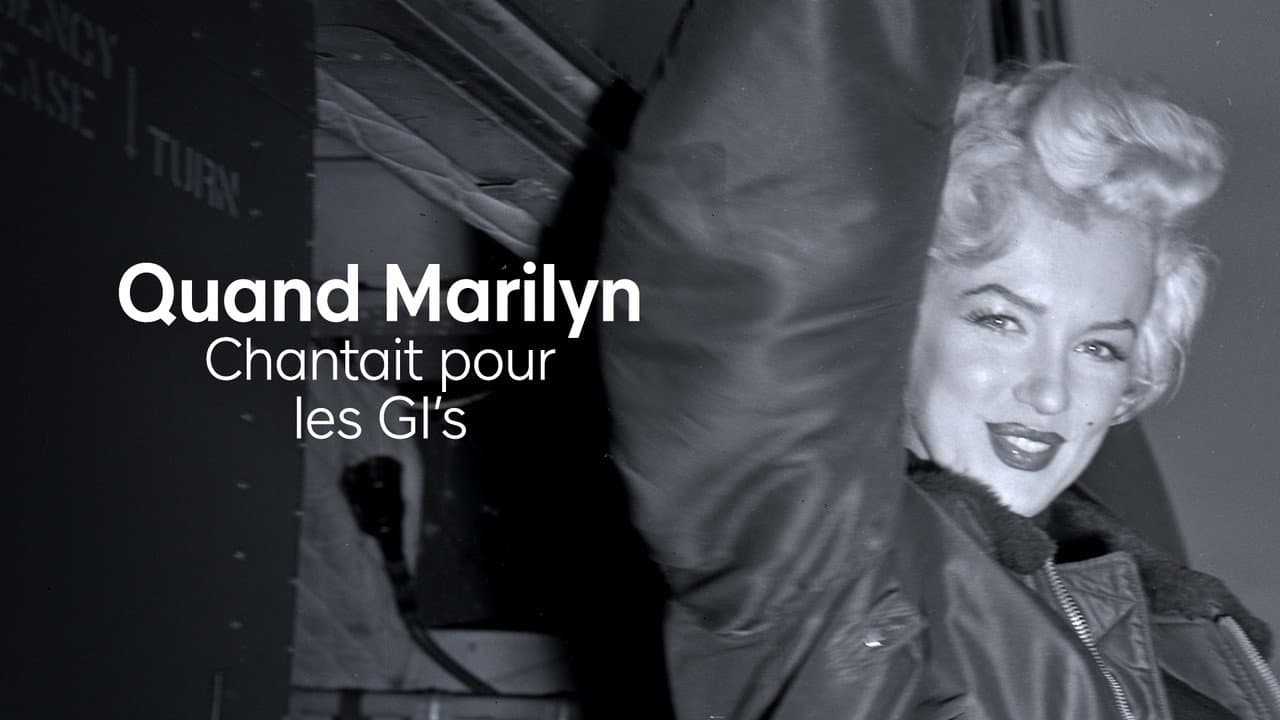
The photographs from those four days are genuinely extraordinary. Overhead shots of the crowd at Incheon. Monroe in that dress, breath visible in the winter air, arms outstretched. These aren't carefully composed publicity stills — they're raw documentary evidence of a specific, bounded moment in time. The production team understood something fundamental: these images don't need editorializing. They carry their own argument.
Why it's not another Monroe biography
You've seen the cradle-to-grave Monroe documentaries. The sweeping ones. The ones that try to contain her entire contradictory life in 120 minutes and end up diluting everything. This isn't that.
By locking the focus down to a single four-day episode, the filmmakers actually expand what they can say about identity and performance and fame. It's a smart structural choice — bounded in time, bounded in geography (a warzone peninsula in winter), yet it opens outward into something much larger about who Monroe was becoming.
The film doesn't moralize about the physical conditions either. Monroe performed in sub-zero temperatures wearing essentially no insulation — a choice that reads now as reckless or defiant or both, depending on how you read her. The documentary seems to understand that ambiguity and refuses to resolve it into a clean feminist parable or a cautionary tale. That restraint is what separates it from lesser biographical docs in this space.
Production details and where to find it
Release: 2026
Runtime: 54 minutes
Producers: ZED and Les Bons Clients (French co-production)
Where to watch: Major streaming platforms — Movie OTT's real-time tracker shows exact availability in your region
The production comes from two European documentary companies known for archival depth over talking-head filler. The 54-minute runtime is tight by feature-documentary standards — almost aggressively so — but it works. There's no padding here. The film trusts that you don't need an hour-long setup to care about what happens on a Korean stage in 1954.
As of 2026, the title's still accumulating audience scores across platforms. No major awards circuit data available yet, though the subject matter alone guarantees attention. Streaming licensing for European co-productions can shift without notice, so check Movie OTT before assuming availability on any specific service this week.
What makes this different from other Monroe documentaries
Look — most Monroe documentaries treat her life as a tragedy that was always going to end the way it did. They work backward from the ending. This film works forward from a single moment, letting that moment tell you something about who she became.
What I keep coming back to is how the film handles scale. You're watching 100,000 people respond to one woman on a plywood stage. That's not a metaphor. That actually happened. The overhead photography gives you a visceral sense of what that meant — the sheer physical fact of it — in a way no amount of narration could replicate.
The documentary also reportedly includes Monroe's own account of the experience. She called it the most exciting thing that had ever happened to her. That quote lands completely differently once you understand the context the film provides. A woman who'd performed her entire life, finally experiencing an audience that gave something back without conditions. The thing nobody mentions about Monroe is how much her entire existence was transactional — until Korea.
FAQ: Everything you need to know before watching
Should I watch this?
Yes — especially if you think you know the Monroe story already. This is a different angle. Even if you've seen the standard biographies, this four-day focus opens something new.
Where can I stream it?
Check Movie OTT's where-to-watch widget for your region. Licensing changes weekly with European productions, so don't assume it's on the same platform it was on last month.
Is it actually true?
Entirely. The documentary draws from documented historical events — military archives, press photography from 1954. No dramatization, no fictional reconstruction. It's grounded in primary material.
How long is it?
54 minutes. Short enough to watch in one sitting. Long enough to actually say something.
Who made it?
Two French production companies: ZED and Les Bons Clients. No major studio backing — it's independent European documentary work with a distinctly focused sensibility.
Why did Monroe go to Korea in 1954?
USO-style morale tour. American troops stationed there during the war needed entertainment. She performed on open-air stages across multiple stops. The cumulative audience reportedly exceeded 100,000 soldiers across those four winter days.
The bottom line
Not every Monroe story needs to be a tragedy. Not every documentary about her needs to run two hours and end in sadness. This one doesn't. At 54 minutes, Marilyn Monroe: The Rise of an Icon makes a focused, well-supported argument about a single pivotal moment — and trusts you to feel the weight of it without being told how.
Documentary fans, history buffs, anyone curious about what it actually looked like when Monroe became Monroe: this is worth your time. Stream it this week via Movie OTT and set aside an hour. You'll spend it on something real.