






Maxo: Forbidden Ritual
The premise: poverty before the horror
Maxo: Forbidden Ritual (2026) doesn't start with a haunting — it starts with a medical bill the family can't pay. Phú and his pregnant wife Thảo are drowning in the kind of poverty that kills quietly. His mother, Mrs. Thuận, dies because they lack the money for treatment. Thảo's already lost one child to miscarriage. They're terrified of losing another.
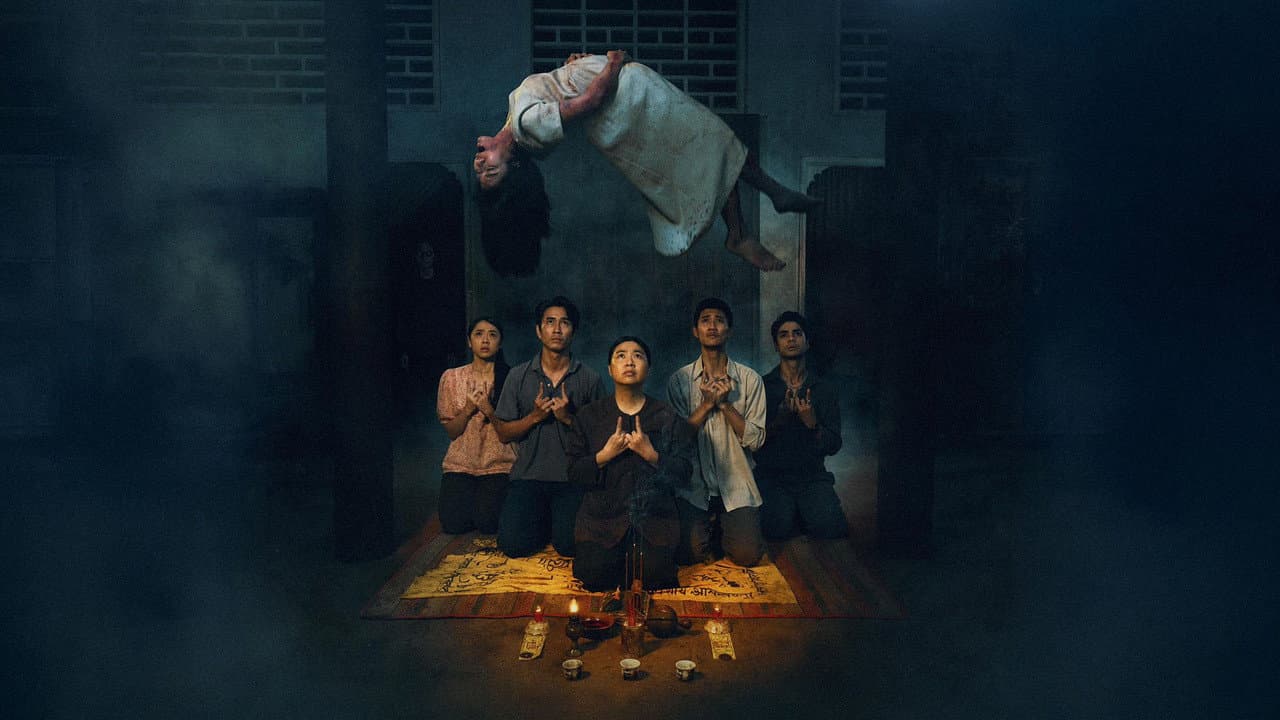
When a neighbor named Mrs. Tánh — someone who practices folk rituals — suggests summoning a wandering spirit to serve as a household protector, it doesn't feel like a horror-movie mistake. It feels like desperation wearing the only clothes it has left. Thảo agrees. The spirit settles into a corner of their home. And then it starts asking to be paid back.
What strikes me about this setup is how it flips the usual haunted-house formula. The family doesn't accidentally anger a ghost or move into a cursed property. They invite one in, knowingly, because staying broke and childless feels like the worse alternative. That's the real horror — not jump scares, but the logic of having nothing left to lose.
Why Vietnamese folk-horror works differently
The thing nobody mentions often enough: Vietnamese spirit traditions aren't generic ghosts-in-the-dark. They're rooted in specific belief systems about household spirits, debt, and obligation — concepts that don't translate into standard American horror shorthand.
Summoning a wandering spirit to bind it as a household protector draws on real practices in Vietnamese spiritual life (though, to be clear, the film isn't documented as based on a specific true story). The horror here isn't "ghost jumps out." It's "we made a contract with something that has its own hunger and zero interest in our circumstances."
According to film coverage tracking Vietnamese genre cinema, titles like The Housemaid and Incantation (Taiwanese, but tonally adjacent) share this same DNA — the supernatural is inseparable from family pressure and social obligation. Movie OTT has been mapping the rise of Southeast Asian horror as a distinct editorial category, and Maxo fits squarely into that tradition. The dread builds through atmosphere and implication before anything overtly threatening happens. You watch Thảo start avoiding corners of the room. The house feels different. Small wrongnesses accumulate.
The performances, while still accumulating reviews, carry the weight of that dramatic arc. Thảo in particular tracks from grief to hope to dawning horror — often within the same scene.
Production details and where to find it
Runtime: 102 minutes — tight and focused for a film doing this much character work alongside genre mechanics.
Produced by: 856 Pictures and CJ HK Entertainment, a co-production that reflects growing cross-border collaboration across Southeast and East Asian cinema. CJ HK Entertainment (the Hong Kong arm of South Korean giant CJ ENM) has become an active partner in regional horror and drama, signaling production with real ambition beyond generic pan-Asian horror aesthetics.
Where to watch: The film's currently available on major OTT platforms. Streaming rights for international titles shift constantly — check the where-to-watch widget at the top of this page for live availability, or visit Movie OTT for real-time breakdowns across Netflix, Prime Video, and others. If you're outside the US, regional availability may vary; CJ HK co-productions often have broader Asian market presence than their Western streaming footprints suggest.
Rating: No official MPAA rating has been confirmed. The film deals with infant loss, poverty, grief, and supernatural threat — it's intended for mature audiences. Parental discretion advised.
IMDb and awards: The film's still in the early data-accumulation phase on IMDb, with ratings essentially at the starting line. That's normal for a 2026 international title still finding its audience. No major awards-circuit coverage has been confirmed yet, though the festival circuit for Southeast Asian horror — Fantasia, Sitges, Bucheon — would be a natural fit.
Should you actually watch this?
Skip it if: You want fast scares and clean jump-scare mechanics. You're looking for something comfortable.
Watch it if: You think the best horror makes you feel something real before it makes you afraid. You're interested in how different cultures approach supernatural dread. You want character work alongside genre thrills.
The 102-minute runtime moves with discipline. There's no padding. Even if reviews are still rolling in, the premise alone — genuine poverty meets cultural spirituality meets a debt that can't be bargained away — suggests something that'll stick with you longer than jump scares do.
Hard to say what the critical consensus will be once the film's been out a few months, but based on the premise and production pedigree, this isn't a film designed to be forgotten by Friday.