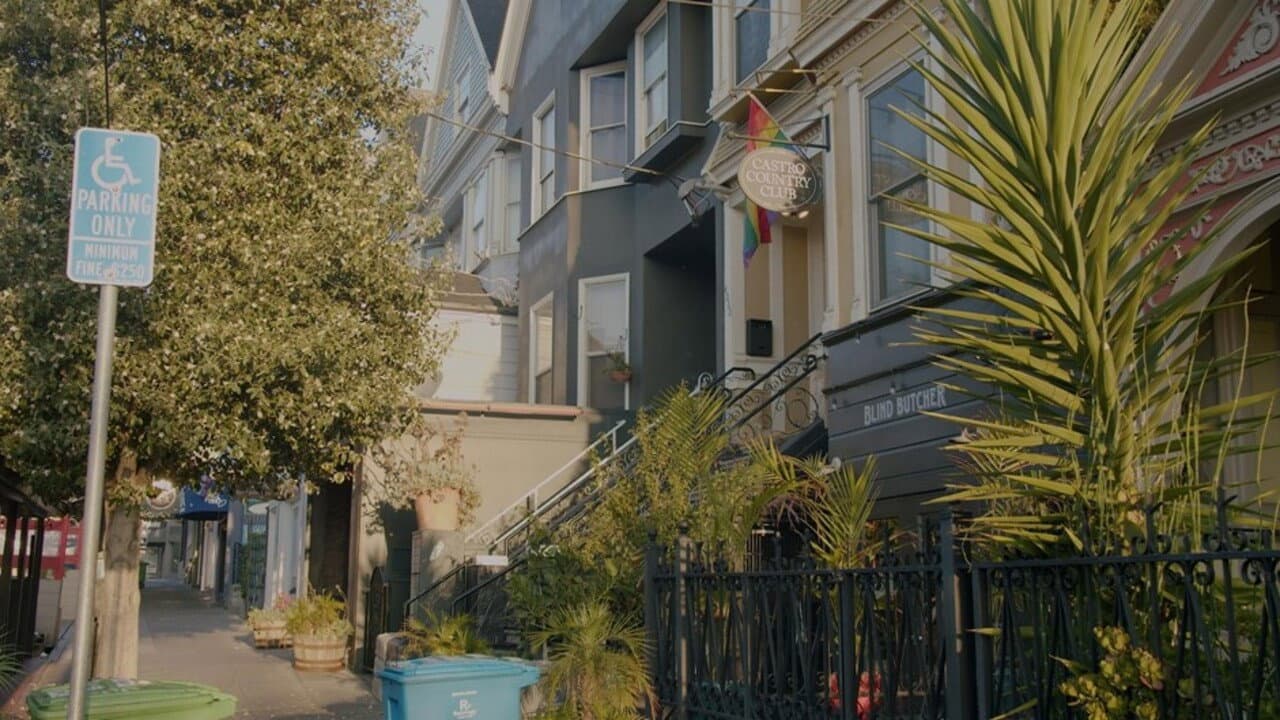
Meet Me at the Club: The Castro Country Club Story
A 40-Year-Old Sober Space That Changed Everything
April 1, 1983. Steve Harris, a gay businessman and restaurateur, opened a coffee shop on 18th Street in San Francisco's Castro neighborhood — one block from the epicenter of LGBTQIA+ community life. The timing wasn't accidental, though the April Fools' date sure feels like dark irony now. The AIDS epidemic had just arrived. Bars and clubs, the traditional gathering spaces for the Castro's LGBTQ community, were becoming increasingly tangled with substance use — a crisis layered on top of another crisis. Harris built something radically different. A place where you could walk in sober and walk out less alone.
That coffee shop became the Castro Country Club, and it's been quietly saving lives for forty years.
Meet Me at the Club: The Castro Country Club Story is a 2026 documentary from writer-director J. Andrew (Liberty Lane Films) that tells this history — not as inspiration porn, but as a rigorous, textured account of how one community space held up under impossible pressure. The film premiered at major festivals in early 2026 and hits San Francisco theaters on June 25, 2026, a date strategically close to Pride and heavy with symbolic weight for a story rooted so deeply in that city's history.
What makes this documentary stand out is how it refuses the single-redemption-arc structure that makes most addiction documentaries feel interchangeable. This isn't one person's story. It's thousands of people — and the early trans experiences within the recovery community get genuine attention here, something most recovery narratives skip entirely.
The Specific History You Won't Find Elsewhere
Here's what I keep thinking about: the Castro Country Club didn't just exist during the AIDS crisis. It existed because of it. The epidemic accelerated addiction and alcoholism across the LGBTQ community, and Harris recognized that the spaces where people found community were also the spaces where substance use was concentrated. His answer wasn't judgment. It was a coffee shop.
Over four decades, the CCC served thousands of people navigating recovery. The film tracks this with archival material, personal testimony, and the kind of embedded access that takes years to earn. What's striking is the attention to how drag functioned within the community — not as spectacle, but as liberation. That detail alone separates this from the standard recovery documentary formula.
The AIDS epidemic's specific role in driving addiction and alcoholism gets careful treatment here. J. Andrew doesn't collapse the two crises into one — he shows how they fed each other, how the loss and the substance use became inseparable, and how one small coffee shop became a counterweight to that momentum.
Honestly, this is the kind of story that's been systematically underdocumented. Trans history in recovery spaces especially. If you're interested in LGBTQ+ history, addiction narratives, or how communities actually survive impossible odds, this film isn't filling a gap — it's creating an entire archive that didn't exist before.
When It's Coming and Where to Watch
The film hasn't hit streaming platforms yet, but Movie OTT's where-to-watch tracker will have current availability across services as soon as deals are finalized. June 25, 2026 marks the San Francisco premiere; a wider theatrical and streaming rollout will follow. Liberty Lane Films hasn't confirmed a VOD window or streaming home yet — that distribution strategy is still evolving as the film exits post-production.
The production budget sits somewhere between $250,000 and $450,000 depending on the source (IMDb lists $250K; Liberty Lane's materials suggest $450K). For a documentary with forty years of archival footage and this level of community access, that's lean. It's also not unusual for budgets to shift during post-production — especially on docs with this much interview material and archival research.
According to the film's materials, runtime is around 120 minutes. That's not a short watch, but neither is it indulgent. The pacing appears to follow the decades chronologically, which works well for this kind of institutional history — you can see how the CCC evolved, adapted, and deepened its role in the community over time.
Check Movie OTT regularly once we hit June. Streaming rights for documentaries often get announced close to release, and their aggregator will have the most current information across all major platforms.
If You've Watched Recovery Documentaries Before, This One's Different
If you liked The 12th, Heroin(e), or Won't You Be My Neighbor? — stories that treat their subjects with genuine complexity instead of sentimentality — this one's worth your time. It has that same refusal to flatten people into either villains or heroes.
The thing nobody mentions about recovery documentaries is how many of them are built around individual breakthroughs. Someone hits bottom. Someone finds faith or therapy or medication. Someone transforms. That's the arc we've all learned to expect. The Castro Country Club's story doesn't fit that shape. It's institutional. It's communal. It's about a place that showed up for forty years, day after day, for people who needed it.
That's harder to dramatize. It's also more honest.
FAQ: What You Actually Need to Know
Q: Is this a true story?
Yes — it's a feature documentary about a real institution that's still operating. The Castro Country Club exists, at 18th Street in San Francisco, founded by Steve Harris on April 1, 1983.
Q: Who directed it?
J. Andrew wrote and directed. It's a Liberty Lane Films production, currently in post-production for a 2026 release.
Q: When's it actually coming out?
June 25, 2026 in San Francisco. Festival premieres are happening in early 2026. No streaming premiere date confirmed yet.
Q: How long is it?
Around 120 minutes. Plan for a full evening.
Q: Where can I watch?
Not yet available on any platform. When it is, Movie OTT's tracking system will show you which service has it in your region — check there once June hits.
What Matters About This Film
Forty years. One building. Thousands of lives. The Castro Country Club didn't need to manufacture drama — the history was already there. What J. Andrew is doing is the harder work: honoring that history without flattening it.
The early signals suggest the film is up to that challenge. Whether you come to it as someone touched by recovery, by LGBTQ+ history, or by the question of how communities survive impossible odds, this is a documentary that earns its runtime through accumulation rather than spectacle.
Watch for it to surface at major festivals in early 2026. The June 25 San Francisco premiere will likely be the moment it gets wider attention — pride season timing guarantees that. After that, keep an eye on Movie OTT and major streaming platforms for the rollout. This one's worth the wait.