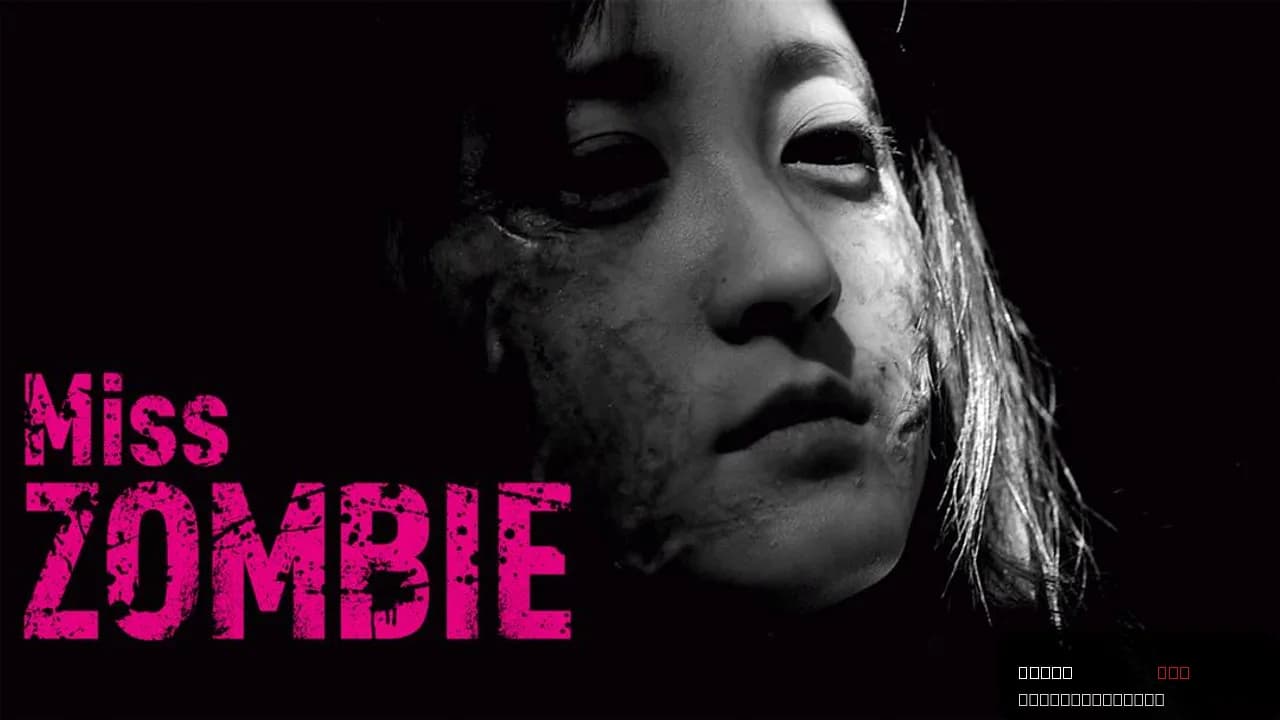
The Story of Miss ZOMBIE
Director Sabu's Miss ZOMBIE (2013) imagines a post-apocalyptic Japan where the undead haven't overrun civilization—they've been domesticated. Captured zombies are bought and sold like servants, stripped of agency and confined to the households of the wealthy elite. The film follows one female zombie purchased by an affluent family, documenting her ordeal as she endures the indignities of servitude while something far more dangerous—her capacity for resistance—begins to awaken. It's a premise that sounds like exploitation, but Sabu uses it as a mirror to examine power, complicity, and the cost of silencing the voiceless.
What makes the setup so unsettling isn't gore or jump scares. It's the mundane cruelty. The zombie isn't a shambling threat; she's a fixture in the home, subjected to the family's casual abuse, their curiosity, their need to control something utterly defenseless. The film refuses easy answers about her nature or her fate, instead asking uncomfortable questions about what we owe to those we've decided are less than human.
Production, Awards, and the Vision Behind Miss ZOMBIE
Miss ZOMBIE premiered at the Busan International Film Festival in October 2013, where it caught the attention of genre festivals worldwide. The film went on to win the Grand Prix at the Festival international du film fantastique de Gérardmer in France in February 2014—a significant validation for a film working in such deliberately provocative territory. Across its festival run, Miss ZOMBIE accumulated four wins and two nominations, establishing Sabu as a filmmaker unafraid to weaponize horror conventions for social commentary.
Produced by Yoshiki Kumazawa and Satake Kazumi, the film clocks in at a lean 85 minutes, a runtime that keeps the tension coiled tight without allowing audiences to look away. The cast, anchored by Ayaka Komatsu in the title role alongside Makoto Togashi, Toru Tezuka, Taro Suruga, Takaya Yamauchi, Okito Serizawa, and Tateto Serizawa, brings a kind of deadpan naturalism to the material that makes the horror feel grounded rather than theatrical. There's no melodrama here—just the quiet dread of watching a system of exploitation function like clockwork. On Movie OTT, you can track where Miss ZOMBIE streams across multiple platforms, but the film's impact doesn't depend on production value or star power. It depends on Sabu's willingness to stay uncomfortable.
Why Miss ZOMBIE Stands Apart in Horror Cinema
What's striking about Miss ZOMBIE is how it refuses the usual zombie-film framework. You won't find survival narratives or apocalyptic action sequences here. Instead, Sabu is interested in something quieter and more corrosive: the psychology of ownership, the erotics of power, the gap between what we tell ourselves we are and what we actually do when no one's watching. The film works best when it's playing with your expectations—when you think you know where it's headed, it pivots, introducing new complications that won't resolve neatly.
Ayaka Komatsu's performance carries the entire film. She's not asked to "act" in the conventional sense; she's asked to be present, to embody absence, to suggest an inner life that the family around her refuses to acknowledge. There are moments—a glance, a pause, a tremor—where you catch something breaking through the zombie mask, and that's where the real horror lives. It's not about what she does. It's about what she could do, the threat of her potential, the danger of her consciousness reasserting itself.
Director Sabu has crafted something that sits uneasily between satire and genuine dread, between social critique and exploitation cinema. The film's thematic richness—its interest in loss, affectation, domestic violence, and the psychology of the psychotic—gives it weight beyond its genre trappings. This isn't a film that wants to entertain you. It wants to implicate you, to make you complicit in the family's casual cruelty simply by asking you to watch.
Where to Stream Miss ZOMBIE Online
Miss ZOMBIE is currently available across a range of streaming platforms. You can watch it on Amazon Prime Video with Ads, Prime Video, Hulu, Apple TV Store, and Google Play Movies, as well as on Japanese streaming services FOD, FOD Channel Amazon Channel, and U-NEXT. Movie OTT's Where-to-Watch widget at the top of this page tracks current availability in real time, so you can find the platform that works best for you. The film's 85-minute runtime makes it perfect for a late-night viewing session—the kind of film that lingers after the credits roll, that you'll find yourself thinking about days later.
Frequently asked questions
Q: Who directed Miss ZOMBIE and what's his background?
Director Sabu helmed Miss ZOMBIE, bringing his distinctive sensibility for social horror to the material. His willingness to work in uncomfortable spaces—exploring power dynamics and institutional cruelty through genre—has made him a fixture at international film festivals.
Q: What's the runtime of Miss ZOMBIE?
The film runs 85 minutes, a tight duration that keeps the tension compressed and prevents the premise from wearing out its welcome.
Q: Where can I watch Miss ZOMBIE right now?
Miss ZOMBIE is streaming on multiple platforms including Amazon Prime Video with Ads, Prime Video, Hulu, Apple TV Store, Google Play Movies, and Japanese services FOD, FOD Channel Amazon Channel, and U-NEXT. Check the Where-to-Watch widget above for current availability.
Q: Is Miss ZOMBIE based on a true story?
No, Miss ZOMBIE is an original fictional work set in a dystopian future Japan. It's Sabu's imagined scenario exploring themes of power, servitude, and resistance.
Q: What awards did Miss ZOMBIE win?
The film won four awards and received two nominations across its festival run, including the Grand Prix at the Festival international du film fantastique de Gérardmer in France in 2014.
Final Thoughts on Miss ZOMBIE
If you're looking for a horror film that'll scare you with jump scares and gore, Miss ZOMBIE isn't it. But if you want something that'll burrow under your skin and make you uncomfortable about your own complicity in systems of exploitation—that's here. It's a film about power, about the way we domesticate what frightens us, about what happens when the domesticated refuse to stay tame. It won't be for everyone, but for those willing to sit with its provocations, it's unforgettable.
