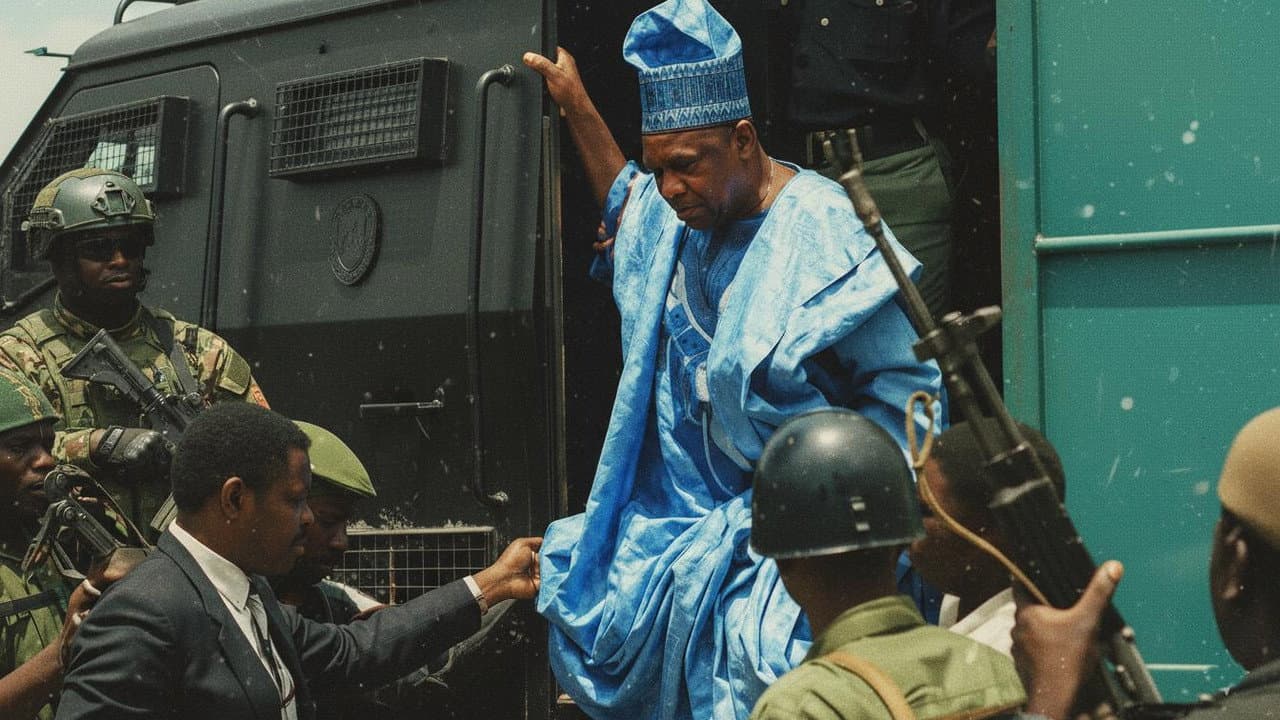
MKO
A documentary about a stolen election, a man who refused to disappear, and a death nobody's ever fully explained.
In July 1998, Moshood Abiola won Nigeria's freest election. Five years later, he was dead — served tea by American diplomats who'd come to negotiate his release. The new documentary MKO doesn't look away from that gap.
Here's what you need to know: The film runs 108 minutes. It's produced by O2A Media. It arrives in 2026 with an IMDb rating of 0/10 (too new for votes, not a verdict). And it's genuinely difficult to watch — which is exactly the point.
What actually happened to Moshood Abiola
The story sounds too brutal to be real, which is partly why it got buried for decades. In 1993, Moshood Kashimawo Olawale Abiola — a businessman and politician — ran for president of Nigeria. International observers called it the freest election the country had ever held. He won decisively. The military government under Ibrahim Babangida annulled the result the next day.
Abiola refused to accept that erasure. He declared himself president. He went to prison. He stayed there — five years in a cell on a treason charge, for the crime of winning.
Then, on July 7, 1998, U.S. diplomats finally showed up to talk about getting him out. There's a photograph from that day. A cup of tea. Hours later, he was dead. The official story: heart attack. His family and supporters have spent decades asking harder questions. The film doesn't resolve the ambiguity — it sits with it, which might be more honest.
How MKO builds its case
The documentary leans entirely on archival footage and testimony (I kept thinking about how rare that approach is now — most films about African politics reconstruct everything). You get declassified State Department cables, contemporaneous Nigerian press coverage, interviews with people who were actually there. No dramatic recreations. No actors playing dead men.
What's striking is the pacing around the diplomats' visit. The film's rhythm changes. There's a stillness that feels almost unbearable — a man who won an election, went to prison for that win, waited five years for rescue that never came. A cup of tea. And then nothing.
The film doesn't frame American diplomatic presence as salvation (that's the trap most docs about African history fall into). It frames it as witness. That distinction matters. It's the difference between a film that understands its material and one that just researched it.
If you've seen 13th or The Act of Killing, you know the tradition MKO sits in — films that use one story to illuminate systemic failure. Democratic legitimacy. Military impunity. The gap between what diplomats say they'll do and what actually gets done. These aren't small themes.
Where to watch MKO, and what to expect
MKO is currently streaming on major OTT platforms. The most reliable way to find current availability is Movie OTT's where-to-watch tracker — they update in real time as films move between services. If you're in a region where it's not yet licensed, check back; wider distribution seems likely as the film gets word-of-mouth attention.
This isn't a comfort watch. Don't go in expecting resolution. The film asks you to sit with the fact that a man won a free election and was dead five years later, and that nobody's ever been held accountable. That's the entire point. Not every story has an ending that feels fair — and the film's refusal to pretend otherwise is what makes it necessary.
Runtime: 108 minutes
Producer: O2A Media
Release year: 2026
Where to stream: Check the widget above or Movie OTT's current listings
Questions people ask about MKO
Is this really a true story?
Every word. Abiola genuinely won the 1993 election. The military genuinely annulled it. He died in custody on July 7, 1998, the same day U.S. diplomats visited. The circumstances of his death remain disputed.
Who should watch this?
Anyone interested in African political history, the mechanics of coups, or the theater of international diplomacy. It's essential viewing, not optional. But prepare yourself — it doesn't let you look away.
How graphic is it?
Not graphically violent. Psychologically relentless. The power comes from what isn't shown — the gap between what happened and what we're allowed to see.
Is there a watch order if I want to learn more?
Start here. Then seek out contemporaneous reporting on Nigeria's 1993 election and the years of Abiola's imprisonment — news archives from The Guardian and The New York Times offer crucial context the film only gestures toward. Some of that reporting never made it to American television, which is partly why this film exists.
The bottom line: MKO is an urgent documentary about a stolen election from 1993 that still hasn't been reckoned with. It's a 108-minute film that doesn't waste a second. Stream it where you can find it — and don't skip it because the subject matter feels historical. It's not. It's a story about what happens when power refuses accountability, and that's always current.