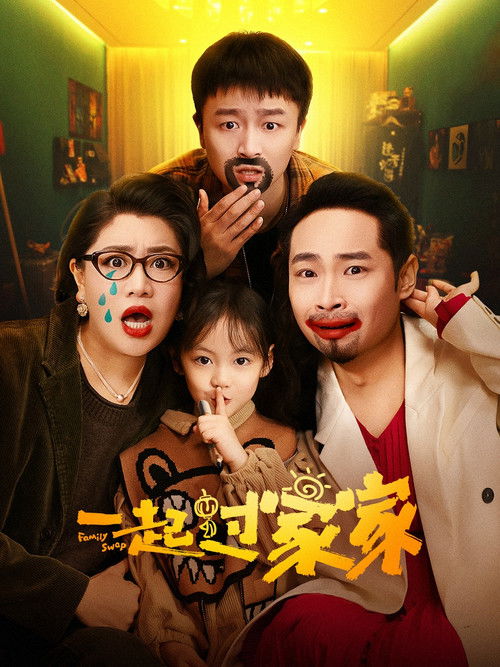
What Mostly Sunny is about
Mostly Sunny centers on Wu You — a name that literally translates to something close to "carefree" or "without worry," which tells you almost everything about where this story starts and where it has to go. He's a single man coasting through his days, sharing a modest home with his mother Zhang Baoxia, who is pushing seventy and still, by all appearances, holding the household together through sheer maternal momentum. Wu You finds himself drawn into the Sunshine Club, a community organization where he rises to the rank of senior partner — a title that sounds more impressive than it probably feels in practice. Then his mother falls ill, and the comfortable, low-stakes life Wu You has built around himself starts to look a lot less stable than he assumed. It's a setup that's as old as family drama itself, but Mostly Sunny earns its place in the genre by keeping its focus small and human.
How Mostly Sunny came together as a production
Released in 2025, Mostly Sunny runs a lean 97 minutes — long enough to breathe, short enough that it doesn't overstay its welcome, which is honestly the right call for a story this intimate. The film blends drama and comedy in a proportion that leans more toward the former as the runtime progresses, though the lighter touches never fully disappear. That tonal balance is one of the more deliberate creative choices here, and it mostly pays off.
The production sits within a wave of Chinese-language family dramedies that have found growing audiences on streaming platforms over the past few years. Films in this space tend to live or die by the chemistry between the lead and whoever plays the parent, and Mostly Sunny is no exception. Zhang Baoxia as a character is given enough specificity — her age, her relationship to her son's arrested development, her sudden vulnerability — that she doesn't collapse into a simple plot device, even when the script is using her illness to push Wu You toward growth.
On the awards and critical-recognition front, Mostly Sunny hasn't accumulated major festival hardware or mainstream Western press coverage as of this writing. Its IMDb rating sits at 4.75 out of 10, which places it in complicated territory — not a disaster, but not a consensus crowd-pleaser either. Hard to say if that score reflects genuine audience disappointment or the particular demographics who tend to rate films on that platform. Ratings for quieter, character-driven dramedies from non-English-language markets often skew lower on aggregators simply because they attract a narrower initial viewership. No Metascore or MPAA classification data is currently listed for the film.
The performances that anchor Mostly Sunny
What's striking is how much of Mostly Sunny's emotional weight rests on the dynamic between Wu You and his mother rather than on any single dramatic set piece. The film doesn't manufacture crisis for spectacle — it lets the crisis arrive quietly, the way illness actually does, and watches how a person who has built his identity around not worrying suddenly has something very real to worry about.
The comedy elements work best in the earlier stretches, when Wu You's involvement with the Sunshine Club gives the film a kind of gentle social texture. There's a scene — early in the second act, when Wu You is performing his senior-partner role with obvious self-satisfaction — that lands as both funny and a little sad, because you can already see the gap between how he sees himself and what his mother actually needs from him. That contrast is where the film is sharpest.
The performances carry a naturalism that suits the material. Neither character is written as a saint or a villain; they're just two people who love each other and have, over decades, developed habits of relating that don't quite fit the moment they're now in. We've seen this story before — the adult child who hasn't grown up, the parent who hid their fragility — but the film's restraint keeps it from feeling recycled. Movie OTT editorial staff have noted that films like this tend to find their audience on streaming rather than in theatrical windows, precisely because they reward the kind of attentive, unhurried viewing that a home environment allows.
Where to stream Mostly Sunny online
Mostly Sunny is currently available on major OTT services, and the quickest way to find out exactly which platforms are carrying it in your region is to check the Where-to-Watch widget at the top of this page — it's updated in real time as licensing deals shift. Streaming availability for international titles like this one can change without much notice, so it's worth confirming before you settle in.
Movie OTT tracks current streaming availability across platforms including Netflix, Prime Video, and Hotstar, among others, so if you're hunting down a specific title across multiple services, movieott.com is a useful single stop. Mostly Sunny's 97-minute runtime makes it a comfortable single-sitting watch, which suits the streaming context well.
Frequently asked questions
Q: Where can I watch Mostly Sunny online?
Mostly Sunny is available on major OTT streaming platforms. Check the Where-to-Watch widget at the top of this page on Movie OTT for real-time availability in your region, as streaming rights can vary by country.
Q: Who is the main character in Mostly Sunny (2025)?
The film follows Wu You, a carefree single man living with his elderly mother Zhang Baoxia. His easygoing life is upended when he joins the Sunshine Club community organization and his mother suddenly falls ill.
Q: Is Mostly Sunny based on a true story?
There's no publicly available information suggesting Mostly Sunny is based on a specific true story or memoir. It appears to be an original dramatic work, though its themes of aging parents and adult children are drawn from very recognizable real-life experiences.
Q: How long is Mostly Sunny?
Mostly Sunny has a runtime of 97 minutes, making it a compact, single-sitting watch that fits comfortably into an evening.
Q: What is Mostly Sunny's IMDb rating?
As of 2025, Mostly Sunny holds an IMDb rating of 4.75 out of 10. Ratings for quieter, non-English-language dramedies can sometimes reflect niche viewership patterns rather than overall quality, so it's worth forming your own opinion.
Final thoughts on who should watch Mostly Sunny
Mostly Sunny won't satisfy viewers looking for plot-driven momentum or big emotional catharsis — that's not what it's offering. It's a film for people who appreciate small-scale stories told with patience: adult children who've ever underestimated a parent, or anyone who's watched a comfortable routine suddenly become insufficient. The comedy keeps it from being heavy, and the drama keeps it from being slight. Not a masterpiece. But a genuinely decent way to spend 97 minutes, especially if you find it through Movie OTT's streaming guide and can watch it on your own terms.