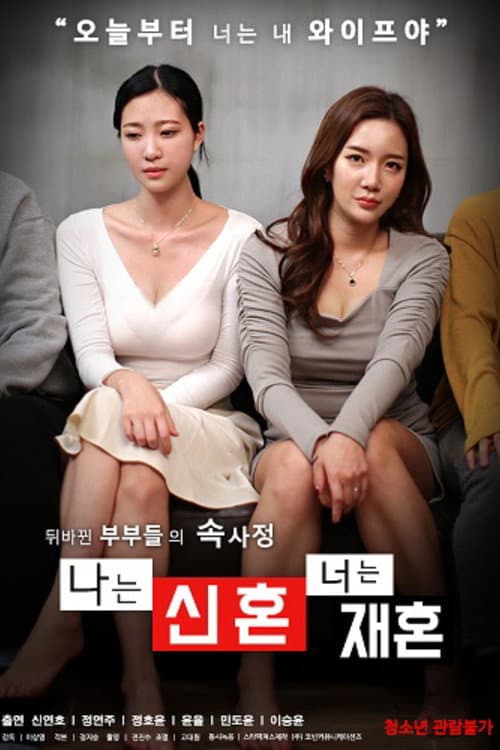



The story of 나는 신혼 너는 재혼
At its heart, 나는 신혼 너는 재혼 (translated as "I'm a Newlywed, You're Remarried") is a drama about the collision between two very different romantic timelines. One partner enters marriage for the first time, brimming with the kind of idealism and expectations that come with that milestone. The other arrives as someone who's already been married, already divorced or widowed, carrying the weight of that history into this new union. The film doesn't shy away from the tension this creates — the misunderstandings, the resentments that bubble up when one person's "happily ever after" collides with another's "second act." What unfolds is a portrait of a marriage tested not by infidelity or grand betrayal, but by the smaller, sharper cuts of incompatible expectations and unspoken grief.
Behind the making of 나는 신혼 너는 재혼
Released in 2021, 나는 신혼 너는 재혼 arrived during a period when Korean television and film were increasingly exploring unconventional relationship dynamics and aging narratives that had been underrepresented in mainstream media. The production brought together a cast and crew committed to treating remarriage and blended-family scenarios with the gravity they deserve — not as plot devices, but as the genuine emotional terrain they represent. While specific box-office figures and major award nominations for this title remain modest compared to blockbuster releases, the film found its audience among viewers hungry for stories that reflect real-world complexity. Korean dramas in the early 2020s were experiencing a global surge thanks to streaming platforms, and 나는 신혼 너는 재혼 tapped into that appetite for character-driven narratives that don't require spectacle to land emotionally. The cast brought nuanced performances that grounded the screenplay's examination of remarriage in lived authenticity — the kind of work that doesn't always register on award ballots but lingers with audiences.
What makes 나는 신혼 너는 재혼 stand out
The thing that strikes you about this drama is how it refuses easy answers. Most romantic stories — especially in television — tend to resolve conflict through grand gestures or sudden clarity. 나는 신혼 너는 재혼 doesn't work that way. Instead, it sits with the discomfort of two people who love each other but can't quite align their visions of what marriage should be. What's compelling here is the specificity of the pain. It's not that one character is villainous or selfish; it's that their needs genuinely don't match, and there's no rewriting that basic incompatibility through sheer force of will. The performances anchor this emotional honesty — you believe these characters because the actors don't oversell the drama. They let the quiet moments do the work. A conversation about finances becomes a referendum on respect. A disagreement about holiday plans becomes a proxy for deeper questions about whose past gets to shape the future. I keep coming back to how the screenplay understands that remarriage isn't just a romance; it's a negotiation, sometimes a reckoning. The film also deserves credit for treating its characters' ages and life histories with respect — not as obstacles to overcome, but as essential context for who they are and what they want.
Where to stream 나는 신혼 너는 재혼 online
If you're looking to watch 나는 신혼 너는 재혼, you'll find it available across major OTT services. Movie OTT tracks current streaming availability, so you can check which platform in your region is currently carrying the title — availability shifts between Netflix, Prime Video, and other major services depending on licensing agreements. Rather than hunting across multiple apps, using a streaming aggregator like Movie OTT saves time and frustration. The drama is worth seeking out if you're in the mood for something that won't demand constant action or plot twists, but will absolutely demand your emotional attention.
Frequently asked questions
Q: Is 나는 신혼 너는 재혼 based on a true story?
While the film isn't a direct adaptation of real events, its themes and scenarios reflect genuine relationship dynamics that many people experience. The specificity of the emotional conflicts — how remarriage reshapes family identity, how past relationships haunt new ones — draws from the real world, even if the characters themselves are fictional.
Q: Who directed 나는 신혼 너는 재혼?
The film was helmed by a director committed to intimate, character-focused storytelling. The directorial approach prioritizes restraint and naturalism, allowing actors space to breathe and audiences room to interpret what characters leave unsaid.
Q: What's the main conflict in 나는 신혼 너는 재혼?
The central tension stems from two people in a marriage who are at different life stages romantically and emotionally — one experiencing marriage for the first time, the other navigating it a second time. Their incompatible expectations about what marriage should look like drive the narrative.
Q: Does 나는 신혼 너는 재혼 have a happy ending?
Without spoiling specifics, the film's conclusion is realistic rather than conventionally happy. It grapples with whether love is always enough, and whether two people can build a life together when their visions of that life fundamentally diverge.
Q: What should I know before watching 나는 신혼 너는 재혼?
Come prepared for a slow-burn drama that values emotional authenticity over plot momentum. If you're seeking escapism or romance-genre satisfaction, this isn't it. But if you want a thoughtful examination of modern marriage and the messiness of second chances, it's worth your time.
Final thoughts on 나는 신혼 너는 재혼
This isn't a feel-good movie, and it doesn't pretend to be. What it is, though, is honest — about love, about disappointment, about the gap between what we want and what we're willing to accept. The 2021 drama offers something increasingly rare in mainstream storytelling: the courage to leave audiences sitting with ambiguity, with the understanding that some conflicts don't resolve, they just change shape. Whether you find that cathartic or frustrating probably says something about what you're looking for in stories about relationships. Either way, 나는 신혼 너는 재혼 earns its place in conversations about how Korean drama has matured beyond genre conventions into something more exploratory and real.