The Story of Mrs. Miniver
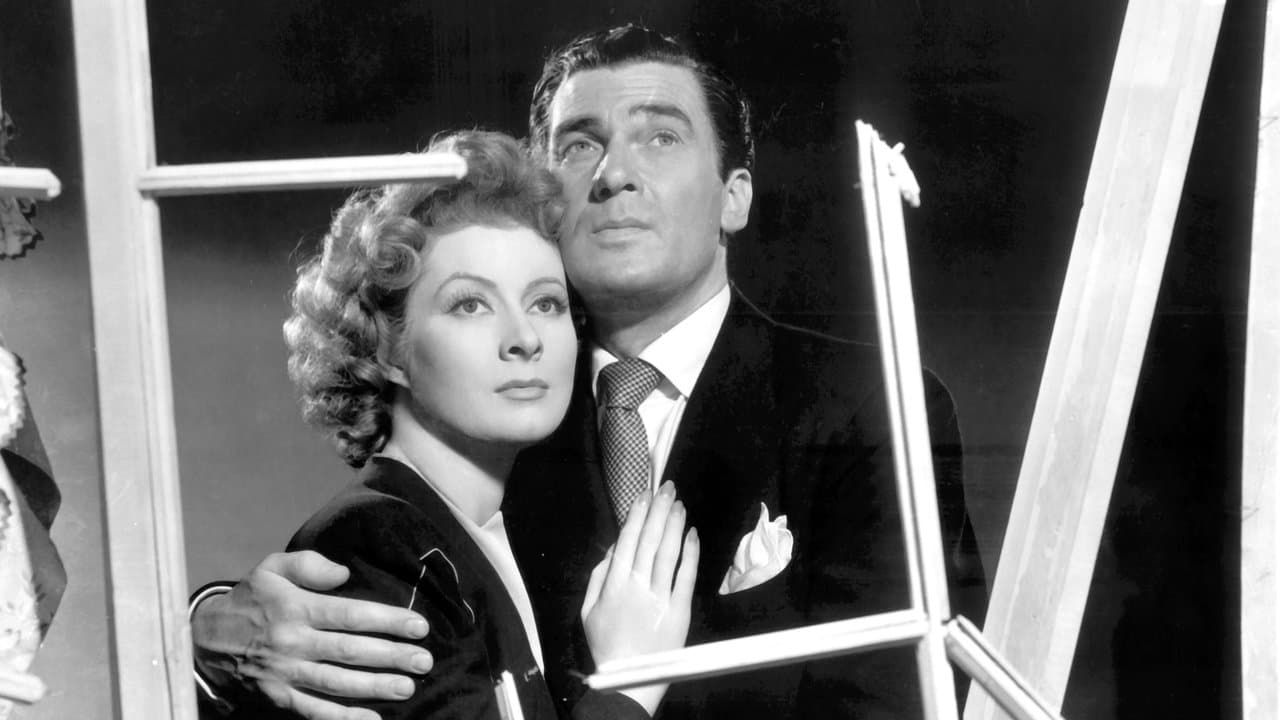
Mrs. Miniver tells the deceptively simple story of Kay Miniver, a middle-class housewife living in rural England who spends her days managing household details, worrying about her son Vin's romantic prospects, and navigating the gentle social hierarchies of her village. The film opens in peacetime, when her biggest concerns involve a new hat and the charming courtship between her son and Carol Beldon, granddaughter of the local nobility. Then war arrives—not as a distant abstraction but as something that arrives on the doorstep, grounding itself in rationing, blackouts, and the draft. Suddenly Kay and her husband Clem, played with understated warmth by Walter Pidgeon, must watch their son join the RAF and face the terrifying possibility that he won't come home. What unfolds is a portrait of resilience that doesn't look like heroism at first—it looks like ordinary people doing what comes next.
Behind the Making of Mrs. Miniver
Directed by William Wyler and produced by Metro-Goldwyn-Mayer, Mrs. Miniver was adapted from Jan Struther's 1940 novel and arrived in American cinemas in 1942, at a moment when the nation needed stories about civilian courage. Wyler assembled a powerhouse cast: Greer Garson in the title role, Walter Pidgeon as her husband, and a supporting ensemble that included Teresa Wright, May Whitty, Reginald Owen, Henry Travers, and Richard Ney. The film became an immediate cultural touchstone, earning seven Academy Awards out of twelve nominations—including Best Picture, Best Director, and Best Actress for Garson, whose victory cemented her status as one of Hollywood's most commanding presences. The film's runtime of 134 minutes was generous even by 1940s standards, but Wyler used every minute to build emotional texture. At a runtime of 134 minutes, the pacing allows scenes to breathe in ways modern audiences might find unfamiliar—but that's part of its power. The film's success wasn't merely critical; it became a box-office phenomenon, resonating with wartime audiences who recognized their own anxieties and quiet dignities reflected on screen. Movie OTT tracks where classics like this one are currently available across streaming services, making it easier to revisit these landmark films.
What Makes Mrs. Miniver Stand Out
What's striking about Mrs. Miniver is how it refuses to sentimentalize its characters or their circumstances. Garson's Kay isn't a martyr or a saint—she's a woman who wants nice things, who gets frustrated, who loves her family fiercely and sometimes imperfectly. The supporting performances anchor the film's emotional truth: Henry Travers as the elderly Mr. Ballard brings a particular poignancy to scenes about aging in wartime, while May Whitty, a Dame of the British theatre, carries the weight of class and tradition with an almost Shakespearean gravitas. There's a scene where Kay encounters a wounded German pilot—a moment that could've been played as propaganda but instead becomes something far more complicated and human. The film doesn't ask you to hate; it asks you to understand. That restraint, that refusal to oversimplify, is what separates Mrs. Miniver from lesser wartime dramas. Audience reviews on Movie OTT's platform note how the film's power depends partly on historical distance—viewers who lived through WWII experienced it as a mirror, while later generations can appreciate its craft and emotional honesty without the weight of lived trauma. The acting style, naturalistic by the standards of its era, feels almost startling now: nobody's performing; they're simply existing under pressure. I keep coming back to the way Wyler frames domestic spaces—a kitchen, a garden, a sitting room—and makes them feel like the most important places in the world, because for these characters, they are.
Where to Stream Mrs. Miniver Online
Mrs. Miniver is available on major OTT services, and the "Where to Watch" widget at the top of this page shows you exactly which platforms currently carry it. Since streaming rights shift periodically, checking that widget ensures you'll find the most up-to-date availability in your region. The film's 134-minute runtime makes it perfect for a weekend viewing, and its 1942 restoration means you'll see it in considerably better quality than earlier home-video releases. Whether you're revisiting a childhood favorite or discovering it for the first time, Movie OTT's streaming aggregator makes it simple to find where it's playing right now.
Frequently asked questions
Q: Who directed Mrs. Miniver?
William Wyler directed Mrs. Miniver. Wyler was one of Hollywood's greatest filmmakers, and this film—his first of three Best Picture wins—demonstrates his gift for extracting nuanced performances and building emotional momentum across a lengthy narrative.
Q: Is Mrs. Miniver based on a true story?
No, Mrs. Miniver is based on Jan Struther's 1940 novel of the same name, which was inspired by real wartime experiences but isn't a biography. Struther created a composite portrait of the British home front rather than documenting a specific family's story.
Q: What is the IMDb rating for Mrs. Miniver?
Mrs. Miniver holds a 7.1/10 rating on IMDb, reflecting its enduring appeal to audiences who appreciate character-driven war dramas and strong ensemble acting, though some modern viewers find its pacing slower than contemporary films.
Q: How many Academy Awards did Mrs. Miniver win?
The film won seven Oscars, including Best Picture, Best Director for William Wyler, and Best Actress for Greer Garson. It was nominated for twelve awards total, making it one of the most honored films of its era.
Q: Is Mrs. Miniver part of a series?
Yes, Mrs. Miniver is part of the Mrs. Miniver Collection, an established franchise. However, the original 1942 film stands completely on its own and requires no prior viewing.
Final Thoughts on Mrs. Miniver
If you're looking for a war film that focuses on the home front rather than the battlefield, Mrs. Miniver remains essential viewing. It's a film that trusts its audience to find drama in small moments—a mother's worry, a husband's quiet strength, the way a community pulls together. Eighty years later, that trust feels almost radical. Don't let the age fool you; this is cinema that moves people.