The story of My Brother, My Brother
What does it mean to exist as half of a whole? That's the question at the heart of My Brother, My Brother, a deceptively brief but emotionally sprawling 2025 short that refuses to fit neatly into a single genre. The film follows identical twins Omar and Wesam as they recount their shared memories — a journey that begins in the womb and stretches toward an inevitable, tragic separation. Rather than treating this as a straightforward biography, the filmmakers employ what they call a "split narrative," meaning we're essentially hearing two voices at once, two perspectives on the same life lived in parallel. It's a structural choice that mirrors the fundamental condition of being a twin: never quite alone, yet always somewhat apart. The film doesn't rely on voiceover sentimentality or heavy-handed emotion. Instead, it lets the visual language — a blend of 2D animation and live-action cinematography — do much of the storytelling work.
Behind the making of My Brother, My Brother
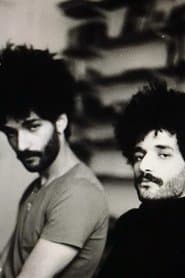
Here's what makes My Brother, My Brother genuinely unusual: it was written and directed by twin brothers themselves — Saad and Abdelrahman Dnewar of Dnewar Films. That's not a gimmick. It's the entire reason this film exists with such specificity and tenderness. The production brought together Dnewar Films, Milkman Films, and Punchline Cinéma, a collaboration that allowed the filmmakers to push beyond conventional documentary or animation into something hybrid, something that feels more like a poem than a traditional narrative. At just 15 minutes, My Brother, My Brother operates in that sweet spot where length becomes part of the artistic statement — long enough to breathe, short enough to hit like a gut punch. The fact that identical twins directed a film about identical twins isn't mere coincidence; it's the entire thesis. Saad and Abdelrahman brought lived experience to every frame, every design choice, every moment of silence. When you watch this film, you're not just seeing a story about twins. You're seeing twins tell their own story, filtered through the lens of other twins.
What makes My Brother, My Brother stand out
There's something quietly devastating about watching two voices describe the same moment — the same memory — and realizing they each experienced it differently. That's the core of what makes My Brother, My Brother work. The split narrative isn't a formal exercise; it's an emotional necessity. What's striking is how the film refuses easy sentimentality. There's no swelling orchestral score telling you when to cry. Instead, the animation and live-action footage create a visual rhythm that feels almost meditative, even when the content is heartbreaking. The combination of 2D animation with live-action cinematography could've felt jarring — two visual languages fighting for attention — but instead they complement each other, the way twins might inhabit the same space without competing. I keep coming back to how the film treats the womb as a character in itself, a shared space before the world demands individuality. The animation style in those sequences is tender without being saccharine, intimate without being cloying. And then, when the film pivots toward the separation that gives the narrative its tragic weight, you feel the shift not just intellectually but physically. The visual language changes. The tone shifts. What was once a celebration of togetherness becomes an elegy for loss. That tonal control — that ability to move a viewer from one emotional register to another without manipulation — is craft. That's filmmaking.
Where to stream My Brother, My Brother online
My Brother, My Brother is currently available on major OTT services, which means you can access it without hunting through obscure platforms or waiting for a festival circuit release. Movie OTT tracks current streaming availability across these services, so you can check the "Where to Watch" widget at the top of this page to see exactly which platform has it in your region right now. Since this is a 2025 release, availability may shift — services rotate their catalogs constantly — but the good news is that this film's relatively recent release and international production backing means it's likely to remain accessible across multiple platforms for the foreseeable future. The short runtime means it's perfect for a weeknight viewing, something you can squeeze in without committing two hours to your screen. That accessibility is part of why shorts like this matter: they don't demand a theatrical trip or a festival pass.
Frequently asked questions
Q: Who directed My Brother, My Brother?
The film was written and directed by twin brothers Saad and Abdelrahman Dnewar of Dnewar Films. Their own experience as twins directly informed the film's emotional specificity and narrative structure.
Q: How long is My Brother, My Brother?
The film runs 15 minutes, making it a short film rather than a feature. That brevity is intentional — it allows the filmmakers to hit their emotional beats without overstaying their welcome.
Q: What genres does My Brother, My Brother fall under?
It's categorized as animation, drama, and documentary. The film blends 2D animation with live-action cinematography and employs a dual narrative structure that straddles documentary and fiction.
Q: Is My Brother, My Brother based on a true story?
Yes, the film is based on the lived experience of the twin directors themselves. It chronicles memories from the womb through to a tragic separation, told through the voices and perspectives of two identical twins.
Q: Where can I watch My Brother, My Brother?
The film is available on major OTT streaming services. Check the "Where to Watch" widget on this page to find which platform currently has it in your region.
Final thoughts on My Brother, My Brother
If you've ever wondered what it feels like to be part of a pair — to share a bond so fundamental that separation feels like losing half of yourself — My Brother, My Brother offers a window into that experience. It's a film that respects its audience's intelligence, that trusts silence and visual storytelling over explanation. The 15-minute runtime means there's no filler, no scene that doesn't earn its place. What you're left with is something rare: a short film that feels complete, that says everything it needs to say without a wasted frame. Don't let the brevity fool you. This one lingers.