









The Story of My House in Umbria
What happens when strangers are forced into proximity by catastrophe? That's the central question driving My House in Umbria, a 2003 made-for-television drama that takes its time answering it. Emily Delahunty isn't your typical heroine—she's an eccentric British romance novelist living a self-constructed life in central Italy, far removed from the mess of the real world. When a terrorist bomb tears through the train she's traveling on, Emily survives. But survival, as the film quietly insists, is only the beginning. After recovering in the hospital, she makes an impulsive decision: she'll invite three other survivors back to her villa in Umbria to heal together. There's The General, a retired British Army veteran carrying his own ghosts; Werner, a young German man wrestling with survivor's guilt; and Aimee, a girl who's lost both parents in the blast and has retreated entirely into silence. What unfolds isn't a thriller about the bombing itself—it's something far more introspective and unsettling. The real explosion happens inside these four people as they learn to live in the same space.
Behind the Making of My House in Umbria
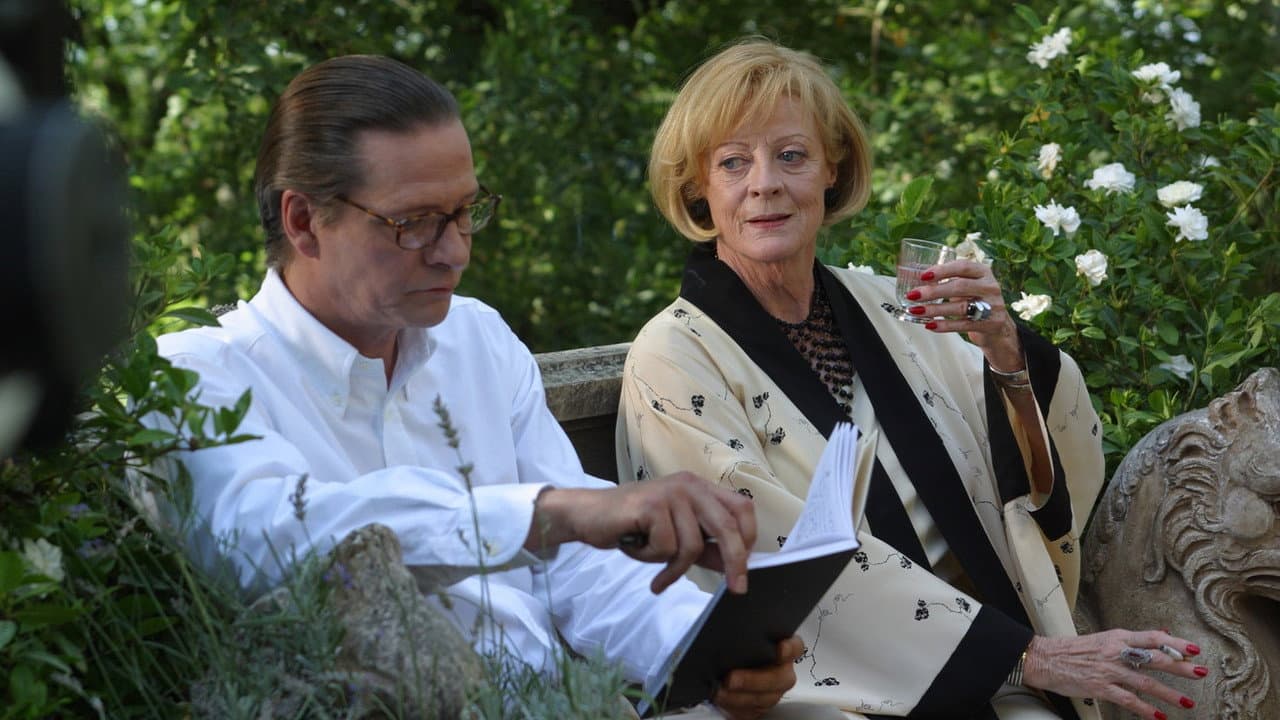
My House in Umbria was adapted from William Trevor's 1991 novella of the same name, part of his collection Two Lives, and brought to the screen by director Richard Loncraine for HBO Films in partnership with Panorama Films. The film's pedigree is immediately apparent: Maggie Smith, one of cinema's finest actors, anchors the ensemble with a performance of remarkable subtlety. Chris Cooper—an actor known for his ability to inhabit morally complicated men—plays The General with a restraint that speaks volumes. The 103-minute runtime might seem modest for a drama, but Loncraine uses every minute, resisting the urge to over-explain or sentimentalize. HBO's commitment to prestige television filmmaking in the early 2000s meant resources and creative freedom; this wasn't a network trying to manufacture a hit, but rather an outlet willing to let a story breathe. The film carries an IMDb rating of 6.068 out of 10, a score that likely reflects how divisive quiet, introspective dramas can be—some viewers hunger for this kind of character study; others find it too restrained. The production values, though, are immaculate. Umbria itself becomes almost a character, its sun-drenched villas and ancient landscapes contrasting sharply with the interior darkness the characters carry.
What Makes My House in Umbria Stand Out
Here's what's striking about My House in Umbria: it refuses easy catharsis. You won't get a scene where everyone cries and hugs and moves on—that's not how trauma works, and that's not what this film is interested in exploring. Instead, what Loncraine captures is the way grief and shock can coexist with everyday mundanity, how people can sit across a dinner table from one another and be completely alone. Smith's Emily is a woman who's built her entire life on fantasy—her romance novels, her carefully curated villa, her persona—and the bombing forces her to confront that the world doesn't care about her narratives. There's a moment early on where she's describing her novels to the other survivors, and you can see the dawning realization on her face that these stories, which once felt so vital, now seem almost obscene in the face of real loss. Chris Cooper's General carries a different kind of weight. He's lived through actual combat, actual war—and now he's watching a young girl who's lost everything, and he can't fix it with military discipline or experience. That's the tension that drives the film: these people who've survived something unimaginable, now trapped in a villa together, learning that survival doesn't come with instructions. The cinematography is deliberately restrained, favoring long takes and quiet moments over melodramatic cuts. When emotion does break through—and it does—it lands harder because you've earned it.
What I keep coming back to is how the film treats Aimee's muteness not as a plot device but as a genuine barrier to connection. She can't speak, and the adults can't force her to. That silence becomes the film's most honest element. The performances across the board are understated in a way that feels almost radical for television drama. Nobody's playing for awards; they're just inhabiting these people, moment by moment. If you're tracking quality streaming content on Movie OTT, this is the kind of film that rewards a second viewing—details you miss the first time around suddenly snap into focus.
Where to Stream My House in Umbria Online
My House in Umbria is available on major OTT services, and the "Where to Watch" widget at the top of this page will show you exactly which platforms currently carry it in your region. Streaming availability shifts frequently, so checking that widget before you hit play is always worth doing. The film's TV-movie origins mean it's found a home on several platforms over the years; HBO's back catalog has been distributed across various services as licensing agreements have evolved. Since it's a 103-minute drama rather than a sprawling series, it's the kind of film you can carve out an evening for without a massive time commitment. Movie OTT tracks current streaming availability across Netflix, Prime Video, and other major services, so you'll know exactly where to find it.
Frequently asked questions
Q: Is My House in Umbria based on a true story? No, it's a fictional adaptation of William Trevor's 1991 novella of the same name. However, Trevor's work is known for its psychological realism and emotional authenticity, which gives the film a sense of truthfulness even though the characters and events are invented.
Q: Who directed My House in Umbria? Richard Loncraine directed the film. He's known for his work in both television and cinema, bringing a deliberate, character-focused approach to the material.
Q: How long is My House in Umbria? The film runs 103 minutes, making it a relatively compact drama that doesn't overstay its welcome.
Q: What's the IMDb rating for My House in Umbria? The film holds a 6.068 rating on IMDb, which reflects the divisive nature of quiet, introspective dramas—some viewers deeply appreciate its restraint, while others find it too slow-paced.
Q: Is My House in Umbria a thriller about the bombing? No. While the train bombing sets the story in motion, the film is primarily a character study about trauma, grief, and how strangers learn to coexist in the aftermath of catastrophe. The focus is on interior emotional landscapes, not external plot mechanics.
Final Thoughts on My House in Umbria
If you're looking for a film that doesn't spell everything out, that trusts you to sit with discomfort and ambiguity—this is it. My House in Umbria won't give you easy answers or neat resolutions. It won't tell you whether these four people will heal, whether they'll form lasting bonds, whether Emily's fantasy world will ever feel solid again. What it does offer is honest observation. Maggie Smith, Chris Cooper, and a quietly devastating supporting cast inhabit a world where grief doesn't have a timeline and connection is fragile. Watch it when you're ready for something slow, something real, something that lingers.