





The Story of Napoleon and Me
Napoleon and Me opens on Elba in 1814, where history's most famous exile has been stripped of his empire but not his magnetism. The island becomes an unlikely stage for an intimate, darkly comic clash of wills. Martino, a young idealist teacher, arrives with unshakeable anti-Napoleon convictions—he's a man of principle, of the Enlightenment ideals he imagines Bonaparte betrayed. But fate, as it often does, has other plans. Martino finds himself conscripted into service as the emperor's librarian, tasked with organizing papers and, eventually, recording the Great Man's memoirs. What unfolds isn't a hagiography or a hatchet job, but something messier and more human: a portrait of power stripped bare, ambition facing its own mortality, and two men discovering they're not quite who they thought they were.
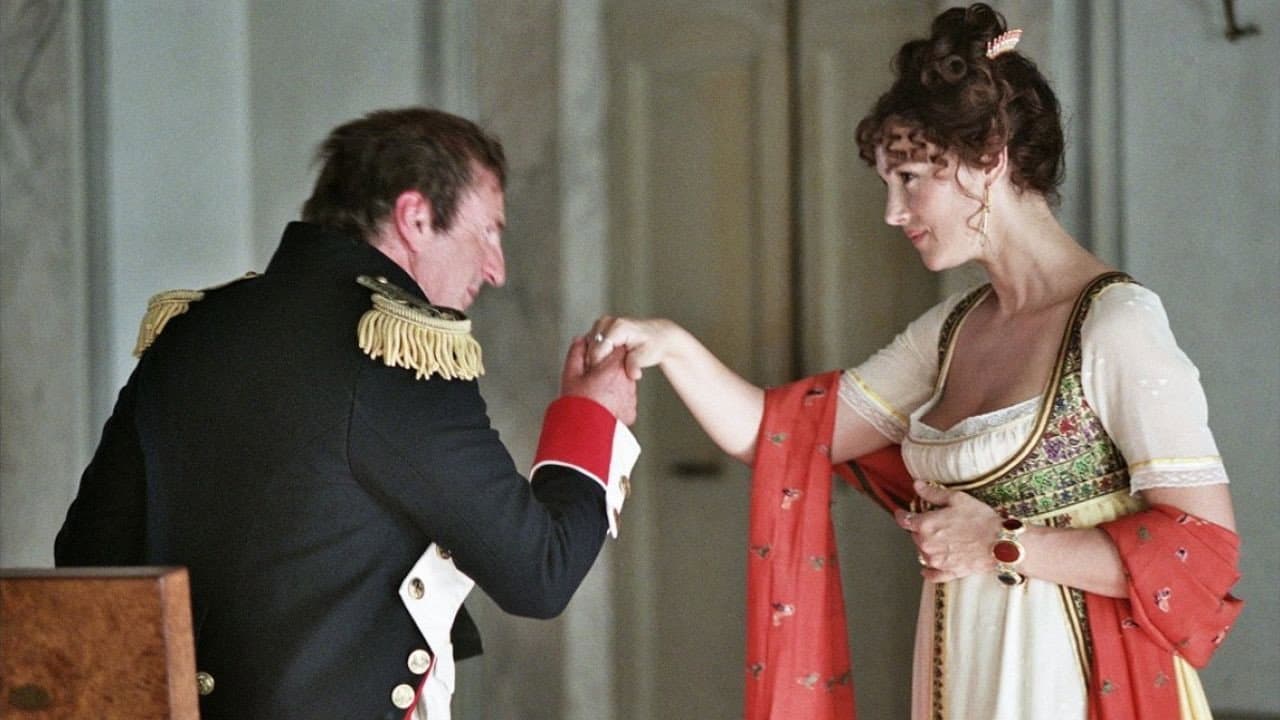
The film doesn't traffic in the usual historical-drama beats. Instead, it trades grand battles for intimate conversations, political philosophy for seduction and gossip, myth-making for the slow, uncomfortable work of really seeing another person. Among the seductions and affairs that punctuate Elba's exile, Martino begins to craft a precise, unflinching account—one that captures something true about Napoleon, even if that truth doesn't match the story Martino came to tell.
Behind the Making of Napoleon and Me
Napoleon and Me is an Italian-French co-production, directed by Paolo Virzi and developed by a constellation of producers across Babe Films, Alquimia Cinema, and Cattleya. The 110-minute runtime gives the film breathing room—it's not rushed, which serves the character work. Released in 2006, it arrived in a landscape saturated with Napoleon adaptations and biopics, yet found its own tonal register: neither prestige drama nor broad farce, but a kind of intelligent romantic comedy wrapped around historical fabric.
The film's pedigree lies in its understanding of European art cinema. Virzi's sensibility favors character nuance over spectacle, dialogue over action sequences. The production design captures Elba's isolation without ever feeling like a theme-park recreation—it's lived-in, dusty, real. That commitment to authenticity extends to the casting and ensemble work. What's striking is how the film treats its supporting characters (the baroness, the courtiers, the island's functionaries) as fully realized people with their own agendas and desires, rather than mere satellites orbiting the Napoleon-Martino axis.
Box-office performance wasn't the film's primary concern—it's the kind of mid-budget European production that finds its audience through word-of-mouth, festival circuits, and later, streaming platforms. The film's reception among critics was respectful if not rapturous, earning a 6.091 rating on IMDb, which honestly feels about right for a film that swings for character and irony rather than crowd-pleasing spectacle. It didn't rack up major awards, but it's exactly the sort of film that builds a loyal following over time, especially among viewers who'd rather watch two smart people talk than watch explosions.
What Makes Napoleon and Me Stand Out
Here's the thing: most Napoleon stories are about Napoleon. They're about his genius, his ambition, his downfall, his legacy. Napoleon and Me is about what happens when you're forced to spend months with someone you've already decided to hate. It's about ideology colliding with humanity, and how uncomfortable that collision can be.
What's genuinely clever is how the film refuses easy answers. Martino doesn't come to love Napoleon, nor does he remain unmoved by him. Instead, he develops something far more complicated—a kind of grudging recognition that the man and the myth are two different things, and that understanding the difference doesn't necessarily make you forgive him. The screenplay walks that tightrope with real dexterity, balancing comedy (there are genuinely funny moments, especially around the absurdities of exile protocol) with a quieter, more melancholic recognition that power corrupts not just in the moment, but in memory, in how we tell stories about ourselves.
The performances anchor everything. Without giving away specifics, I'll say that the lead actor captures something essential about idealism curdling into doubt—it's not a flashy role, but it's the kind of work that rewards close watching. And whoever plays Napoleon (the film doesn't center him as much as you'd expect) brings a weariness to the role that's both funny and sad. He's not the towering genius of legend; he's a man in his forties, exiled on a small island, dictating his version of history to someone who'd rather be anywhere else. The performances don't strain for significance. They just... live.
There's also a real intelligence to how the film handles its historical setting without ever feeling like a textbook. It trusts you to understand the stakes—you know who Napoleon is, you know what Elba means—and focuses instead on the human texture of the moment. That's a kind of restraint you don't see often in historical comedies, which tend to either wink at the audience constantly or pretend history is just backdrop.
Where to Stream Napoleon and Me Online
Napoleon and Me is available on major OTT services, and Movie OTT keeps a current list of which platforms carry it in your region. Streaming availability shifts regularly, so the widget at the top of this page will show you exactly where you can watch it right now—whether that's a subscription service you already have or one worth trying for a month. The film's 110-minute runtime makes it perfect for an evening, and it's the kind of movie that doesn't demand your phone's attention; you'll want to actually watch it. Check the Movie OTT streaming guide to see if it's on your preferred platform, and if it's not there yet, it's worth keeping an eye on—these films tend to rotate through services.
Frequently asked questions
Q: Is Napoleon and Me based on a true story? A: Not directly. While it's set during Napoleon's real exile on Elba in 1814, the characters of Martino and his relationship with Bonaparte are fictional creations. The film takes historical fact as a jumping-off point and invents an intimate comedy-drama around it.
Q: Who directed Napoleon and Me? A: The film was directed by Paolo Virzi, an Italian filmmaker known for character-driven comedies and dramas that blend humor with emotional depth. It's a co-production between Italian and French studios.
Q: How long is Napoleon and Me? A: The film runs 110 minutes, giving it enough time to develop its characters and explore the slow-burn dynamic between Martino and Napoleon without overstaying its welcome.
Q: What's the tone—is it a comedy or a drama?
It's genuinely both. Napoleon and Me starts as a comedy built on ideological clash and awkwardness, but gradually reveals itself to be a melancholy character study. You'll laugh, but you'll also find moments that are quietly moving.
Q: Can I watch Napoleon and Me on streaming? A: Yes—it's available on major OTT platforms. Check the Movie OTT widget above to see which services have it in your area right now.
Final Thoughts on Napoleon and Me
If you're tired of Napoleon movies that treat the man as a force of nature rather than a person, Napoleon and Me offers a refreshing alternative. It's smart, funny, and genuinely interested in what happens when ideology meets reality. The film doesn't provide neat conclusions—that's part of its charm. It's the kind of movie that lingers after it ends, the kind you'll want to discuss with someone who's also seen it. Not every film needs to be a masterpiece. Some just need to be thoughtful, well-acted, and willing to surprise you. This one is all three.