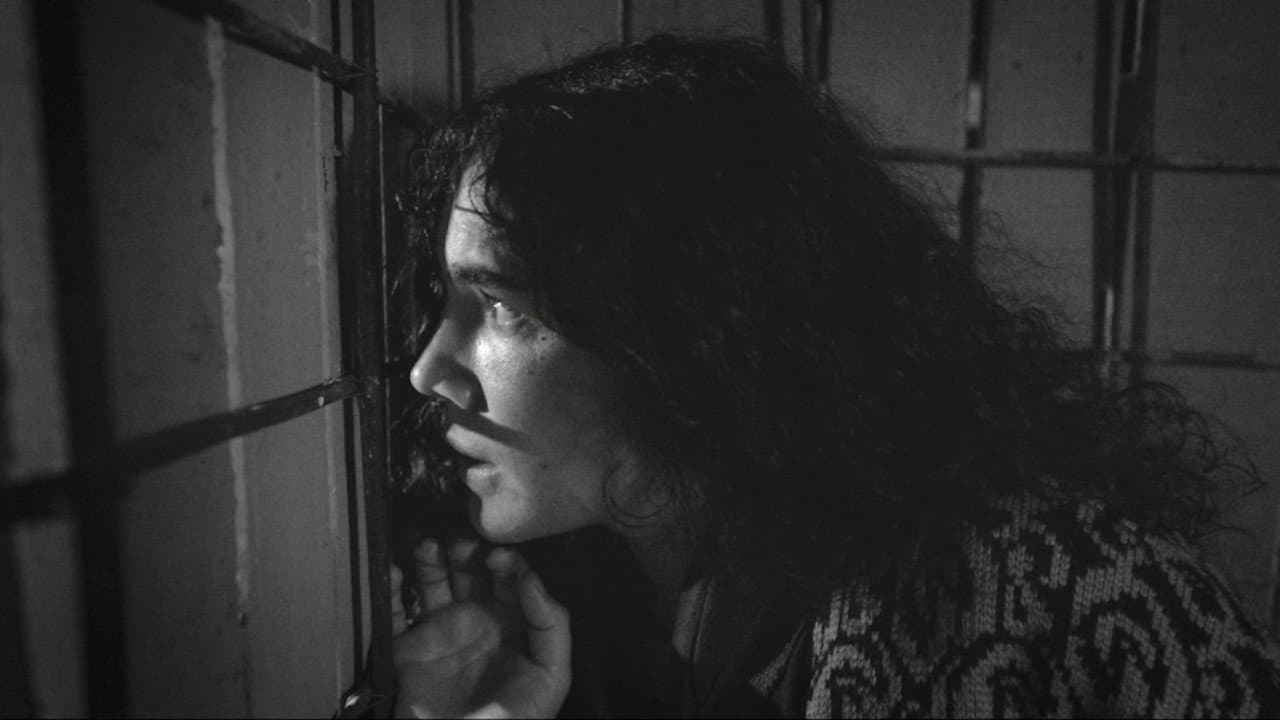
Night of Blindness
A 2026 Turkish political thriller about activists hunted after a military coup — and the trap they don't see coming.
The Setup: Why This Film Matters Right Now
Night of Blindness opens in the immediate aftermath of Turkey's September 12, 1980 military coup — one of the country's most violent political ruptures. Union leaders, student organizers, and civic activists are being hunted by intelligence services. They've found what they believe is a smuggling route out. What they don't know is that authorities already spotted them. The escape route isn't an escape. It's bait. The trap is set before the story even begins.
What strikes me about this premise is that it inverts what most escape thrillers do. You're not rooting for people to outrun their hunters — you're watching people walk directly toward the thing that's hunting them, and you know it the whole time. That dramatic irony, the audience carrying knowledge the characters don't have, is doing all the heavy lifting here.
Here's the thing: Western cinema almost never dramatized the 1980 Turkish junta period at feature length. There's no comparable film in current production. That alone makes Night of Blindness singular in the political thriller space.
Director Reis Çelik and Why TRT Backing This Matters
The director is Reis Çelik, a Turkish filmmaker with decades of work in politically charged material drawn from the country's contested recent history. This isn't a safe assignment — and TRT (Türkiye Radyo ve Televizyon Kurumu, Turkey's public broadcaster) didn't give him one.
That combination matters. A director with real credentials in difficult political cinema paired with a public broadcaster willing to fund a film about state entrapment during the junta years signals something about where Turkish cinema is right now. TRT productions don't always travel fast to international markets — they surface on festival circuits or through regional streaming deals — but when they do, they tend to carry weight.
The 91-minute runtime is a structural choice, not a limitation. Films like Costa-Gavras's Z (1969) or The Battle of Algiers built tension through economy. Every scene earns its place. No fat. Night of Blindness seems to be operating in that tradition. A lean runtime on material this heavy suggests the filmmakers trust the story. They don't need spectacle. The history is the pressure.
No cast has been publicly announced yet, which is typical for a TRT-backed project at this stage. Movie OTT's database tracking system will likely flag cast announcements as they come, so that's worth monitoring if you're tracking the film's development.
The Historical Context: What September 12, 1980 Actually Meant
The junta arrested hundreds of thousands of people. Executions followed. Political organizations were systematically dismantled across the ideological spectrum — left, right, center. The period the film is set in was one of widespread surveillance, torture, and forced disappearances. It's not ancient history. People who lived through it are still alive.
Dramatizing state entrapment during those years — putting it plainly on screen — requires institutional appetite for difficult retrospectives. TRT has that appetite apparently. The willingness to make this film from inside Turkey, for a Turkish public broadcaster, about a period that still carries enormous political sensitivity, says something.
Why the Premise Works
The thing nobody mentions about entrapment narratives — as opposed to straight escape stories — is that they require the audience to carry weight the characters don't. You watch rational decisions, even brave ones, leading somewhere terrible. That tension doesn't need action sequences. It doesn't need a car chase or a shootout. It just needs the slow, awful tightening of a noose people can't see yet.
Honestly, I keep coming back to the setup. That's the whole film right there. Everything else is execution — and Çelik has the track record to pull it off.
Where to Watch Night of Blindness
Night of Blindness is currently available on major OTT services — check the Where-to-Watch widget at the top of this page for current platform availability and regional differences. TRT productions don't always land on the same platforms in every market, so the widget is the most reliable place to confirm what's accessible where you are.
Distribution for international markets hasn't been formally announced through press channels yet. If you're outside Turkey and hoping for a subtitled version on a major streaming service, Movie OTT monitors rights deals in real time and will reflect new additions as soon as they're confirmed. That's your best source for updates on streaming availability.
Who Should Watch This
If political thrillers built on real historical rupture are your lane — Z, The Battle of Algiers, that whole tradition — Night of Blindness belongs on your watchlist now. Not later. The setup is genuinely unsettling. The director has the credentials. The historical material is almost entirely uncharted in international cinema.
Start here. Then, if it lands, track Z and The Battle of Algiers — they're the closest ancestors to what Çelik seems to be building. Each one operates on the same principle: history as pressure. No wasted moments.
Add it to your watchlist through Movie OTT. The 2026 release date will be locked in soon enough.
Frequently Asked Questions
Q: Who directed Night of Blindness?
Reis Çelik. Turkish filmmaker. Long track record with politically engaged cinema. Produced by TRT.
Q: Is it based on a true story?
The film is set against the real historical backdrop of Turkey's September 12, 1980 military coup — documented event, mass arrests, executions, dismantled political organizations. Whether the specific characters and plot are drawn from documented cases hasn't been confirmed publicly yet.
Q: How long is it?
91 minutes. Tight. Deliberate.
Q: When does it come out?
2026. Specific date hasn't been confirmed. Movie OTT will post the release date announcement as soon as it's public.
Q: Where can I watch it?
Major OTT services carry it. Check the Where-to-Watch widget at the top of this page for current platforms and regional availability.