
The story of Old Times: Memory, desire, and the unreliable past
Old Times opens in a carefully renovated farmhouse somewhere beyond London, where a prosperous couple are preparing to receive an unexpected guest—the wife's best friend from twenty years ago. What begins as an evening of pleasant reunion quickly becomes something far more complicated. The three characters find themselves locked in a psychological dance, one where the past doesn't simply visit them—it interrogates them. As they reminisce, memories collide, contradict, and transform. What did or didn't happen? Who's remembering correctly? The film doesn't answer these questions cleanly, and that's precisely the point. Pinter's world is one where language masks as much as it reveals, where subtext becomes the real conversation, and where a single evening can unravel the careful architecture of a marriage.
Behind the making of Old Times: From stage to BBC screen
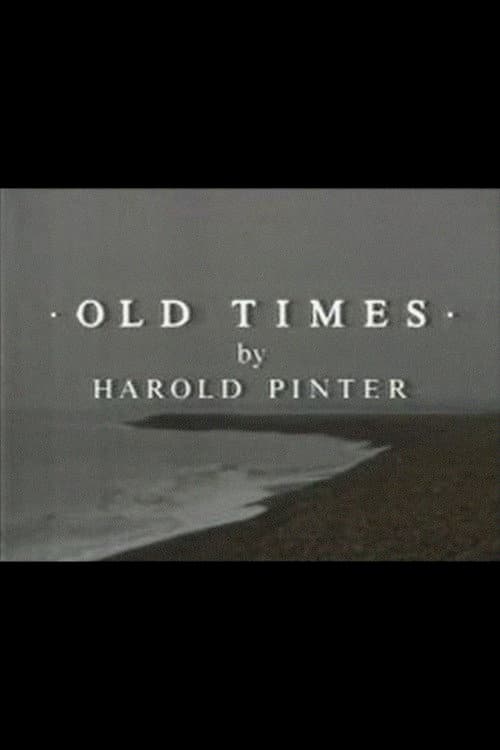
Old Times originated as a stage play by Harold Pinter, first performed by the Royal Shakespeare Company at the Aldwych Theatre in London on June 1, 1971. The original production starred Colin Blakely, Dorothy Tutin, and Vivien Merchant, with Peter Hall directing—the legendary RSC director who was also celebrating his 40th birthday when Pinter dedicated the play to him. Two decades later, the BBC brought this theatrical masterpiece to television in 1991, translating Pinter's claustrophobic, dialogue-driven drama into a 78-minute film. The adaptation preserves the play's essential tension: three actors, mostly one room, and the weight of unspoken histories pressing down on every exchange. Though it arrived with modest expectations on the BBC schedule, the production showcases the kind of serious literary adaptation that the corporation was known for during this era—the sort of thing that doesn't chase ratings but trusts its audience to sit with discomfort. The IMDb rating of 4.6/10 suggests that not everyone connected with the material, which is unsurprising given Pinter's deliberately opaque style isn't designed for mass appeal.
What makes Old Times stand out: Performance and the power of the unspoken
What's striking about Old Times is how much of its power comes from what isn't said. Pinter's dialogue is sparse, repetitive at times, punctuated by long silences that feel less like empty space and more like a held breath. The performances have to carry enormous weight—and they do. The three actors move through the evening like chess players, each calculating, each protecting something. There's a moment where the friend describes a memory of the wife, and you can see the husband's entire body tense; he's not even in the conversation, but he's absolutely listening, and what he hears seems to threaten everything. That's the film's real achievement. It doesn't ask you to like these people or root for them. Instead, it asks you to watch them wrestle with the gap between what they remember and what might actually have happened, and to recognize that gap in your own life. The tension builds not through plot mechanics but through the simple act of three people trying to maintain control in a room where control keeps slipping away. Movie OTT helps you track where serious dramas like this are currently streaming, because these character studies deserve to be found.
Where to stream Old Times online
Old Times is available on major OTT services, making this 1991 BBC adaptation more accessible than ever. The film's modest runtime of 78 minutes means you can experience Pinter's entire psychological apparatus in an evening—no commitment required beyond your willingness to sit with ambiguity. If you're exploring classic British television drama or Pinter adaptations, the streaming availability makes this an easy addition to your watchlist. Movie OTT's Where to Watch widget at the top of this page shows you exactly which platforms currently have Old Times in your region, so you can start watching immediately without the usual hunt across multiple services.
Frequently asked questions
Q: Is Old Times based on a play?
Yes. Old Times is an adaptation of Harold Pinter's 1971 stage play, first performed by the Royal Shakespeare Company at the Aldwych Theatre in London. The BBC filmed this version in 1991, preserving the play's dialogue and structure while adapting it for television.
Q: How long is Old Times?
The film runs 78 minutes, making it a lean, focused experience that doesn't overstay its welcome despite its psychological intensity.
Q: Who directed the original stage production?
Peter Hall, the legendary RSC director, directed the original 1971 production, which starred Colin Blakely, Dorothy Tutin, and Vivien Merchant. Pinter dedicated the play to Hall on his 40th birthday.
Q: Why is Old Times so hard to follow?
Pinter deliberately leaves the truth ambiguous—we're never entirely sure which memories are accurate or what actually happened between these characters. That uncertainty is the point. The film trusts you to sit with confusion and draw your own conclusions.
Q: Where can I watch Old Times?
Old Times is currently available on major OTT platforms. Check the Where to Watch widget on this page to see which services have it in your region right now.
Final thoughts on Old Times
Old Times won't be for everyone—it's too strange, too mannered, too committed to ambiguity for that. But if you're the kind of viewer who doesn't mind being unsettled, who finds meaning in silences and subtext, who enjoys watching actors navigate impossible emotional terrain, then this BBC adaptation deserves your time. It's a film that trusts its audience, and honestly, that's becoming rarer. The thing nobody mentions is how funny it can be—dark, uncomfortable humor lurking beneath the surface tension. Pinter understood that the most frightening moments in human relationships aren't the ones where people shout; they're the ones where everyone's smiling and nothing is safe.