The story of On Borrowed Time
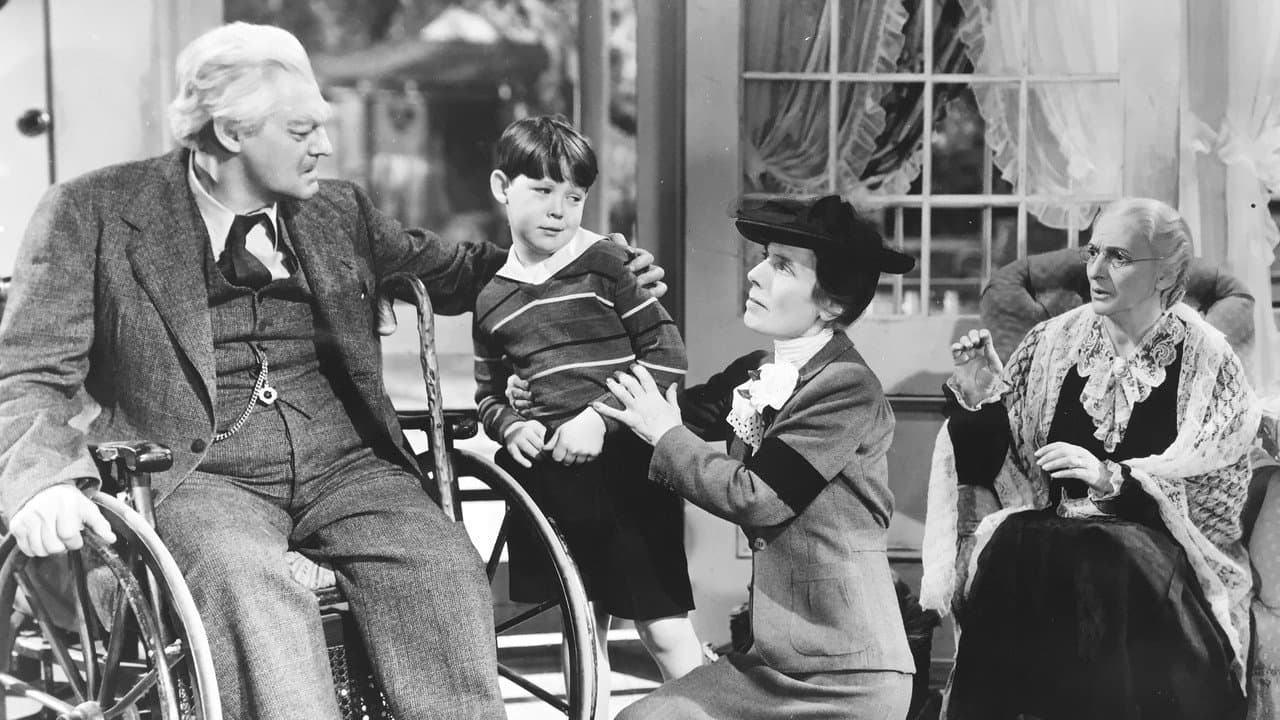
On Borrowed Time opens with a premise that sounds almost whimsical until you realize what's really at stake. Young Pud has lost his parents and now lives with his aging grandparents, but the bond between the boy and his grandfather—affectionately called Gramps—is the emotional spine of everything that follows. When a scheming relative circles, threatening to take custody of the child, Gramps faces an impossible choice: his own mortality versus his grandson's future. Then Mr. Brink arrives. Not as a villain, but as something far more unsettling—Death itself, polite and businesslike, come to collect an old man's time. What happens next isn't a straightforward surrender. Through quick thinking and desperation, Gramps manages to trap Brink in the branches of a sprawling apple tree, effectively imprisoning Death and buying himself time. The question that drives the film isn't whether he can hold Death at bay forever—it's what he'll do with the days he's stolen, and whether love alone is enough to protect a child from a cruel world.
Behind the making of On Borrowed Time
On Borrowed Time arrived in 1939 as a major studio production from Metro-Goldwyn-Mayer, directed by Harold S. Bucquet and produced by Sidney Franklin. The film was adapted from Paul Osborn's 1938 Broadway play, which itself was based on Lawrence Edward Watkin's novel—a pedigree that gave the material immediate prestige. What's striking is that the play had already proven itself on stage; audiences had responded to its blend of sentiment and supernatural elements, so MGM wasn't taking a wild gamble. They were banking on a proven property with serious dramatic weight.
The casting was a masterstroke. Lionel Barrymore, already a legend in Hollywood, anchored the film as Gramps, bringing the kind of weathered authority and tender vulnerability that only comes from decades of craft. Cedric Hardwicke—the Sir who plays Mr. Brink—was equally distinguished, known for his theatrical precision and ability to make even fantastical roles feel grounded. Beulah Bondi rounded out the core ensemble as the grandmother, a steady emotional presence. The film runs 99 minutes, a lean runtime that keeps the emotional stakes tight without letting the premise wear out its welcome. By all accounts, the chemistry between Barrymore and the young actor playing Pud—Bobs Watson—was genuine and affecting, which matters enormously when a film's heart depends on a child-elder relationship. The IMDb rating of 7.567/10 reflects solid critical and audience appreciation, suggesting the film's emotional core has held up across decades.
What makes On Borrowed Time stand out
There's a reason this film has endured—and it's not just nostalgia. On Borrowed Time works because it refuses to choose between being a fantasy and being a genuine character study. The conceit of trapping Death in a tree could've been played for laughs or melodrama, but instead, the film treats it as a real moral problem. Gramps isn't a hero defying the universe; he's a desperate old man trying to do right by a child he loves. That tension—between the fantastical setup and the very human stakes—is what gives the film its emotional weight. Cedric Hardwicke's Mr. Brink is particularly brilliant. He's not evil. He's not even unkind. He's Death, and Death is patient, professional, and oddly sympathetic. Watching Barrymore and Hardwicke circle each other—verbally, morally—creates a strange kind of intimacy that's rare in cinema. The film doesn't shy away from the real threat either: the custody battle, the uncertainty about what happens to Pud, the knowledge that you can't actually stop time forever.
What makes this work on a deeper level is that it's not afraid to be melancholy. Yes, there's comedy—the apple tree setup provides moments of dark humor—but the film never lets you forget that we're watching a man negotiate with death because he's terrified of abandoning a child. It's a story about mortality that doesn't require a body count or jump scares. It requires only two great actors and a script willing to sit with uncomfortable truths. The performances carry the weight. Barrymore doesn't play Gramps as a saint; he's crotchety, flawed, and sometimes wrong. That makes his love for Pud more real, not less.
Where to stream On Borrowed Time online
On Borrowed Time is available on major OTT services, and you can check the Where to Watch widget at the top of this page to see exactly which platforms currently have it in your region. Streaming availability shifts, but this 1939 classic has found its way onto several major services over the years—a testament to its enduring appeal. If you're hunting for it, Movie OTT keeps a running list of where older films like this one are streaming, so you won't waste time clicking around. The 99-minute runtime makes it perfect for a weeknight watch, and the emotional payoff justifies the time investment. Whether you're a classic film enthusiast or just curious about how Hollywood handled fantasy and family drama in the late 1930s, the availability is there.
Frequently asked questions
Q: Who directed On Borrowed Time?
Harold S. Bucquet directed the film, with Sidney Franklin producing. It was adapted from Paul Osborn's successful 1938 Broadway play.
Q: Is On Borrowed Time based on a true story?
No, it's a work of fiction. The story comes from Lawrence Edward Watkin's novel, adapted for the stage and then for film. The fantasy premise—trapping Death in a tree—is entirely imaginative.
Q: What's the runtime of On Borrowed Time?
The film runs 99 minutes, making it a lean, focused watch that doesn't overstay its welcome despite its weighty emotional themes.
Q: Why does Gramps trap Mr. Brink in the apple tree?
Gramps is desperate to protect his orphaned grandson, Pud, from being taken away by a scheming relative. When Death arrives to claim him, he uses quick thinking to confine Mr. Brink—and thus Death itself—to the tree, buying time to resolve the custody crisis.
Q: How is On Borrowed Time rated on IMDb?
The film holds a 7.567/10 rating on IMDb, reflecting solid appreciation from both critics and audiences over the decades.
Final thoughts on On Borrowed Time
On Borrowed Time is one of those films that sneaks up on you. You come in expecting a quaint period piece with a supernatural gimmick, and you leave having watched something genuinely moving about love, mortality, and what we owe to the people we're leaving behind. Lionel Barrymore and Cedric Hardwicke make it work—their scenes together have a gravity that elevates the material beyond its premise. It's not a perfect film, but it's a sincere one, and that sincerity matters. If you haven't seen it, don't let the 1939 date fool you. This one's worth your time.