




What Our Father: The Last Days of a Dictator is about
Our Father: The Last Days of a Dictator opens in Portugal in 1968, at the precise moment when one of the twentieth century's most durable authoritarian regimes quietly began its unraveling — not through revolution, but through a fall from a deck chair. António de Oliveira Salazar, the fascist dictator who had ruled Portugal longer than any comparable figure in modern history, suffered a stroke and was removed from power without ever being told. What followed was one of history's stranger footnotes: for nearly two years, the people closest to him — his housekeeper Maria de Jesus, his maids Aparecida, Socorro, and Teresinha, and his personal physician — maintained an elaborate, meticulously managed illusion. Salazar held court, issued opinions, believed himself still President of the Council. He died in 1970 never knowing otherwise. The film, running 108 minutes, doesn't sensationalize any of this. It doesn't need to.
How Our Father: The Last Days of a Dictator came together
The film is directed and co-written by José Filipe Costa, a filmmaker whose background is almost entirely in documentary work — which makes this his most ambitious leap into fiction to date. That documentary instinct is visible throughout: Costa's camera tends to observe rather than editorialize, letting the domestic rhythms of the São Bento mansion do the heavy lifting. The production comes from Uma Pedra no Sapato, a Portuguese company with a track record in serious, festival-oriented cinema.
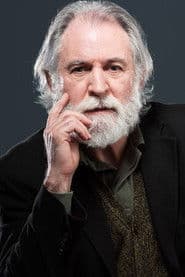
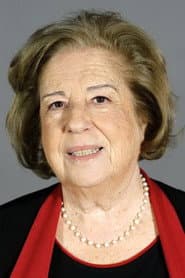
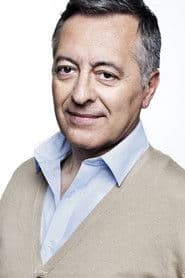
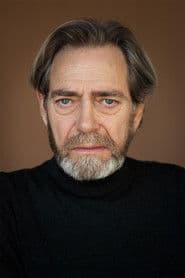
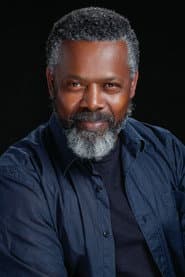
Jorge Mota takes on the daunting task of playing Salazar, surrounded by a cast that includes Vera Barreto, Carolina Amaral, Cléa Almeida, and Catarina Avelar — the women whose daily performances of deference and false normalcy form the film's emotional core. Hard to say if any single performance here would have worked without the ensemble holding the whole thing together, but Mota's Salazar is a quietly chilling creation: diminished, occasionally lucid, and utterly convinced of his own continued relevance.
Our Father: The Last Days of a Dictator had its world premiere in the Big Screen Competition at the International Film Festival Rotterdam in January 2025, which placed it immediately in the company of ambitious, challenging world cinema. The Film Verdict noted the film's careful period reconstruction and its willingness to sit in discomfort rather than resolve its central irony too neatly. IFFR's official selection page described it as a work that moves between political satire and something closer to a nightmare, with Salazar's animal-filled delusions bleeding into the film's visual grammar in ways that are genuinely strange. No major awards have been confirmed at the time of writing, though its Rotterdam platform gives it a credible path through the arthouse circuit.
Why Our Father: The Last Days of a Dictator stands out from other political dramas
What's striking is how Costa resists the obvious approach. This could have been a straightforward historical indictment — a film that positions itself as a reckoning with fascism, complete with swelling score and moral clarity. Instead, it's something more unsettling and, honestly, more interesting. The servants who maintain the illusion are not simply victims or villains; they're people navigating an impossible situation under a regime that has conditioned them to comply. The film doesn't let them — or us — off the hook easily.
The satirical edge is real but it's dry. Almost arid. There are moments — particularly a scene in which Salazar receives a briefing on affairs of state that has been entirely fabricated for his benefit — where the absurdity tips into something almost farcical, but Costa pulls back before it becomes comedy. That restraint is either the film's greatest strength or its most debated quality, depending on which review you read.
According to the ICS Film review from Rotterdam 2025, some critics felt that Salazar himself remains too opaque — that the film's deliberate emotional distance prevents us from fully inhabiting his perspective or understanding what drove five decades of authoritarian rule. That's a fair point. But I'd argue the opacity is partly the point: Salazar's interiority was always a performance, and Costa seems uninterested in humanizing a man who spent his career dehumanizing others. The animal nightmares that punctuate his sleep — vivid, surreal, deeply strange — suggest an inner life that even Salazar himself can't fully access.
The production design deserves particular mention. The São Bento mansion is rendered as a kind of gilded trap, all heavy curtains and formal furniture, a space that looks like power but functions like a hospice.
Where to stream Our Father: The Last Days of a Dictator online
Our Father: The Last Days of a Dictator is available to stream on major OTT services, with MUBI being among the most prominent platforms carrying the film for arthouse and cinephile audiences globally. MUBI's curation of festival titles makes it a natural home for a film of this profile — one that premiered at Rotterdam and is aimed squarely at viewers who seek out serious international cinema. The Where-to-Watch widget at the top of this page has the most current platform availability, since streaming rights shift more often than most people expect.
Movie OTT tracks streaming availability across major platforms in real time, so if you're outside a region where MUBI carries the title, it's worth checking back — distribution windows for festival films like this one tend to expand over the months following a premiere. Movie OTT also aggregates editorial coverage alongside availability data, which means you can read criticism and find a way to watch in the same place.
Frequently asked questions
Q: Is Our Father: The Last Days of a Dictator based on a true story?
Yes. The film dramatizes the real final years of António de Oliveira Salazar, Portugal's dictator, who suffered a stroke in 1968 and was removed from power without being informed. He lived under a maintained illusion until his death in 1970, genuinely believing he was still President of the Council.
Q: Who directed Our Father: The Last Days of a Dictator?
The film was directed and co-written by José Filipe Costa, a Portuguese filmmaker primarily known for documentary work. Our Father: The Last Days of a Dictator represents his most significant move into narrative fiction, and it premiered in the Big Screen Competition at the International Film Festival Rotterdam in 2025.
Q: Where can I watch Our Father: The Last Days of a Dictator?
The film is available on major OTT platforms including MUBI, which has been one of its primary streaming homes following its festival run. For the most up-to-date list of where it's streaming in your region, check the Where-to-Watch widget on this page or visit movieott.com for live availability tracking.
Q: How long is Our Father: The Last Days of a Dictator?
The film has a runtime of 108 minutes. It's a single-feature drama with no sequel or series component — a contained, self-sufficient work.
Q: Who plays Salazar in Our Father: The Last Days of a Dictator?
Jorge Mota plays António de Oliveira Salazar. The supporting cast includes Vera Barreto, Carolina Amaral, Cléa Almeida, and Catarina Avelar, who portray the household staff responsible for maintaining the fiction that Salazar is still in power.
Who should watch Our Father: The Last Days of a Dictator
This one is for patient viewers — people who don't need a film to explain itself or deliver catharsis on schedule. Our Father: The Last Days of a Dictator rewards attention and a tolerance for ambiguity. If you came up on films like The Death of Stalin or even something quieter like Amour, the register here will feel familiar, if darker. It's not an easy watch, and it's not trying to be. But as a portrait of power's final, hollow performance, it's genuinely difficult to shake. Movie OTT rates it as essential viewing for fans of European political cinema.