The story of Out California Way
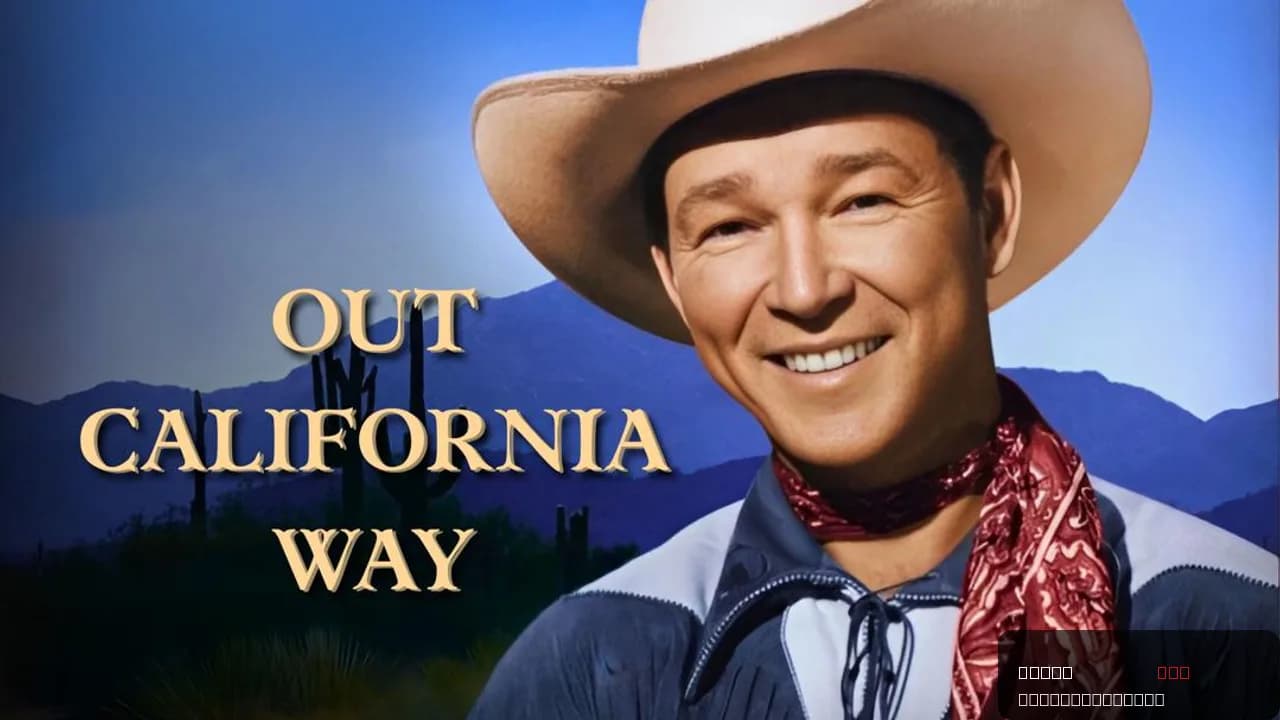
Out California Way follows Monte Hale as he arrives in California with big dreams of becoming a Western film star. He's not alone—his young sidekick Danny (Robert Blake), the spirited Gloria (Lorna Gray), and a remarkably talented dancing horse named Pardner round out this unlikely crew. What should be a straightforward climb to fame becomes complicated fast. A rival named Rod Mason doesn't want Hale to succeed, and he'll stop at nothing to sabotage the group's auditions and performances. The film's central conflict is refreshingly simple: can Hale and his friends overcome Mason's interference and land their shot at stardom? What unfolds is a brisk 52-minute adventure that mixes musical numbers with Western action, all designed to keep the momentum rolling without ever overstaying its welcome.
Behind the making of Out California Way
Director Lesley Selander helmed Out California Way for Republic Pictures, a studio known for churning out B-Westerns and low-budget features that still managed to attract genuine talent. What's striking is that this production holds a genuine claim to cinema history—it was the first feature film ever shot in Trucolor, a three-strip color process that represented a significant technical leap. The cast brought real star power to what might otherwise have been a throwaway programmer. Roy Rogers, already a major box office draw, agreed to a cameo appearance alongside his frequent co-star Dale Evans (though she's not credited in all sources). Monte Hale, who'd go on to become a Republic Pictures fixture, carries the lead with an easy charm. Robert Blake—who'd later become famous for Baretta—was just a child actor here, part of the studio's stable of young talent. Lorna Gray, a Republic contract player, provides romantic interest and comic relief in equal measure. The film's modest runtime and Republic's efficient production methods meant Selander could shoot quickly without sacrificing entertainment value, and Movie OTT tracks how these mid-budget productions from the 1940s continue to find audiences today.
What makes Out California Way stand out
The performances work because nobody's trying too hard. Hale brings an unpretentious energy to the lead—he's not playing a complex character wrestling with moral ambiguity, he's just a guy who wants to make it, and that directness is oddly refreshing. Robert Blake, despite his youth, doesn't come across as saccharine; there's a real kid-actor quality to his work that feels authentic rather than cutesy. What's less clear is whether the film's musical numbers land as intended. The dancing horse Pardner is genuinely entertaining—the trick work is competent for 1946, and there's something undeniably charming about watching a horse execute choreographed movements. The Trucolor cinematography, groundbreaking as it was, gives the film a particular aesthetic quality—slightly saturated, a touch artificial by modern standards, but undeniably striking when you're watching it. What I keep coming back to is the film's commitment to momentum. At 52 minutes, it doesn't waste scenes on exposition or lengthy dramatic beats. Every sequence either advances the plot or delivers entertainment, which means the pacing never drags. According to the IMDb rating of 5.4/10, modern audiences find it uneven—and honestly, that's fair. The film's dated production values and some genuinely creaky plot mechanics won't appeal to everyone. But for fans of classic Westerns and curious film historians, there's enough here to justify a viewing. Movie OTT's streaming guides make it easier than ever to explore these overlooked titles from Hollywood's golden age.
How to watch Out California Way online
Out California Way is currently available to stream on Prime Video, where you can watch it on demand. The film's short runtime makes it perfect for a lunch-break viewing or as a palate cleanser between longer features. Since this is a 1946 Republic Pictures production, availability can shift—streaming rights bounce around depending on licensing agreements—so if you're interested, checking the Where to Watch widget at the top of this page will give you the most current information on where it's available right now. Movie OTT keeps that data updated across all major platforms, so you won't waste time searching. The Trucolor cinematography is best appreciated on a decent screen, so streaming beats hunting down a worn DVD.
Frequently asked questions
Q: Who directed Out California Way?
Lesley Selander directed this 1946 Republic Pictures production. Selander was a prolific B-movie director who specialized in Westerns and action pictures, making him a natural fit for this musical Western.
Q: Is Out California Way based on a true story?
No, it's an original screenplay about fictional characters pursuing stardom in Hollywood. The plot—a young performer fighting off a rival's sabotage attempts—is a classic Hollywood trope rather than an adaptation of real events.
Q: Why is Out California Way historically significant?
It was the first feature film ever shot in Trucolor, a three-strip color process that represented a major technical advancement in cinematography at the time. This distinction alone makes it noteworthy for film historians and technology enthusiasts.
Q: Does Roy Rogers appear in Out California Way?
Yes, Roy Rogers makes a cameo appearance in the film, as does Dale Evans, though their roles are brief. Their presence added marquee value to what was otherwise a mid-budget Republic picture.
Q: How long is Out California Way?
The film runs 52 minutes, making it a brisk, efficient piece of entertainment that doesn't overstay its welcome. This shorter runtime was typical for Republic Pictures' B-movie output during the 1940s.
Final thoughts on Out California Way
Out California Way isn't a masterpiece, and nobody's going to argue it ranks among the great Westerns of the 1940s. What it is, though, is a genuinely entertaining piece of Hollywood history—a film that captures a specific moment in studio filmmaking when efficiency and charm mattered more than bloated production values. Monte Hale's earnest performance, the novelty of Pardner the dancing horse, and that groundbreaking Trucolor cinematography combine to create something worth your time. If you're a Western fan, a film historian, or just someone curious about how Hollywood entertained audiences during the postwar era, this one deserves your attention. Stream it on Prime Video and see what you think.