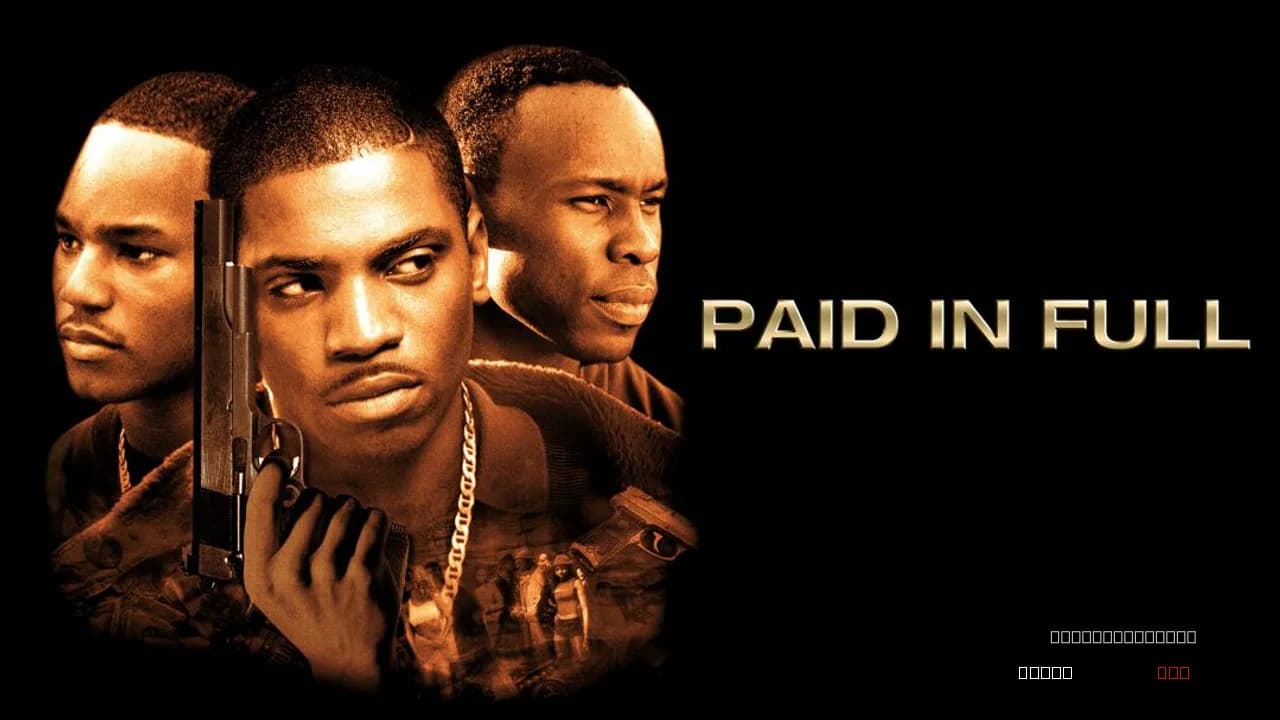



The story of Paid in Full: Harlem's rise and fall
Paid in Full is a 2002 American crime drama that zeroes in on one man's ascent through the ruthless machinery of 1980s Harlem's drug trade. The film follows Ace (Wood Harris), a young delivery boy working at a dry cleaner who gets pulled into the streets and gradually climbs toward the top of the dealing hierarchy. But success in that world comes with a price — and the higher Ace climbs, the more he finds himself battling rivals, navigating betrayal, and wrestling with the weight of what he's become. It's not a straightforward rise-and-fall narrative; it's messier than that. The film doesn't let you off easy with neat morality. Instead, it shows how circumstance, ambition, and survival instinct can blur the line between making a living and losing yourself.
Production, cast and box office: How Paid in Full came together
Directed by Charles Stone III from a screenplay by Matthew Cirulnick and Thulani Davis, Paid in Full is loosely based on the lives of real drug dealers Azie Faison, Rich Porter, and Alpo Martinez — figures whose stories loom large in Harlem's criminal history. The film assembled a cast that blended seasoned actors with musicians stepping into dramatic roles. Wood Harris anchors the film as Ace, bringing a quiet intensity to a character caught between ambition and conscience. Mekhi Phifer plays Rico, and rapper Cam'ron takes on a supporting role, lending the film an authenticity that comes from casting people who understood the world being portrayed. Kevin Carroll, Chi McBride, Regina Hall, and Esai Morales round out the ensemble, each adding texture to the film's portrait of Harlem street life.
However, Paid in Full didn't find an audience on theatrical release. The film earned just $3,090,862 at the box office — a modest return that suggested mainstream audiences weren't ready for its particular brand of street narrative in 2002. Critics were similarly divided. The film received a Metascore of 49, indicating mixed reviews, and sits at 53% on Rotten Tomatoes, landing it in that frustrating middle ground where some critics praised what it was trying to do while others found the story familiar or derivative. It earned one award nomination, though critical recognition wasn't the film's strength on arrival. What matters now, though, is what happened after: Paid in Full developed a cult following that's only grown over two decades, becoming the kind of film that gets rewatched, quoted, and debated in a way the box office numbers never predicted.
What makes Paid in Full stand out: Performance and gritty authenticity
What's striking about Paid in Full — and what critics who championed it at the time noticed — is how grounded it feels. This isn't a Hollywood crime drama with glamorous montages and slick cinematography designed to make the drug trade look cool. Instead, Stone III and his team committed to showing the texture of Harlem in the 1980s: the cramped apartments, the corner conversations, the constant low-level danger that becomes background noise for people living in that world. Wood Harris delivers a performance that's all restraint and buried emotion; you see Ace's moral deterioration not through big dramatic speeches but through small moments — a glance, a hesitation, the way he stops reaching for something he once wanted. That's the kind of acting that doesn't always win awards but sticks with you.
The film doesn't shy away from depicting the violence and degradation of street life, nor does it romanticize it. There's a fistfight scene early on that's brutal and unglamorous — not choreographed for excitement but for the raw desperation of two people fighting over scraps. I keep coming back to how the film treats organized crime not as an empire-building fantasy but as a trap, a system where even winning means you're still trapped. Cam'ron's presence adds something too; he's not a trained actor, but his naturalism in scenes works because he's not performing "rapper in a drama" — he's just there, part of the fabric. The film's greatest strength is its refusal to make Harlem itself the villain. The streets aren't evil; they're just there, and people are doing what they can to survive in them. That nuance — that resistance to easy judgment — is what separates Paid in Full from a hundred other crime movies.
Where to stream Paid in Full online
If you're looking to watch Paid in Full, you've got multiple options across streaming platforms. The film is available on Paramount+ (in both Essential and Premium tiers), as well as on Paramount+ through Amazon Channel if you subscribe that way. You can also rent or purchase it on Apple TV Store, Prime Video, Google Play Movies, YouTube, and Fandango At Home. For international viewers, it's available on maxdome Store and Freenet meinVOD in certain regions. If you're a fuboTV subscriber, you can catch it there as well. Movie OTT tracks current streaming availability across all these platforms, so you can see exactly where it's available in your region without having to hunt through multiple apps. The "Where to Watch" widget at the top of this page shows real-time availability, making it easy to find the platform that works best for you.
Frequently asked questions
Q: Is Paid in Full based on a true story?
Yes, the film is loosely based on the lives of real drug dealers from Harlem in the 1980s, specifically Azie Faison, Rich Porter, and Alpo Martinez. While the characters and plot are fictionalized, the film draws heavily on their actual histories and the broader context of Harlem's drug trade during that era.
Q: Who directed Paid in Full?
Charles Stone III directed the film from a screenplay by Matthew Cirulnick and Thulani Davis. Stone III brings a documentary-like realism to the storytelling, avoiding the stylistic excess that often accompanies crime dramas.
Q: What's the runtime and rating of Paid in Full?
Paid in Full runs 98 minutes and is rated R for language, violence, and drug use. It's not a film for younger viewers, and the content reflects the harsh realities of street life in 1980s Harlem.
Q: Why did Paid in Full bomb at the box office but develop a cult following?
The film earned only $3.1 million theatrically, but it's found its audience through home video, cable, and streaming platforms over the past two decades. Audiences have come to appreciate its authenticity and refusal to sensationalize its subject matter — qualities that weren't as commercially appealing in 2002 but feel prescient now.
Q: How is Paid in Full rated on IMDb and by critics?
Paid in Full holds a 7.0 rating on IMDb (based on nearly 16,000 votes), suggesting solid appreciation among viewers. However, critics were more divided: it scored 49 on Metascore and 53% on Rotten Tomatoes, reflecting mixed reviews that praised performances but criticized the narrative as familiar.
Final thoughts on Paid in Full
Paid in Full deserves another look — especially if you haven't seen it since 2002 or if you've heard about it but never gotten around to watching. It's the kind of film that rewards patience and attention, one that trusts you to sit with uncomfortable moments and draw your own conclusions. It won't give you easy answers about morality or redemption, and it won't pretend that Harlem's drug trade is anything other than a system that destroys lives. But it'll also show you the humanity in people trapped by circumstance, and that's rarer in crime cinema than you'd think. Whether you're discovering it for the first time on Paramount+ or revisiting it after years, there's something here worth your time.