









The story of Palm Trees in the Snow
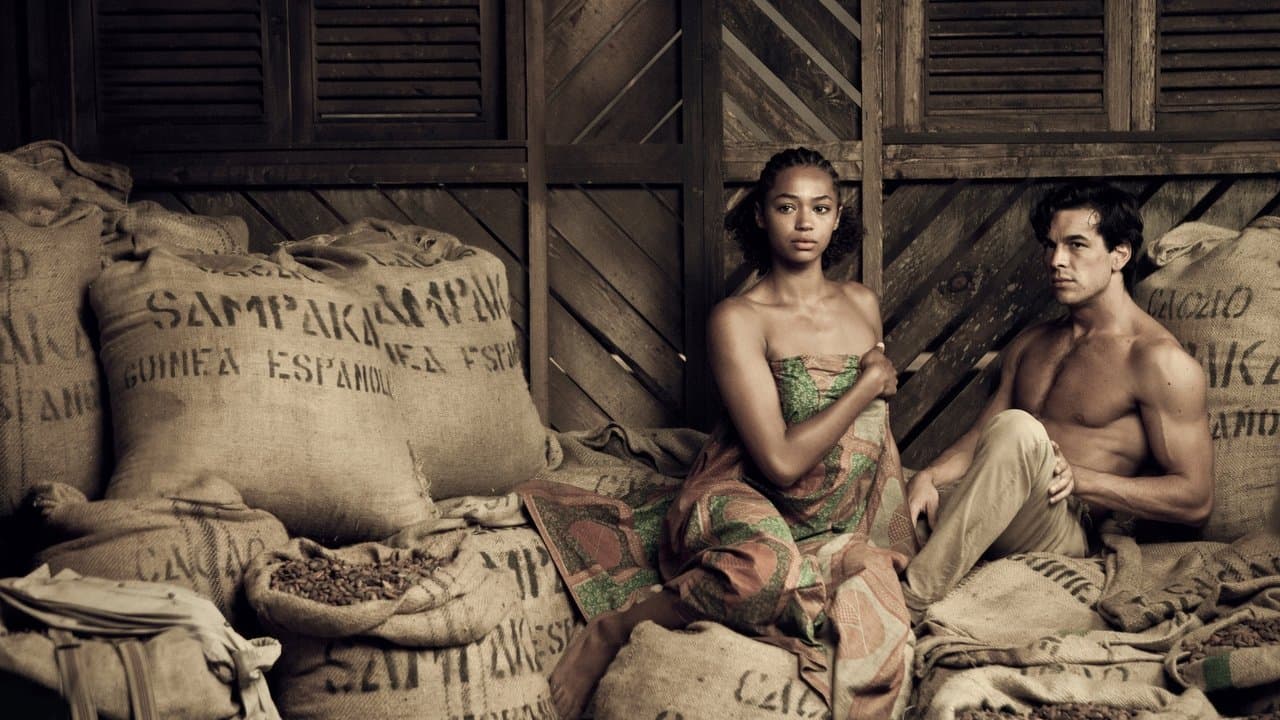
Palm Trees in the Snow opens in 2003 Spain, where an accidental discovery sets Clarence on an unexpected journey. She finds herself traveling from the snowy mountains of Huesca to the island of Fernando Poo in Equatorial Guinea — a place her father Jacobo and uncle Kilian spent their formative years. What begins as a simple trip backward in time becomes something far more complicated: a reckoning with family history, hidden relationships, and the colonial past that shaped an entire generation. The film doesn't just tell one story. It braids together past and present, weaving between Clarence's contemporary quest and the vivid memories of her father's youth in Africa.
Director Fernando González Molina crafts a narrative that feels both intimate and sweeping, moving between the intimate chambers of family secrets and the broader landscape of colonial exploitation. The setup is deceptively simple — a woman goes looking for answers — but what unfolds is far richer, touching on themes of belonging, identity, and how the choices made by one generation echo through decades. It's the kind of film that doesn't rush its revelations.
Behind the making of Palm Trees in the Snow
Palm Trees in the Snow arrived in 2015 as a major Spanish production, adapted from Luz Gabás's 2012 novel Palmeras en la nieve by screenwriter Sergio G. Sánchez. The film brought together a heavyweight consortium of production partners, including Nostromo Pictures, Atresmedia, Telefónica Studios, Warner Bros. Entertainment España, and others — a sign of just how seriously the Spanish film industry took this project. With a runtime of 164 minutes, González Molina was given the space to develop character and atmosphere rather than chase plot mechanics.
The cast and crew represented the cream of Spanish cinema. The production design had to convincingly render both contemporary Spain and the colonial Equatorial Guinea of the 1950s and 60s, which required meticulous attention to period detail and location work. Sánchez, who'd previously written the screenplay for The Orphanage, brought a sophisticated sensibility to the adaptation — he understood how to layer mystery with emotional truth. The film's ambitious scope, both thematically and visually, positioned it as a prestige drama aimed at serious audiences willing to invest in a story that doesn't provide easy answers. On IMDb, the film holds a solid 7.378/10 rating, reflecting its resonance with viewers who appreciate character-driven historical drama.
What makes Palm Trees in the Snow stand out
What's striking about Palm Trees in the Snow is how it refuses to simplify its moral terrain. The film is set against the backdrop of colonialism in Africa — a subject that demands honesty — yet it doesn't treat its characters as mere symbols. Jacobo and Kilian are men caught between worlds, neither fully Spanish nor African, and the film allows them their complexity, their contradictions, their capacity for both tenderness and complicity. That's harder to pull off than it sounds.
The performances anchor everything. The actors playing the younger versions of Jacobo and Kilian carry the weight of the flashback sequences with a naturalism that makes their youthful idealism and gradual moral compromise feel lived-in rather than performed. When the film cuts between past and present — between the men they were and the men they've become — there's a genuine ache to the juxtaposition. I keep coming back to how the film handles the romance at its center: it's not treated as a distraction from the historical elements but as integral to them. Love, the film suggests, doesn't exist in a vacuum. It's shaped by place, by power, by the messy realities of the world we inhabit.
The cinematography captures both the lush strangeness of Equatorial Guinea and the austere beauty of the Spanish mountains with equal care. González Molina understands that landscape is never just backdrop — it's a character in itself. The 164-minute runtime, which could have been a liability, becomes an asset. The film earns its length through patient scene work and the slow accumulation of detail. You don't just watch Palm Trees in the Snow; you inhabit it.
Where to stream Palm Trees in the Snow online
Finding Palm Trees in the Snow has become easier thanks to the proliferation of streaming platforms. The film is available on major OTT services, and Movie OTT maintains a current list of where you can watch it depending on your region and subscription. Rather than hunting through multiple apps, Movie OTT aggregates streaming availability so you can see at a glance whether it's on your preferred platform. The "Where to Watch" widget at the top of this page shows you all current options — no guessing required. Since streaming catalogs shift regularly, checking there first will save you time and frustration. The film's 164-minute runtime makes it a commitment, so knowing exactly where to find it matters.
Frequently asked questions
Q: Is Palm Trees in the Snow based on a true story?
The film's tagline — "Based on thousands of real stories" — captures its approach. While the specific characters and plot are fictional, they're rooted in the genuine historical experience of Spanish colonizers in Equatorial Guinea during the mid-20th century. Director Fernando González Molina and screenwriter Sergio G. Sánchez drew on the novel by Luz Gabás, which itself was informed by extensive research into this period.
Q: How long is Palm Trees in the Snow?
The film runs 164 minutes (just under three hours), which gives González Molina ample time to develop both the contemporary storyline and the extended flashback sequences that form the emotional core of the narrative.
Q: Who directed Palm Trees in the Snow?
Fernando González Molina directed the film, adapting Luz Gabás's 2012 novel through a screenplay by Sergio G. Sánchez. It was a major Spanish production released in 2015.
Q: What are the main genres of Palm Trees in the Snow?
The film blends drama, history, and romance. It's not a straightforward love story or a conventional historical epic — it's a hybrid that uses romance as a lens through which to examine colonial history and family legacy.
Q: Where was Palm Trees in the Snow filmed?
The production required location work in both Spain (particularly the snowy mountains of Huesca) and Equatorial Guinea, as well as studio work to recreate the colonial-era settings with historical accuracy.
Final thoughts on Palm Trees in the Snow
Palm Trees in the Snow is the kind of film that lingers. It doesn't offer neat resolutions or moral clarity — and that's precisely what makes it worth watching. In an era when streaming platforms churn out content designed to be consumed and forgotten, this Spanish epic insists on depth, on ambiguity, on the messy reality of how history lives in families. The film asks hard questions about complicity, belonging, and what we owe to the past. It's patient cinema, demanding cinema — but for viewers willing to settle in, it's profoundly rewarding. Whether you're drawn to historical drama, character studies, or films that treat their audiences as intelligent, it's worth seeking out.