









The Story of Parasite Eve
Parasite Eve tells the story of Toshiaki Nagashima, a scientist who faces an unbearable tragedy: his wife Kiyomi is left brain dead following a traffic accident on their first wedding anniversary. Rather than accept her death, Nagashima makes a desperate bargain with a hospital doctor who wants access to Kiyomi's organs for transplant research. The deal seems straightforward enough—the doctor harvests what he needs, but Nagashima retains his wife's liver for his own experiments. What unfolds next, however, isn't a touching tale of resurrection. It's something far stranger and far more terrifying. The samples from Kiyomi's body begin to transform, coalescing into a gelatinous form that reveals itself as a collective consciousness—an organization of sentient mitochondria, the cellular powerhouses that should exist only to serve human metabolism. These entities have other plans entirely.
Behind the Making of Parasite Eve
Parasite Eve arrived in 1997 as an adaptation of Hideaki Sena's 1995 novel of the same name, a work that had already captured the imagination of Japanese readers with its audacious premise. Director Masayuki Ochiai took on the challenge of translating Sena's biotech-horror concept to screen, working with production partners Robot Communications, Fuji Television Network, and KADOKAWA Shoten to bring the film to life. The 120-minute runtime allowed Ochiai space to develop both the intimate tragedy of Nagashima's grief and the escalating cosmic horror of what Kiyomi becomes. What's striking is how the film commits to its high-concept premise without winking at the audience—there's no ironic distance here, just a genuine attempt to make mitochondrial consciousness feel like a plausible threat. The cast and crew approached the material with the kind of earnestness you don't often see in creature features, treating the science as if it might actually work. The film's box office performance in Japan established it as a cult property, and it's remained a reference point for genre fans interested in how Japanese science fiction approaches body horror and existential threat differently than its Western counterparts. While it didn't achieve mainstream crossover success internationally at the time, it's developed a devoted following among those who stumble across it through streaming platforms or retrospectives.
What Makes Parasite Eve Stand Out
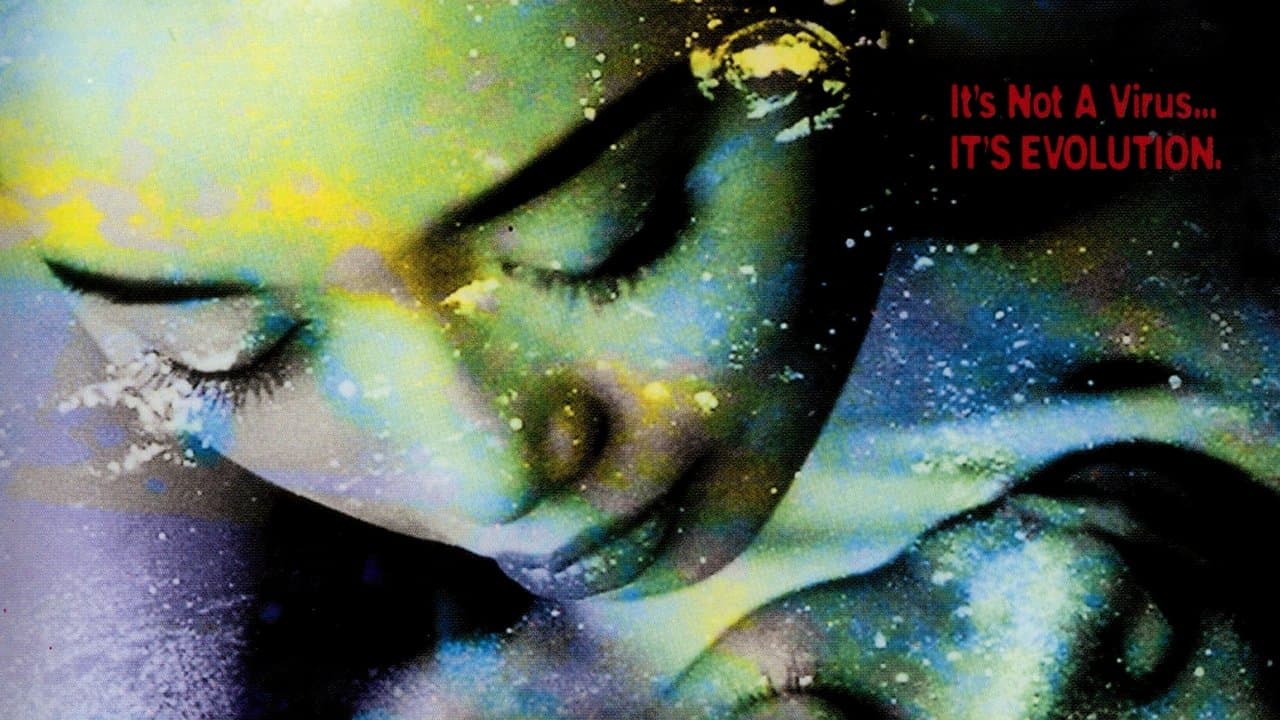
The film's central conceit—that evolution might not wait for natural selection, that it could be engineered or accelerated by a consciousness we've overlooked living inside us—still holds considerable power. Most science fiction treats the microscopic world as backdrop; Parasite Eve makes it protagonist and antagonist simultaneously. What's genuinely unsettling is the film's refusal to treat Kiyomi's transformation as purely monstrous. She's still, in some sense, Kiyomi. The mitochondrial collective retains fragments of her identity, her memories, her connection to Nagashima. That ambiguity—is this his wife evolved, or is his wife dead and something wearing her memory is what remains?—creates a tension that pure action-horror can't touch. The performances navigate this impossible emotional terrain with restraint. There's no melodrama, no screaming at the sky. Instead, there's a creeping dread as characters realize that the threat isn't external but cellular, intimate, and perhaps inevitable. The tagline says it all: "It's not a virus... it's evolution." That distinction matters. You can fight a virus. You can't fight the fundamental reorganization of what life means. The film's willingness to sit with that philosophical weight, rather than defaulting to gunfire and explosions, is what separates it from more conventional creature features of its era.
Where to Stream Parasite Eve Online
Finding Parasite Eve can be a bit of a hunt, but the film is available across major OTT services—check the "Where to Watch" widget at the top of this page for current availability in your region. Streaming rights for international films, especially cult Japanese properties from the 1990s, shift regularly between platforms, so what's available today might migrate tomorrow. Movie OTT keeps tabs on where titles are streaming across the major services, so you don't have to ping five different apps trying to locate it. If you're a subscriber to one of the major platforms, there's a solid chance Parasite Eve is already in your library, particularly if your service has a robust Asian cinema section. The film's relatively niche status means it won't always show up in algorithmic recommendations, but it's worth searching for directly—one of those hidden gems that rewards curiosity.
Frequently Asked Questions
Q: Is Parasite Eve based on a true story?
No, it's based on Hideaki Sena's 1995 science fiction novel of the same name. While the film draws on real biological concepts—mitochondria, cellular evolution, organ transplantation—the premise of sentient mitochondrial consciousness is entirely fictional.
Q: Who directed Parasite Eve?
Japanese director Masayuki Ochiai helmed the film, bringing his sensibility for blending intimate human drama with large-scale speculative concepts. It remains one of his most audacious works.
Q: How long is Parasite Eve?
The film runs 120 minutes, giving it enough time to develop both the emotional core of Nagashima's grief and the escalating body-horror elements without feeling rushed.
Q: What's the rating for Parasite Eve?
The film holds a 5.65/10 on IMDb, reflecting its status as a divisive cult film—some viewers find it brilliant and ahead of its time, while others find the pacing or premise too unconventional for their taste.
Q: Is Parasite Eve connected to the video game?
No. The 1998 PlayStation game of the same name was inspired by the novel but exists in its own continuity. They share thematic DNA but are separate adaptations of Sena's work.
Final Thoughts on Parasite Eve
Parasite Eve isn't a film for everyone. It moves slowly in places, prioritizes philosophical questions over action, and asks you to sit with the idea that your own cells might have agendas that don't align with your survival. But that's precisely why it matters. In an era when sci-fi often defaults to spectacle, here's a 1997 Japanese film that trusts its premise and its audience. If you're the kind of viewer who gravitates toward unconventional horror and speculative fiction that makes you think long after the credits roll—that's the audience this film was made for. Worth seeking out.